
Reviewed · TOURS IN CEBU
Private 5-Hour Cebu City Tour with Lunch
Cebu City’s story comes into focus on this compact private tour. In five hours, you move from a Chinese Taoist temple to a Spanish fort, a 16th-century Catholic basilica, and a hardwood-and-coral family home. The route gives you a useful first look at how several cultures shaped Cebu.
I like the small private group, which keeps the pace flexible and makes it easier to ask questions. I also like that lunch, entrance fees, and hotel transport are included, so the advertised $91.03 per person covers much more than a guide and a van.
The main caution is guide quality. Some guests receive a lively history lesson in clear English, while one account describes a guide named Edwin leaving the group at each stop and spending much of the tour in the vehicle. Confirm what level of guiding you expect before you go.
Key details to know before booking
- Four major Cebu sights in five hours: The route covers the Taoist Temple, Basilica del Santo Niño, Magellan’s Cross, Fort San Pedro, and Casa Gorordo Museum.
- Private transport for up to six people: Your group does not share the vehicle with a large tour crowd.
- Lunch and admission fees are included: You do not need to budget separately for the listed attractions or the midday meal.
- A useful culture mix: The tour links Cebu’s Chinese community, Spanish colonial past, Catholic tradition, military history, and wealthy Filipino family life.
- Traffic affects the schedule: Transfer times are approximate, and Cebu’s roads can slow the day down.
- Guide quality matters: Strong guiding can make the historical stops memorable, while a quiet or disengaged guide can reduce the tour to simple sightseeing.
Starting the day with a private ride through Cebu
The tour begins with hotel pickup in Cebu City. The information gives both an 8:30 a.m. start time and a 9 a.m. hotel pickup, so confirm the exact meeting time when you book. That small check can save you from standing in a hotel lobby with your breakfast getting cold.
Your group travels in a private vehicle, with a maximum of six people. That size works well for families or friends who want to move together without waiting for a full coach. It also gives you a better chance to ask about Cebu’s past, local customs, and the meaning of the places you are seeing.
The route includes a drive about four miles, or 6 kilometers, from the city center to the Taoist Temple. You also pass Carbon Market, where produce arrives from different parts of the island. The drive is not just dead time. It gives you a quick look at everyday commerce and the flow of food into the city.
Still, allow for traffic. The tour is listed at about five hours, but exact transfer times depend on the time of day and road conditions. If you have a flight, ferry, or fixed afternoon appointment, leave a generous buffer after the scheduled drop-off.
A few more things to do in Cebu worth a look
- Cebu City: Bohol Countryside Tour with Loboc Cruise Lunch
★ 4.5 · 488 reviews - Canyoneering Experience in Kawasan Falls with Lunch
★ 5.0 · 440 reviews - Cebu: Kawasan Falls Canyoneering Tour with Ziplining & Lunch
★ 4.8 · 259 reviews
Cebu Taoist Temple and the city’s Chinese heritage
The Cebu Taoist Temple is the most visually different stop on the route. Built in 1972 by Cebu’s Chinese community, it is a relatively modern religious site compared with the Spanish-era buildings later in the tour.
The entrance gate recalls the Great Wall of China, with tiered roofs and curling dragon details. The colorful design gives the morning a strong visual start, especially after the drive through the city.
You should expect this stop to work best as a guided introduction rather than a long independent visit. The temple’s importance comes from its place in Cebu’s Chinese community, and a good guide can explain that setting without turning the visit into a rushed photo stop.
The tour description does not promise a religious ceremony or a particular ritual experience. Treat the temple as a cultural and architectural visit, and dress respectfully. Smart casual clothing is required for the tour, which is useful guidance at religious sites and also keeps you comfortable through the warm Cebu day.
Carbon Market and the practical side of Cebu
Passing Carbon Market adds a small but useful piece of daily life to the route. The market is where vendors bring fresh produce from around the island, so it connects the city to the farms and communities beyond Cebu City.
You may not stop for a full market visit, and the tour does not list one as a formal attraction. Even so, seeing the market area from the vehicle helps break up the sequence of churches and museums. It reminds you that Cebu is not only a collection of historic sites. It is also a working city where food, trade, and transport shape the day.
This is one reason private transport helps. You can ask your guide what you are seeing as you pass, rather than simply watching the city through a bus window. If the guide is quiet, however, this portion may feel like a transfer rather than a meaningful part of the tour.
Basilica del Santo Niño and Magellan’s Cross
The Basilica del Santo Niño takes you to the Catholic heart of the itinerary. Founded in 1565, the basilica houses a revered 16th-century statuette of the Christ child, known as the Santo Niño.
The date matters. This is not simply an attractive old church. It connects to the early Spanish period in the Philippines and to Cebu’s long Catholic tradition. Your guide can help explain why the Santo Niño is so important, but you should also expect this to be an active religious site rather than a museum built only for sightseeing.
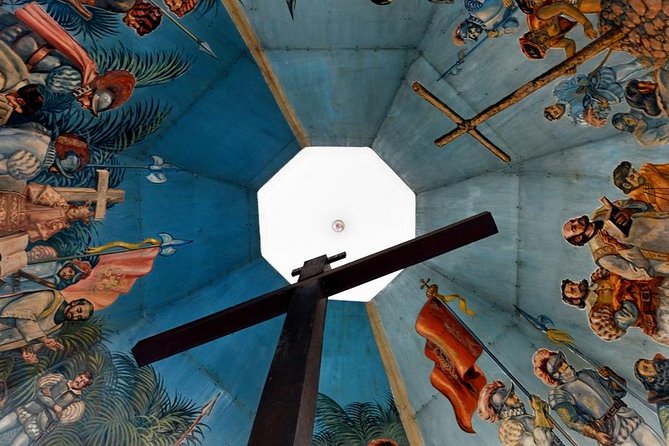
Across the street, you see Magellan’s Cross. Portuguese and Spanish explorers placed the cross in Cebu in 1521 under the orders of Ferdinand Magellan. The short distance between the basilica and the cross makes this an efficient stop, but the two sites carry different layers of meaning: one reflects continuing religious devotion, while the other recalls European arrival and colonial expansion.
Plan on about an hour for this part of the visit. The area can feel more intense than the quieter museum and fort stops, so listen closely to the guide and keep personal belongings secure. The tour includes admission fees, though the description does not specify every possible church-area charge or optional purchase.
Same base, a different kind of day out:
- Cebu City: Whale Shark Swimming & Kawasan Falls Canyoneering
★ 4.7 · 665 reviews - Cebu: Oslob Whale Sharks, Tumalog Falls & Sardine Snorkeling
★ 4.3 · 343 reviews - Cebu: Whale Shark Swim and Kawasan Canyoneering Tour
★ 4.6 · 318 reviews - Cebu: Oslob Whale Sharks, Moalboal Sardine Run & Turtles
★ 4.5 · 266 reviews
Fort San Pedro’s quiet courtyard
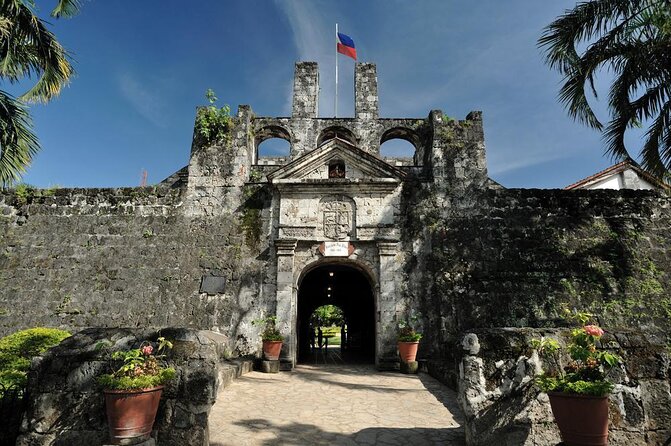
Fort San Pedro was founded in 1565 as a military outpost. Today, its inner courtyard contains a tranquil garden, giving you a calmer setting after the basilica and city streets.
The fort is valuable because it brings military history into the tour. You see how Cebu’s Spanish-era story was not only about churches and trade, but also defense and control. The compact fort setting should be easy to cover within the allotted hour, though the depth of the explanation will depend heavily on your guide.
I like the contrast here. A fort can sound stern on paper, yet the garden gives the visit a slower rhythm. You can look at the structure, hear about its military role, and take a short break from the traffic outside.
Admission is included. A moderate level of fitness is recommended for the overall activity, but the supplied details do not list stairs, distances inside the fort, or specific accessibility arrangements. If anyone in your group has mobility concerns, ask the operator for current site information before booking.
Casa Gorordo Museum and 19th-century Cebu life
Casa Gorordo Museum is the final listed stop, and it shifts the focus from public institutions to private life. The house was built in the 1850s for a wealthy family and made with Mactan coral stone and Philippine hardwood.
Inside, the home has been restored and furnished in period style. This gives you a look at how elite Filipino families lived in the mid-19th century, with attention to the building materials and domestic spaces that a fort or basilica cannot show you.
For me, this is an important finish because it gives the tour a human scale. You move from broad subjects such as colonial power and religion to rooms designed for family life. The house also helps you notice local materials, especially Mactan coral and hardwood, rather than treating the past as a string of dates.
The museum is listed as a one-hour stop with admission included. If your group prefers buildings, interiors, and social history to monuments, you may find this more rewarding than the quicker outdoor stops.
Lunch included, with one important caution
Lunch is included in the price, which makes the $91.03 cost easier to judge. You are paying for a private guide, private vehicle, hotel pickup and drop-off within Cebu City, four admission tickets, local taxes, and a meal. For a group of two to six people, that can be sensible value compared with arranging each piece separately.
The meal is not described in detail, so do not book this expecting a named restaurant, a particular cuisine, or a special dining setting. One account praised the lunch, while another described a poor buffet served as early as 11 a.m. That contrast is worth taking seriously.
The timing may feel early because the tour starts in the morning and fits several stops into a short window. If you have dietary restrictions, ask about meal arrangements before departure. The provided details do not list vegetarian, allergy, or other special-diet options.
How much the private format is worth
At $91.03 per person, this is not the cheapest way to see Cebu City. It can still be good value if your group wants a private vehicle, a guide, included entry fees, and no need to plan the route yourself.
The value improves when six people share the vehicle, assuming everyone pays the listed per-person rate. For a smaller group, the price buys comfort and control. You avoid organizing separate rides between the Taoist Temple, central Cebu, and Casa Gorordo Museum.
The private format also matters for families. Children must be accompanied by an adult, and a child rate applies only when sharing with two paying adults. Since the tour is limited to six people, it is suitable for a family group that wants to stay together, though the moderate fitness requirement and religious-site etiquette still apply.
The weak point is that privacy does not guarantee a strong guide. Ask whether your guide will accompany you inside each attraction and provide commentary at the sites. That question directly addresses the most serious negative account, in which the guide reportedly left the group to visit on its own.
Who will enjoy this Cebu half-day tour
I would choose this experience if you have only one day in Cebu City and want a broad introduction without arranging several taxis or entrance tickets. It also suits families, couples, and small groups who prefer a set plan and hotel transport.
History fans get several useful angles: Chinese community life, Spanish military power, Catholic devotion, European arrival, and 19th-century Filipino domestic life. The tour is not designed for long visits at one site, though, so specialists may want more time at the basilica, fort, or museum.
The tour can work well in rain because most of the day is built around established attractions and private transport. Still, outdoor movement between sites will be less pleasant in wet weather. One positive account specifically described an enjoyable day despite rain, with the guide’s English and Cebu history explanations receiving strong praise.
You should think twice if you dislike fixed schedules or want a relaxed lunch. Four main stops plus city transfers in five hours is a brisk plan. You will see a lot, but you will not have unlimited time to linger.
Booking advice and cancellation terms
The operator is Blue Horizons Travel and Tours, Inc. Confirmation is normally issued at booking, but reservations made within seven days of travel may receive confirmation within 48 hours, subject to availability.
Hotel pickup and drop-off apply only to hotels located within Cebu City. If you are staying outside the city, confirm the meeting point and any additional transport arrangements before paying.
Free cancellation is available up to 24 hours before the experience begins. Changes or cancellations made less than 24 hours before the start time are not accepted for a refund, and the cut-off follows local Cebu time.
Should you book this Cebu City tour?
Book it if you want a practical first look at Cebu, value a private vehicle, and like having lunch and entrance fees handled in one booking. The mix of the Taoist Temple, Santo Niño Basilica, Magellan’s Cross, Fort San Pedro, and Casa Gorordo Museum gives you more cultural range than a tour focused only on Spanish landmarks.
I would book it with one condition: confirm the guiding arrangement. The best version of this tour includes clear English explanations and active guiding at each site, qualities praised in the strongest accounts. If the operator can assure you that the guide will walk through the attractions with your group, the tour offers solid convenience and good coverage. If you mainly want independent sightseeing with transport, the guide service may not justify the price.
FAQ
How long is the Cebu City tour?
The tour lasts approximately five hours.
What time does the tour start?
The meeting information lists an 8:30 a.m. start, while the tour description says hotel pickup begins at 9 a.m. Confirm your exact pickup time when booking.
How many people can join the private tour?
The tour allows a maximum of six people.
Is hotel pickup included?
Yes. Pickup and drop-off are included for hotels located within Cebu City.
Is lunch included?
Yes. Lunch is included, although the meal type and restaurant are not specified.
Are entrance fees included?
Yes. Admission fees for the listed attractions are included.
Which attractions are included?
The route includes Cebu Taoist Temple, Basilica del Santo Niño, Magellan’s Cross, Fort San Pedro, and Casa Gorordo Museum.
Is the tour suitable for children?
Yes. It is described as family-friendly, but children must be accompanied by an adult. A child rate applies only when sharing with two paying adults.
What should I wear?
Smart casual clothing is requested. Respectful clothing is especially useful at the Taoist Temple and Basilica del Santo Niño.
Can I cancel for a full refund?
Yes, if you cancel at least 24 hours before the experience start time. Cancellations or changes made less than 24 hours before the start are not accepted for a refund.
Just added in Cebu
- Whale Shark Watching & Tumalog Falls & Kawasan Falls★ 5.0 · 16 reviews
- Whale Shark Watching and Sumilon Sandbar Private Tour Package★ 5.0 · 17 reviews
- Whale Shark Watching with Sumilon Sandbar and Kawasan Falls Tour★ 5.0 · 8 reviews
- Full Day Shark Watching and Canyoneering in Cebu★ 5.0 · 15 reviews
- Half day tour with Snorkel at Sancturary and Sulpa island★ 5.0 · 3 reviews
- Cebu Whale Shark Encounter, Moalboal Sardines & Tumalog Falls★ 4.0 · 18 reviews
- Bohol Chocolate Hills & Tarsiers with roundtrip ferry from Cebu★ 5.0 · 7 reviews
- Transfer Cebu City – Bantayan Island★ 3.5 · 4 reviews
Tours in Cebu, compared.
Whale Shark Swimming & Kawasan Falls Canyoneering
Read our review →
Bohol Countryside Tour with Loboc Cruise Lunch
Read our review →
Canyoneering Experience in Kawasan Falls with Lunch
Read our review →
Oslob Whale Sharks, Tumalog Falls & Sardine Snorkeling
Read our review →
Whale Shark Swim and Kawasan Canyoneering Tour
Read our review →
Oslob Whale Sharks, Moalboal Sardine Run & Turtles
Read our review →
Kawasan Falls Canyoneering Tour with Ziplining & Lunch
Read our review →
Whale Shark, Monkey Sanctuary, & Moalboal Turtles Tour
Read our review →Browse the lists this tour appears in