
Reviewed · TOURS IN MANILA
Bataan Death March memorial tour
The most powerful part of this day is the link between the places you visit and the families who lived through them. At several stops, your guide may explain the Bataan Death March through personal family stories, including the experience of guide JB Quemado’s grandfather, who survived the march and imprisonment. This is not just a museum outing. It is a hard look at war, captivity, sacrifice, and memory.
I like the private format, which lets your group ask questions and adjust the day when possible. I also like the mix of major memorials and the small Bamban Museum of History, where local relics and personal accounts add detail that larger sites can lack. The main drawback is the distance: this is a full 10-hour day with a great deal of time in the vehicle, and the route may run in reverse from the order shown here.
Key points to know
- Personal World War II stories: Guides such as JB Quemado may connect the march to family experiences, including his grandfather’s survival.
- Four important stops: Visit Mount Samat, the Bataan World War II Museum, Capas National Shrine, and Bamban Museum of History.
- A long day from Manila: The tour begins around 7:00 am and lasts about 10 hours, with several hours spent on the road.
- Private transport for up to four: The $350 group price covers as many as four people, making the cost easier to share.
- A small museum with a big role: Bamban offers local objects and stories that help fill in gaps left by formal memorials.
- Check the route before departure: Mariveles and Bagac can take about four hours from Manila, so the guide may start at Camp O’Donnell instead.
Why this day matters beyond the memorials
The Bataan Death March is one of the darkest chapters of the Philippines during World War II. In 1942, Filipino and American forces surrendered after the Battle of Bataan. Prisoners were then forced to march to Camp O’Donnell, where many died from exhaustion, disease, hunger, and abuse.
A visit to these sites helps you connect that broad story to actual locations. You see the shrine where military sacrifice is remembered, the surrender site, the former prison camp, and a local museum that preserves objects and accounts from the area.
I would not choose this tour for a light sightseeing day. The subject is painful, and some displays and stories may be difficult to hear. But if you care about military history, Filipino history, or the human cost of war, the day gives you far more context than you would get by visiting one memorial alone.
The private setup matters here. With only your own group, you can pause for questions, spend more time at a meaningful display, or ask the guide to explain a family connection. Guides may include JB Quemado, Vincent, or Ferdinand Contreras. JB’s grandfather took part in the march and endured imprisonment, while Ferdinand has been praised for giving a clear account of the events and the places connected to them.
Other trips people book in Manila:
- Intramuros, Manila: Historical Bamboo Bike Tour
★ 4.8 · 583 reviews - Experience Intramuros with Bamboo Bicycle – Ecotours
★ 5.0 · 508 reviews - Manila: Intramuros, Chinatown, and Old Manila Half-Day Tour
★ 4.8 · 475 reviews
Starting from Manila at 7:00 am
The day begins early, with hotel pickup available in the Manila area. The price is $350 per group of up to four people, not per person. For a full group, that works out to $87.50 each before any separate costs not stated in the tour information.
That price is easier to justify when you consider the private vehicle, hotel transfer, guide, admission to the listed paid sites, and the amount of ground covered. It becomes less attractive for one or two people, though the private format gives you more control and avoids joining a larger group.
You should prepare for a long day. The drive to the Bataan and Tarlac area takes time, and one route explanation notes that reaching Mariveles or Bagac can take about four hours from Manila. This is why the actual order may differ from the sequence described here. Starting at Camp O’Donnell can save time compared with driving first to the farthest southern points.
That route choice is practical, but it can confuse you if you expect the stops in a fixed order. I would confirm the planned sequence with the provider before departure, especially if a particular site matters most to you.
Mount Samat and the Shrine of Valor
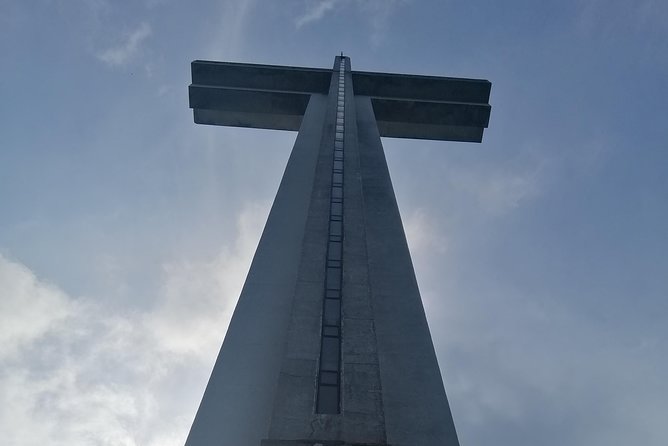
Mount Samat National Shrine, also called Dambana ng Kagitingan, honors the Filipino and American forces who fought during World War II. It is one of the most visually striking stops, with a large memorial complex and views from the mountain setting.
The shrine gives the day a strong opening or midpoint because it places the fighting in a physical setting. You are not only reading about Bataan. You are looking across the area where the campaign took place and considering how difficult the terrain and conditions must have been.
Plan on about one hour here, with admission included. The site is closed on Mondays, so avoid booking it for that day. The tour information does not promise a detailed walking route or every feature of the grounds, so ask your guide to point out the parts that matter most.
I like this stop because it deals with military courage before the story turns to surrender and captivity. That order can give the day emotional balance. You first see the sacrifice of the soldiers, then follow what happened after the surrender.
The Bataan World War II Museum and the surrender site
The Bataan World War II Museum is connected with the surrender of the USAFFE forces in 1942. USAFFE refers to the United States Army Forces in the Far East, which included Filipino and American troops.
You have about 30 minutes here, and admission is included. That is not a long visit, so your guide’s explanation is important. Ask for help understanding the sequence from the fighting on Bataan to the surrender and the treatment of prisoners afterward.
A short museum visit can work well in a packed day, but it also means you should not expect to study every display at length. If you have a special interest in military equipment, prisoner accounts, or the chain of events in 1942, tell the guide early so the time can be used well.
The value of this stop is its direct connection to the surrender. It helps bridge the gap between battlefield history and the forced march that followed. Without that link, Capas National Shrine can feel like a separate story. Together, the sites show how one event led to another.
Same base, a different kind of day out:
- Manila: Old & New 4-Hour City Tour
★ 4.5 · 458 reviews - Spectacular Manila to Tagaytay: Full-Day Sightseeing Tour
★ 5.0 · 349 reviews - Makati Nightlife: VIP Access to Clubs, Rooftops & Go-Go Bars
★ 4.9 · 278 reviews - Discover Tagaytay’s Countryside: Half-Day Sightseeing Tour
★ 4.5 · 207 reviews
Capas National Shrine and Camp O’Donnell
Capas National Shrine occupies the former Camp O’Donnell, a concentration camp for Filipino prisoners of war in 1942. This is one of the most important stops for understanding what happened after the march.
The planned visit lasts about 30 minutes. That may sound brief for a place with such weight, but the stop gives you a chance to pay respects and place the prisoners’ suffering in a specific location. The experience is less about collecting facts and more about recognizing the scale of what happened here.
Camp O’Donnell is also important for the route. Because Bataan is several hours away from Manila, the guide may begin here and travel south later. The tour is still covering the same key places, but the order may be different from what you first expect.
I would ask your guide how much time is available before reaching Camp O’Donnell. If this is the part of the tour you care about most, say so. A private day gives you a better chance to shape the discussion, though the overall driving schedule still limits how long you can remain at each site.
Bamban Museum of History and its local perspective
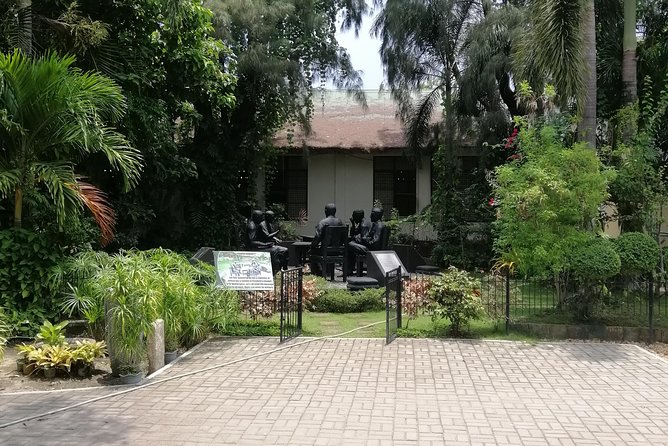
The Bamban Museum of History is a private museum with relics from the area. Its curator shares stories about local places and people connected to World War II. Admission is included at no extra charge.
This may become the most rewarding stop for you if you prefer personal objects and local stories to formal monuments. The larger memorials give you national context. Bamban helps show how the war affected particular communities and individuals.
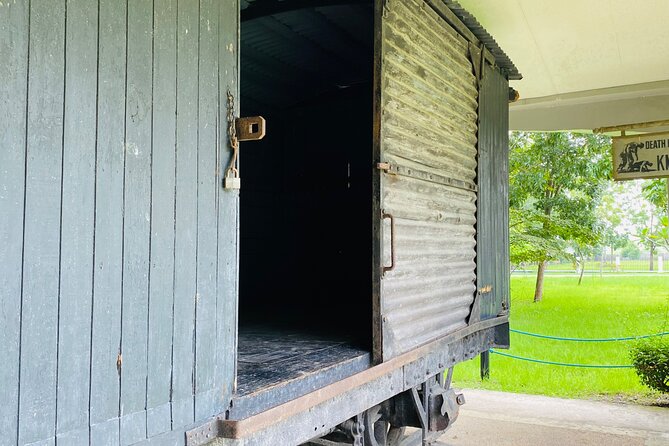
The museum is scheduled for about one hour, longer than the two 30-minute stops. That extra time matters because the curator can explain the objects and the events tied to them. One display includes a replica cart used to transport American prisoners during the march, a simple object that can make the conditions more concrete.
The museum is privately maintained, so do not expect the same presentation style as a major government site. That is part of its appeal, but it may also feel less polished. I see it as a valuable counterpoint to the official memorials, not a replacement for them.
What the long drive adds, and what it costs
The road time is the biggest practical issue. You will spend a large portion of the day traveling between Manila, Bataan, and Tarlac. One visitor described the travel as long but worthwhile, while another noted that the tour contains a great deal of driving along with the history.
You should be comfortable with that tradeoff before booking. This is not a compact Manila excursion with four sites close together. The distance is the reason a private vehicle and early start are useful.
The driving can also give your guide time to explain the wider story. The best use of the day is not simply arriving, taking a photo, and leaving. Ask questions in the vehicle, especially about Filipino participation, the surrender, the prisoner experience, and the connection between each location.
Bring water, keep your morning flexible, and expect the schedule to change if traffic or site conditions affect the route. Those are sensible precautions for any full-day trip, but they matter more here because the tour covers such a wide area.
How the guides shape the experience
A good guide is especially important on a memorial tour. Dates and names are useful, but the places become easier to understand when someone explains how they connect.
JB Quemado has a direct family connection through his grandfather, who survived the march and imprisonment. That perspective can add a personal layer to the official story. Instead of hearing only about military units and dates, you may hear how the experience was remembered within a Filipino family.
Vincent has also been praised for being communicative and for adjusting to the group’s needs. Ferdinand Contreras has been singled out for giving a strong overview of the march and the locations connected with it. The assigned guide may vary, so you should not book on the assumption that one specific person is guaranteed unless the provider confirms it.
The guide’s role is also important because some historical questions may be more detailed than the schedule allows. If you have a specialist interest, share it when booking or at the start of the day. The tour is designed for general historical learning, not necessarily for an academic study of every battle or unit.
Who will get the most from this tour
I would recommend this day to you if you have a serious interest in World War II, Filipino history, military memorials, or family connections to the Pacific War. It is also a good choice if you want to visit several related sites without arranging your own long-distance transport.
The tour suits families and small groups particularly well. Up to four people can share the private price, and a private vehicle makes it easier to discuss the subject at your own pace. A grandparent traveling with a younger family member may find the personal stories especially meaningful, though the subject matter is not light.
I would think twice if you dislike long road journeys or prefer relaxed sightseeing. The stops are important, but several visits are short. You will get more from this experience if you accept the day as a historical field trip rather than a polished entertainment outing.
The tour is also a better fit for someone who wants Filipino perspectives on the war. The stories connected to Filipino prisoners, local communities, and guide family history keep the experience from being only an account of American military loss.
Booking, weather, and practical details
Confirmation is provided when you book, and a mobile ticket is available. Hotel pickup is offered in the Manila area, with a listed start time of 7:00 am.
The tour is private, so only your group participates. Most people can take part, and service animals are allowed. The supplied information does not give a detailed accessibility assessment for every site, so contact the provider if you need specific support.
Mount Samat is closed on Mondays. The San Fernando station is not included because it has been under construction since December 2022, so do not expect that stop to be added to the day.
You can cancel for a full refund up to 24 hours before the start time. Changes or cancellations made less than 24 hours ahead are not accepted for a refund. The experience also requires good weather. If poor weather causes cancellation, you are offered another date or a full refund.
Is the Bataan Death March tour worth booking?
For the right person, yes. I would book it if I wanted a serious, personal look at the Bataan Death March and preferred having a guide connect the memorials, museums, and prison camp into one story.
The strongest reasons are the private group format, the guide’s possible family connection, Mount Samat’s setting, and the unusual Bamban museum. The main warning is the time in the vehicle. You should also confirm the route, the guide, and the planned stops before setting out, since the day may run in reverse.
If you want a quick half-day outing, choose something closer to Manila. If you want to understand a painful part of Philippine and American history through the actual places involved, this demanding day is a worthwhile choice.
FAQ
How long does the Bataan Death March memorial tour last?
The tour lasts approximately 10 hours, beginning around 7:00 am.
How much does the tour cost?
The price is $350 per group of up to four people.
Does the tour include hotel pickup?
Yes. Pickup is offered from hotels in the Manila area.
Which sites are visited?
The tour visits Mount Samat National Shrine, the Bataan World War II Museum, Capas National Shrine, and Bamban Museum of History.
Is admission included?
Admission is included at Mount Samat National Shrine and the Bataan World War II Museum. Admission is also included at Capas National Shrine. Bamban Museum of History is listed with free admission.
Is this a private tour?
Yes. Only your group participates, with a maximum of four people.
Is Mount Samat open every day?
Mount Samat National Shrine is closed on Mondays.
What is the cancellation policy?
You can cancel at least 24 hours before the start time for a full refund. Cancellations or changes made less than 24 hours before the start time are not accepted for a refund. If poor weather causes the tour to be canceled, you are offered another date or a full refund.
Just added in Manila
- From Manila: Villa Escudero Guided Tour★ 5.0 · 19 reviews
- Breathtaking Cultural Experience in Villa Escudero★ 4.5 · 15 reviews
- Manila Street food and Night Market Tour★ 4.7 · 21 reviews
- Solo Traveler Friendly Manila Walk w/ Mobile Photography★ 5.0 · 22 reviews
- Day hike to Mount Daraitan with Tinipak River 2024★ 5.0 · 22 reviews
- Manila: Intramuros Walled City Guided Walking Tour★ 4.5 · 30 reviews
- Half-Day Manila City Tour★ 5.0 · 29 reviews
- Makati Rooftop Barhopping with Local Guide★ 4.8 · 26 reviews
Tours in Manila, compared.

Intramuros, Manila: Historical Bamboo Bike Tour
Read our review →
Experience Intramuros with Bamboo Bicycle – Ecotours
Read our review →
Intramuros, Chinatown, and Old Manila Half-Day Tour
Read our review →
Spectacular Manila to Tagaytay: Full-Day Sightseeing Tour
Read our review →
Makati Nightlife: VIP Access to Clubs, Rooftops & Go-Go Bars
Read our review →
Discover Tagaytay’s Countryside: Half-Day Sightseeing Tour
Read our review →
Manila Food Tour: Explore World’s Oldest Chinatown
Read our review →Browse the lists this tour appears in