
Reviewed · TOURS IN MANILA
2 Days Private Bataan Tour with Corregidor
The most powerful part of this two-day trip is the way it links separate wartime sites into one clear story. You begin at the Bataan Death March memorials, see the places tied to surrender and imprisonment, then spend the second day on Corregidor, where the campaign’s final chapter comes into sharper focus.
I like the private car and guide, since you can ask questions, adjust the pace, and request sites that matter to you. I also like the personal feel of the trip. Guide JB has been praised for tailoring the route and explaining battlefield events in detail. The main drawback is the price, $1,150 per person, plus two very early starts and long days on the road.
Key points to know before booking
- Capas National Shrine opens the story: This former Camp O’Donnell prison camp connects the Battle of Bataan with the suffering that followed surrender.
- Bamban Museum adds a personal collection: The private museum holds World War II artifacts and is operated by a war historian. Donations are appreciated.
- The Zero Kilometer marker gives the Death March a physical starting point: It is a brief stop, but an important one.
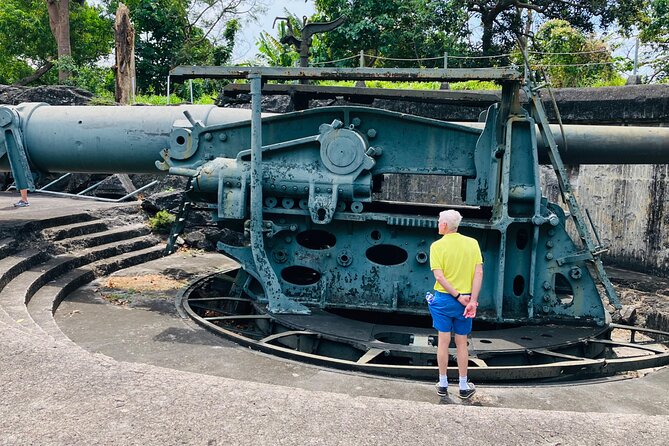
- Corregidor gets seven hours: You travel by boat from the pier at 7:00 a.m., then use the island tour bus for a full day of sites and battlefield discussion.
- Mount Samat and San Fernando fill in missing pieces: One marks the final battle of Bataan, while the railway station recalls the movement of prisoners toward Camp O’Donnell.
- This is best for serious history fans: The trip focuses on wartime events, memorials, military sites, and guided explanation rather than general sightseeing.
A two-day route through the Philippines’ World War II story
This is not a light excursion with one memorial and a quick photo stop. It is a focused history trip that covers the Battle of Bataan, the Death March, prisoner camps, the surrender, and the defense of Corregidor.
The private format matters here. You travel with your own party in a private car and have a guide for the full experience. That gives you room to ask about specific units, family connections, or parts of the campaign that interest you. One person who had a grandfather on the Death March found the route especially moving, and that makes sense: the tour follows actual places rather than treating the event as a distant chapter in a textbook.
You should also know what this trip is not. It is not built around beaches, food stops, or a relaxed resort pace. The schedule begins early, covers several sites, and includes a long day on Corregidor. If your interest in wartime history is mild, the amount of information may feel heavy. If you want to understand the campaign in place, this structure makes good sense.
A few more things to do in Manila worth a look
- From Manila: 2-Day Buscalan Tour with Apo Whang-od
★ 3.6 · 29 reviews - Cebu: 2-Day Private Tour Moalboal and Oslob
★ 4.7 · 4 reviews - 2 Days SSI Advanced Open Water Course in Boracay
★ 5.0 · 3 reviews
Capas National Shrine and the human cost of surrender
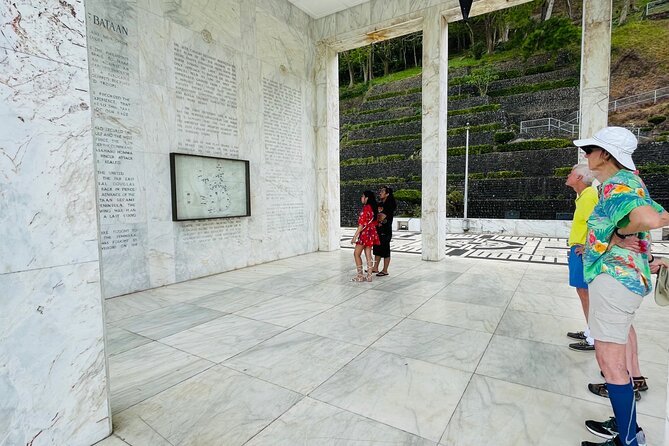
Capas National Shrine, also known as Camp O’Donnell, is the first major stop. The site was used as a prison camp for Filipino and American prisoners of war after the Battle of Bataan.
You have about an hour here, with admission included. That is enough time for the guide to explain how the surrender led to imprisonment and why Capas matters in the larger story. The stop moves the focus away from troop movements and commanders and toward the people who suffered after the fighting ended.
I would pay close attention to the transition between Bataan and Capas. The tour is not simply showing you a battlefield, then a memorial. It is showing how the fall of Bataan produced a second ordeal for the prisoners. That connection is one of the strongest reasons to take the route with a guide rather than visit each place alone.
The visit may feel solemn and quiet. It is also one of the places where the subject matter can become emotionally difficult, especially if you have a family connection to the Death March or the prisoners held afterward.
Bamban Museum’s private collection
The Bamban Museum of History offers a different type of stop. Rather than a large public memorial, it is a private World War II museum assembled by a war historian, with an extensive collection of wartime artifacts.
The planned visit lasts about an hour, and admission is free. Donations are appreciated, so bring some local currency if you want to support the museum, though no donation amount is stated.
This stop can add texture to the formal memorials. At Capas and the other major sites, the setting carries the weight. At Bamban, the objects help make the period more concrete. Your guide can place those artifacts within the campaign and explain why they matter.
Because this is a private museum, the experience may feel more personal than a standard institutional display. You should also allow for some variation in how the visit unfolds. The available information does not specify the exact objects on display or the museum’s facilities, so come for the historical collection and discussion, not a polished visitor center.
Bataan World War II Museum and the surrender
The Bataan World War II Museum is tied to the surrender site of American General Edward King to Japanese forces. The visit lasts about an hour, and admission is included.
This stop gives you a direct way to discuss April 9, 1942, the date associated with the surrender of Bataan. The location helps turn a major military event into a place you can stand in and examine. That is especially useful if you know the broad outline of the campaign but want to understand how the final decision looked on the ground.
The museum also works well as a companion to Capas. One stop deals with surrender and the immediate military outcome. The other deals with imprisonment and the suffering that followed. Taken together, they give the first day a strong shape.
A guide is valuable here because battlefield sites can be hard to read without context. The buildings, roads, and memorial spaces do not automatically explain the sequence of events. The tour promises extended battlefield discussion, and this is one of the places where that discussion earns its keep.
Same base, a different kind of day out:
- Intramuros, Manila: Historical Bamboo Bike Tour
★ 4.8 · 583 reviews - Experience Intramuros with Bamboo Bicycle – Ecotours
★ 5.0 · 508 reviews - Manila: Intramuros, Chinatown, and Old Manila Half-Day Tour
★ 4.8 · 475 reviews - Manila: Old & New 4-Hour City Tour
★ 4.5 · 458 reviews
The Zero Kilometer marker and the start of the Death March
The Zero Kilometer Death March Marker is a short stop of about 30 minutes. It marks the starting point of the Death March.
You will not spend as long here as at the museums or Corregidor, but the stop carries unusual weight. A starting marker gives the route a clear geographic reference. After hearing about the prisoners at Capas and the surrender at Bataan, you can connect those events to the beginning of the forced march.
This is also a good place to ask your guide to explain how the marker fits into the larger route. The stop is brief, so it works best when you already understand the surrounding history from the earlier visits.
Do not judge its value by the time spent there. Thirty minutes is enough for a focused explanation and a moment to take in the site. The tour’s strength comes from placing this marker alongside the other stops, not from treating it as a stand-alone attraction.
Corregidor: the longest and most important day
Day two begins early. You go to the pier at 7:00 a.m., take a boat ride of about 20 minutes to Corregidor, and then use a tour bus to move around the island.
The Corregidor portion lasts about seven hours, making it the largest single part of the trip. That length matters. You are not simply arriving, taking a quick look, and heading back. You have time for a broad visit and for detailed battlefield discussion with your guide.
The island is central to the story of the Philippines in World War II. It lets you consider the wider defense of Manila Bay and the final phase of the campaign after Bataan. The tour’s private format is particularly useful here because you can spend more time on the questions that interest you instead of following only a fixed group script.
One person described having the island almost to the private party and receiving a very personal visit. You should not assume the same conditions on every departure, but the private booking does give your group a better chance to shape the discussion and avoid the limitations of a large tour.
The boat ride is short, while the island visit is long. Plan mentally for a full day, not a quick island outing. The early pier meeting also means you need to be ready at the start time. The supplied details do not state the exact return time, so keep your evening flexible.
Mount Samat and the final battle of Bataan
Mount Samat National Shrine, also called Dambana ng Kagitingan, is scheduled for about two hours. The mountain is associated with the final battle of Bataan before the American surrender.
This is one of the most important stops for understanding the campaign’s closing stage. The setting helps you connect the battle to a specific high point rather than viewing Bataan as one broad, undefined area. Two hours gives the guide enough time to explain the military setting and the meaning of the shrine.
The stop also balances the memorial focus of the first day. Capas and the Death March marker direct your attention toward prisoners and forced movement. Mount Samat brings you back to the fighting itself and the point at which the defense of Bataan ended.
The timing can make this a demanding day. Corregidor already takes about seven hours, and Mount Samat adds another two-hour visit. That is a benefit for a history enthusiast, but a drawback if you prefer short sightseeing stops with plenty of free time.
San Fernando and the railway connection
San Fernando is a brief 30-minute stop at the train station where prisoners were loaded before being taken to the concentration camp.
The station helps complete the chain of events. You see the starting point of the Death March, then learn about the prison camp at Capas, and here you encounter the transport stage between them. The stop is short, but its role is clear.
I would treat San Fernando as a context stop rather than a major attraction. You are not given a long visit or a broad museum program here. Its value comes from fitting the railway station into the route and helping you understand how prisoners were moved after the march.
This is a good example of why the full two-day structure is useful. Some places are powerful on their own. Others become meaningful only when you see how they connect to the next stage of the story.
What the private format adds
The trip uses a private car with a tour guide, and only your group participates. That is a major advantage for anyone with a family story or a particular military interest.
You can ask for more explanation at a site that matters to you. One booking was adjusted to include the places the person most wanted to see, showing that the route can respond to personal priorities. Ask about your preferred stops before departure, since the listed schedule is already full.
Guide JB is identified as the guide for the overall trip in one account, and he has been praised for his detailed battlefield explanations. The trip is strongest when you use that access well. Bring questions about the Battle of Bataan, the surrender, Corregidor, or the Death March, and tell the guide if your family has a connection to the campaign.
There is a trade-off. A private trip costs more than a standard shared excursion. You are paying for the vehicle, guide time, a tailored experience, and the chance to discuss the sites at your own pace. At $1,150 per person, the value depends heavily on how much you care about the subject and how many people are in your group.
Is $1,150 per person a fair price?
The cost is high, so it deserves a clear-eyed look. The price covers a private two-day experience with a guide, private transportation, the Corregidor boat and island visit, and included admission at several listed stops. It also saves you from arranging a complicated sequence of locations on your own.
For a serious World War II student, military-history reader, or person with a family connection, the price may be reasonable because the tour links sites that would be difficult to understand as isolated visits. The guide’s time is also important. You are not just paying to be driven between memorials. You are paying for battlefield explanation and a route shaped around your interests.
For a casual sightseer, I would hesitate. The price is substantial, the schedule is demanding, and the topic remains focused for two full days. You should book only if Bataan and Corregidor are major priorities during your time in the Philippines.
Admission is included at Capas National Shrine, the Bataan World War II Museum, and Mount Samat National Shrine. The Bamban Museum does not charge admission but appreciates donations. Corregidor is listed with no admission charge in the tour details, though the boat and island transport are part of the arranged experience.
Timing, effort, and practical planning
The stated start time is 7:00 a.m. Day two requires you to reach the pier at that hour, so early mornings are part of the deal. The first day also involves several stops by private car, while the second day combines a boat and an island tour bus.
The itinerary is full without being rushed at every stop. Visits range from 30 minutes at San Fernando and the Zero Kilometer marker to two hours at Mount Samat and seven hours on Corregidor. Those different lengths reflect the importance and size of each location.
You should wear practical clothing and shoes suitable for a day of moving between memorials, museums, transport points, and outdoor sites. The supplied details do not specify walking distances, meals, or hotel arrangements, so confirm those points before booking if they matter to you.
Most people can participate, according to the tour information. It is still wise to ask the provider about any personal mobility concerns, especially because the trip includes a boat, a tour bus, and a long day away from Manila.
Confirmation is provided at booking, and the experience is offered with mobile tickets. The cancellation terms are strict: a full refund requires cancellation at least six full days before the start time, a cancellation two to six days ahead receives 50 percent, and cancellations less than two full days ahead are not refunded. Bad weather may lead to a new date or a full refund.
Who should book this Bataan and Corregidor tour?
I would choose this trip if you want the Philippine World War II story explained in places tied directly to the events. It is especially well suited to history buffs, military-history students, and families tracing a relative who fought, marched, surrendered, or was imprisoned.
The private setup also suits you if you dislike large groups or want to ask many questions. Guide JB’s role and the detailed battlefield discussions are central benefits, not small extras.
I would skip it if you want a relaxed weekend, flexible late mornings, or a broad introduction to Manila and central Luzon. The tour is focused, expensive, and emotionally serious.
Should you book it?
Book this tour if Corregidor and the Bataan Death March are at the top of your Philippines list. The route connects Capas, Bamban, the surrender site, the Zero Kilometer marker, Corregidor, Mount Samat, and San Fernando into one carefully focused story.
Before paying, confirm the exact pickup arrangements, meal plan, return timing, and any sites you especially want to add. If you value private transport, detailed discussion, and the freedom to shape the visit, the price can make sense. If you only want to see one or two wartime sites, choose a shorter outing instead.
FAQ
Where does the tour start?
The tour starts at 7:00 a.m. Pickup is offered, and the experience is based in Manila, Philippines.
Is this a private tour?
Yes. The experience uses a private car and guide, and only your group participates.
How long is the Corregidor visit?
The Corregidor portion lasts about seven hours. You go to the pier at 7:00 a.m., take a boat ride of about 20 minutes, and then travel around the island by tour bus.
Which admissions are included?
Admission is included at Capas National Shrine, the Bataan World War II Museum, and Mount Samat National Shrine. The Bamban Museum has free admission and appreciates donations.
Who leads the tour?
The experience provider is JB Quemado. Guide JB is identified as the guide for the overall trip and leads the battlefield discussions.
Can I cancel for a full refund?
You can receive a full refund if you cancel at least six full days before the experience start time. Cancellations two to six full days ahead receive a 50 percent refund, while cancellations less than two full days ahead are not refunded. If poor weather causes the tour to be canceled, you can choose another date or receive a full refund.
Just added in Manila
- Private Tour: Tagaytay Midlands & Taal Volcano Boat Ride★ 4.5 · 15 reviews
- Tagaytay Adventure: Volcano Views, Countryside, Market & Cruise!★ 4.5 · 14 reviews
- 3 Days Private Tour in Banaue Ifugao visiting Batad Rice Terraces★ 3.5 · 3 reviews
- Unforgettable Manila Fishing Village Day Excursion 2024★ 5.0 · 4 reviews
- Tagaytay Day Tour sightseeing with Panoramic Taal volcano view★ 5.0 · 6 reviews
- Tagaytay + Hidden Valley Springs: A Scenic Escape w/ Transfers★ 4.0 · 4 reviews
- 5 Days Sagada Banaue Batad Discovery (PRIVATE GROUP TOUR Max 6 Travellers)★ 5.0 · 16 reviews
- Shared Old Manila Tour★ 5.0 · 5 reviews
Tours in Manila, compared.

Intramuros, Manila: Historical Bamboo Bike Tour
Read our review →
Experience Intramuros with Bamboo Bicycle – Ecotours
Read our review →
Intramuros, Chinatown, and Old Manila Half-Day Tour
Read our review →
Spectacular Manila to Tagaytay: Full-Day Sightseeing Tour
Read our review →
Makati Nightlife: VIP Access to Clubs, Rooftops & Go-Go Bars
Read our review →
Discover Tagaytay’s Countryside: Half-Day Sightseeing Tour
Read our review →

Manila Food Tour: Explore World’s Oldest Chinatown
Read our review →Browse the lists this tour appears in