
Reviewed · HISTORICAL TOURS
Manila Historical Highlights Private Half Day Tour
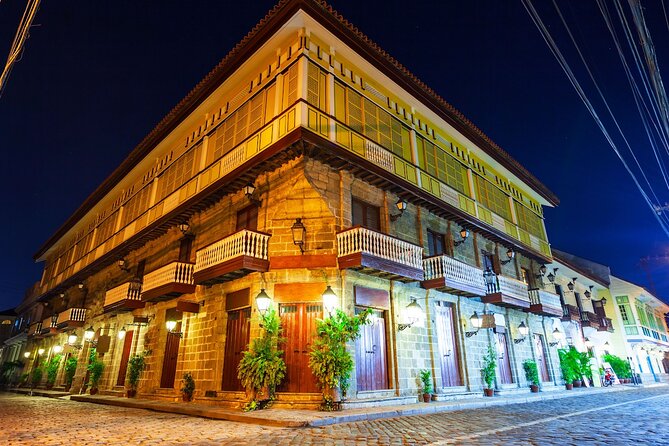
Manila’s story comes into sharp focus inside Intramuros, the old walled city where Spanish churches, military defenses, colonial homes, and World War II memorials sit close together. This private half-day tour gives you a useful first look without asking you to solve Manila’s traffic or arrange several admissions yourself.
I like the private format, which lets the guide slow down for questions or adjust the pace for older relatives. I also like the mix of grand landmarks and sobering sites, from Fort Santiago and San Agustin Church to the Memorare Manila 1945 monument. The main caution is timing: traffic can shorten the visit, and some interiors may be closed, especially on Mondays.
Key points to know before you book
- Fort Santiago anchors the visit: One hour is reserved for Manila’s best-known fortress, with admission included.
- Seven Intramuros stops fit into four hours: Expect a brisk overview rather than a slow museum day.
- Private transport adds real value: Hotel pickup and drop-off help you avoid Manila’s difficult traffic and parking.
- The guide shapes the experience: Arsen, Tessa, Teresita, Victor, and other local guides have been praised for clear English, personal stories, and flexible pacing.
- Some costs are separate: Casa Manila and Baluarte de San Diego each charge PHP75 for adults and PHP50 for children.
- Check opening days before going: San Agustin Church and Casa Manila may be closed on Mondays, so the itinerary may need adjusting.
Why Intramuros is the right place to start
If you have only a few hours in Manila, Intramuros gives you more historical context per block than a broad city drive. The district gathers Spanish colonial buildings, old defensive walls, churches, civic squares, and wartime reminders in one compact area.
That compact layout matters. You are not spending the whole tour moving between far-flung sights. Instead, your guide can explain how Manila developed around the walled settlement, then connect Spanish rule, Filipino life, religion, war, and the city’s modern identity.
The experience is private, so your group is the only group participating. That makes a difference when you want to ask about Filipino ancestry, family history, architecture, or the Battle of Manila. Guides such as Arsen have shared both established historical facts and personal family perspectives, giving the visit a human voice without turning it into a lecture.
The tour lasts about four hours. That is enough for a strong orientation, but not enough for long museum visits at every stop. I would think of it as a guided introduction to old Manila, not a full archaeological or architectural study.
A few more things to do in Manila worth a look
- Intramuros, Manila: Historical Bamboo Bike Tour
★ 4.8 · 583 reviews - Explore Intramuros: Introduction to Philippine History
★ 5.0 · 80 reviews - Experience Manila’s Heritage: Intramuros & More in Half a Day!
★ 5.0 · 76 reviews
Fort Santiago gives the tour its backbone
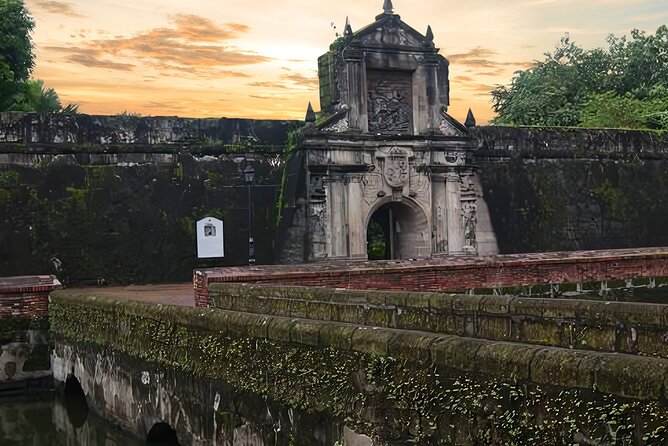
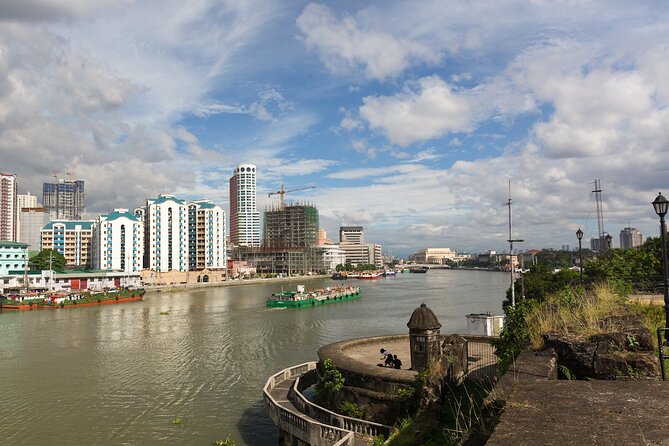
The first major stop is Fort Santiago, with about one hour set aside and admission included. Built in 1571 under Miguel López de Legazpi, the fortress served as a key military defense within Intramuros.
A good guide can make the fort more than a collection of walls and courtyards. Its importance comes from what happened there over centuries: Spanish military control, changing colonial power, and the violence of the Second World War. You get a sense of Manila as a strategic port city, not simply an old quarter with attractive stonework.
The one-hour allocation is sensible. It gives you time to see the main areas, hear the wider story, and ask questions without allowing one site to swallow the entire morning. If you are especially interested in military history, you may wish for more time. For a first visit, the pace should give you a clear framework for the rest of Intramuros.
Fort Santiago is also where the guide’s strengths become most important. Past guides including Arsen, Tessa, and Teresita have been praised for explaining events clearly, answering questions, and connecting national history with family experience. Guide assignments are not guaranteed, but the tour depends heavily on having someone who can turn dates and buildings into a readable story.
Baluarte de San Diego shows the old defenses
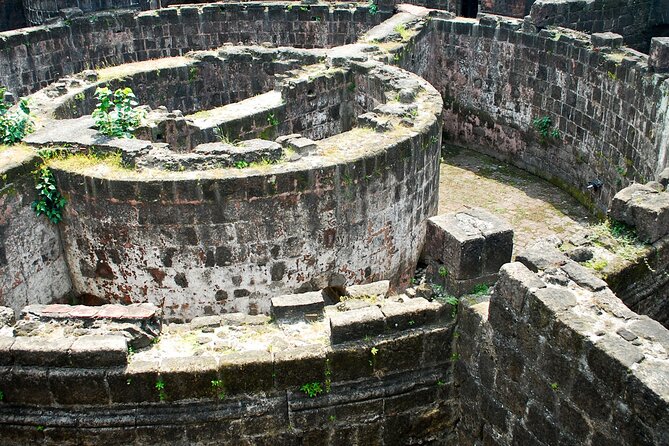
Baluarte de San Diego is a smaller stop, planned for about 30 minutes. This bastion was built in 1586 as part of Intramuros’ defensive system and offers a look at Spanish military architecture from a different angle than Fort Santiago.
I like having both forts in the same tour. Fort Santiago provides the main historical narrative, while Baluarte de San Diego helps you understand the defensive shape of the walled city. The second stop is shorter, so expect a quick visit rather than a long exploration.
Admission is not included. The stated fee is PHP75 for adults and PHP50 for children, paid directly at the site, with assistance from the guide. That is a small extra cost, but you should carry some Philippine pesos or be prepared to pay as directed at the entrance.
Because Manila’s traffic can affect the schedule, Baluarte de San Diego may receive less time if the tour starts late or roads are slow. The private format helps, since the guide can explain the change and keep the visit focused.
The cathedral and Plaza Roma explain civic Manila
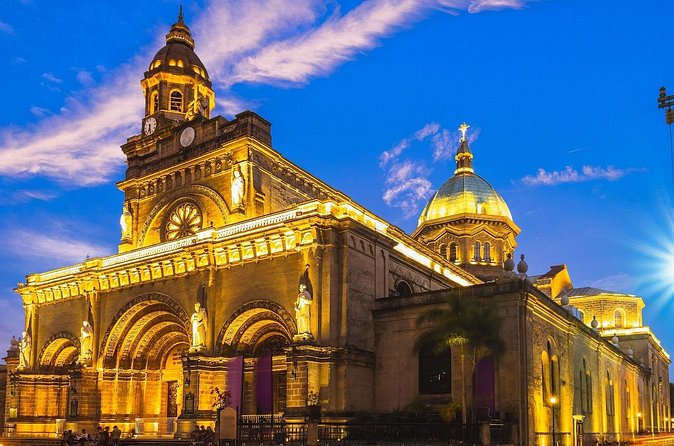
Manila Cathedral receives about 15 minutes. Officially called the Minor Basilica and Metropolitan Cathedral of the Immaculate Conception, it is one of the city’s key Catholic landmarks.
Fifteen minutes is enough for an exterior look, a short explanation, and a possible interior visit when open. It is not enough for a detailed study of the church’s design or long religious observation. Admission is free, but access can depend on services or local conditions.
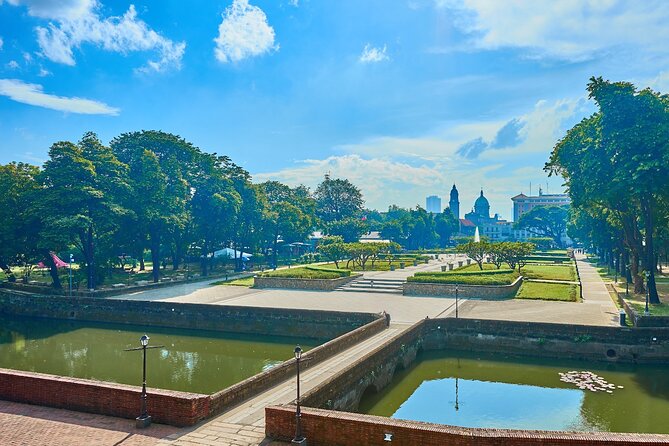
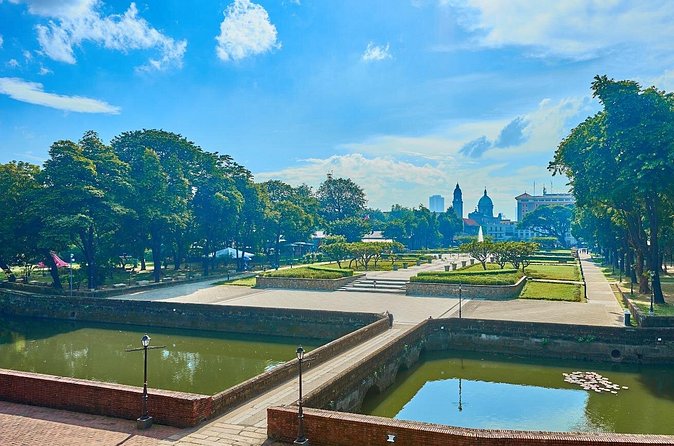
Next comes Plaza Roma, also allotted 15 minutes. During the Spanish colonial period, this square served as Intramuros’ main civic center and was often called Plaza Mayor. Today, it helps you read the district as an organized colonial town, with religious, government, and military power concentrated nearby.
These stops work best when your guide links them together. The cathedral is not just a church, and the plaza is not just an open space. Together, they show how public life in colonial Manila was structured. You will get more from the square if you listen for those connections rather than treating it as a quick photo stop.
Same base, a different kind of day out:
- Experience Intramuros with Bamboo Bicycle – Ecotours
★ 5.0 · 508 reviews - Manila: Intramuros, Chinatown, and Old Manila Half-Day Tour
★ 4.8 · 475 reviews - Manila: Old & New 4-Hour City Tour
★ 4.5 · 458 reviews - Spectacular Manila to Tagaytay: Full-Day Sightseeing Tour
★ 5.0 · 349 reviews
Memorare Manila 1945 brings the hardest history
The Memorare Manila 1945 Monument is a 15-minute stop dedicated to civilians who died during the Battle of Manila in World War II. It is one of the most serious moments of the tour.
The monument changes the tone of the visit. Until this point, you have mainly been looking at colonial power, religious buildings, and fortifications. Here, the focus turns to civilians and the destruction that shaped modern Manila.
I appreciate its inclusion because a tour of Intramuros can otherwise become too polished. Churches and restored buildings tell only part of the story. The memorial reminds you that Manila’s past includes enormous loss, and that the old city you see today was affected by war in a direct and painful way.
The stop is short, but that does not make it unimportant. Your guide’s explanation matters more than a long stay. If you want a deeper study of the Battle of Manila, this tour can give you the starting point, though you would need additional time elsewhere.
San Agustin Church is the architectural highlight
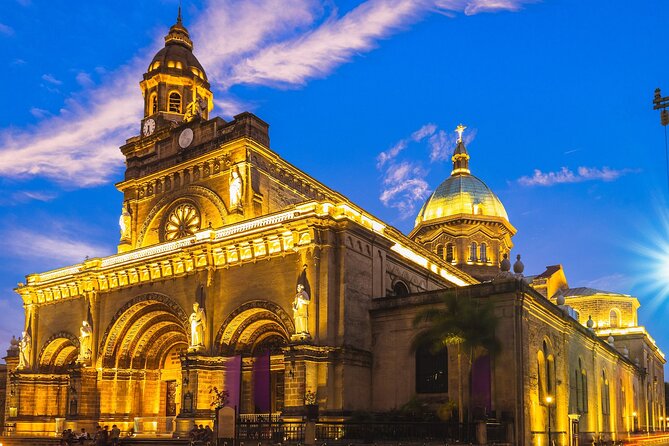
San Agustin Church is the oldest stone church in the Philippines, dating from 1607. It is also part of the Baroque Churches of the Philippines UNESCO World Heritage listing. The tour allows about 30 minutes here, and admission is not included.
This is likely to be one of the most memorable buildings on the route. The age alone is striking, but the church also helps you understand how religion shaped Spanish colonial Manila. It is not simply an old building to photograph. It is a place where architecture, worship, colonial power, and Filipino history overlap.
The 30-minute slot gives you time to look around and hear the main points without losing the rest of the morning. If church interiors are your main interest, you may find the visit too brief. Still, the stop is well chosen for a first tour.
Admission is separate, with the same stated fee of PHP75 for adults and PHP50 for children. Check the day of your visit before booking. One complaint about the experience came from a Monday visit when San Agustin Church and Casa Manila were closed. The guide was described as pleasant, but the advertised route could not be delivered in full. A quick confirmation of opening days can prevent disappointment.
Casa Manila recreates upper-class colonial life
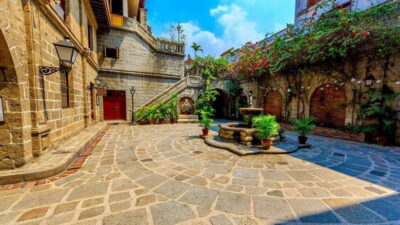
Casa Manila is a reconstructed Spanish colonial house showing how wealthy Filipinos lived in the 19th century. The planned visit is about 15 minutes, with admission paid separately.
This stop adds a social layer that forts and churches cannot provide. You get a look at domestic life, furnishings, and the comforts associated with the wealthy Filipino class often called the ilustrados. It helps you ask who lived inside the colonial system and how status was displayed at home.
Fifteen minutes is a short visit, so do not expect a detailed house museum tour. The value lies in the contrast: Fort Santiago shows military authority, Manila Cathedral and San Agustin show religious authority, and Casa Manila points toward private wealth and social rank.
The entrance fee is PHP75 for adults and PHP50 for children. Like San Agustin Church, Casa Manila may be closed on Mondays. If these interiors matter most to you, ask about availability before the tour begins.
What the private vehicle changes
The tour includes an air-conditioned vehicle, private transportation, fuel, tolls, parking fees, a driver, and a guide. Hotel pickup and drop-off are offered, and the private arrangement can be especially useful if your hotel sits outside the area served by standard group tours.
Manila traffic is not a minor detail. It can be heavy enough to cut into a four-hour schedule, and one practical suggestion from the experience is to start early. A careful driver such as Jeffrey or Arbie can make the journey less stressful, but no driver can remove congestion entirely.
The vehicle is most useful before and after the walking portion. Inside Intramuros, you will still need to walk between some sights. The amount varies with the guide’s route and the needs of your group. Families with older relatives have found the private format useful because the guide could pause for rests and adapt the pace.
If someone in your party has difficulty walking, mention it in advance. The experience is described as suitable for most people, and guides including Victor and Arsen have been attentive to older adults and people who needed periodic sitting. That does not mean the route is fully step-free or free of uneven surfaces, so set realistic expectations.
The guides are the main variable
The tour includes a guide, but you cannot select a particular person from the information provided. Names associated with especially strong experiences include Arsen, Tessa, Teresita Reyes, Victor, and Jocelyn.
The praise is consistent in a few useful ways. Guides have been valued for clear English, strong command of Philippine history, a friendly manner, and a willingness to stop for questions. Arsen in particular has been described as bringing a younger Filipino perspective, while Teresita and Tessa have been praised for their passion and family connections to the past.
That matters because a half-day itinerary can feel flat if the guide only recites dates. The best version of this tour lets you ask why events mattered, how Manila changed, and how Filipino families experienced those changes. One guide was especially appreciated for asking questions after each explanation and shaping the tour around personal interests.
Guide quality can vary from one departure to another, as it can on any guided experience. Still, the private setup gives you a better chance to speak directly with the guide than a large coach tour would.
Is $90 per person a fair price?
At $90 per person, this is not the cheapest way to see Intramuros. The value comes from what is bundled: a private vehicle, driver, fuel, tolls, parking, a guide, hotel transport, and Fort Santiago admission.
For a solo visitor or couple, the price may feel high compared with walking independently. You would save money on a self-guided visit, especially since several landmarks are free or have modest admission charges. But you would also need to manage Manila traffic, navigation, transport, and historical context yourself.
For a family or small group, the calculation improves. Group discounts are offered, and the cost buys a private arrangement rather than seats on a shared coach. You can ask questions, adjust the walking pace, and return to your hotel without arranging another ride.
I see the strongest value for people on a short stay, a family with older relatives, or anyone stopping in Manila before a flight. The tour can turn a complicated few hours into a clear introduction. It is less compelling if you already know Intramuros well or want to spend an entire day inside museums and churches.
Who will get the most from this half-day visit
I would choose this tour if you want structure and historical context without giving up the privacy of your own group. It suits first-time visitors, families, people with limited time, and anyone who prefers a guide to explain what they are seeing.
It also works well for a short layover or the final morning before a flight, provided you leave enough time for traffic and airport requirements. One visitor used it as a way to spend a few hours before flying out, which is exactly the kind of schedule this tour fits.
You should look elsewhere if you want a slow, specialized study of Filipino church art, Spanish fortification design, or World War II. Seven stops in about four hours means some visits will be brief. The tour gives you the outline and key stories, then leaves you room to return to the places that interest you most.
Rain can also affect the experience. The tour requires good weather, and a cancellation caused by poor conditions gives you the choice of another date or a full refund.
Should you book the Manila Historical Highlights tour?
I would book it if you have one morning, want to understand Manila quickly, and value a private guide and door-to-door transport. The strongest parts are Fort Santiago, San Agustin Church, the wartime memorial, and the personal explanations that guides such as Arsen, Tessa, Teresita, and Victor bring to the route.
Before paying, confirm the start time, pickup details, and whether San Agustin Church and Casa Manila will be open. Start early if possible, bring comfortable shoes, and allow for traffic. If you want a calm first encounter with Manila’s old city, this is a practical choice. If you want every stop open and plenty of time at each one, plan a longer visit or use this tour as your orientation day.
FAQ
How long is the Manila Historical Highlights tour?
The tour lasts approximately four hours.
Is this a private tour?
Yes. Only your group participates in the private tour or activity.
Is hotel pickup available?
Pickup and drop-off are offered, with private transportation provided. Confirm the exact arrangement when booking.
What is included in the price?
The price includes an air-conditioned vehicle, private transportation, parking fees, fuel, toll fees, driver, tour guide, guided tour, and admission to Fort Santiago.
Are Casa Manila and Baluarte de San Diego included?
No. Admission to both sites is separate. The stated fee is PHP75 for adults and PHP50 for children at each site, paid directly to the location.
Are meals included?
No. Meals and personal expenses are not included.
Can children participate?
Yes. The tour information provides child admission prices for Casa Manila and Baluarte de San Diego, and most people can participate.
Can I cancel for a full refund?
Yes, if you cancel at least 24 hours before the experience start time. Cancellations or changes made less than 24 hours before the start time are not refunded or accepted.
What happens if bad weather cancels the tour?
If poor weather causes the tour to be canceled, you will be offered a different date or a full refund.
Just added in Manila
- Private Tour: Tagaytay Midlands & Taal Volcano Boat Ride★ 4.5 · 15 reviews
- Tagaytay Adventure: Volcano Views, Countryside, Market & Cruise!★ 4.5 · 14 reviews
- 3 Days Private Tour in Banaue Ifugao visiting Batad Rice Terraces★ 3.5 · 3 reviews
- Tagaytay Day Tour sightseeing with Panoramic Taal volcano view★ 5.0 · 6 reviews
- Tagaytay + Hidden Valley Springs: A Scenic Escape w/ Transfers★ 4.0 · 4 reviews
- Unforgettable Manila Fishing Village Day Excursion 2024★ 5.0 · 4 reviews
- 5 Days Sagada Banaue Batad Discovery (PRIVATE GROUP TOUR Max 6 Travellers)★ 5.0 · 16 reviews
- Shared Old Manila Tour★ 5.0 · 5 reviews
Historical Tours, compared.

Intramuros, Manila: Historical Bamboo Bike Tour
Read our review →
The Original Cebu City Historical and Food Walking Tour
Read our review →
Explore Intramuros: Introduction to Philippine History
Read our review →
Experience Manila’s Heritage: Intramuros & More in Half a Day!
Read our review →
Exploring Cebu City’s rich history and Uphill Tour
Read our review →
Browse the lists this tour appears in