
Reviewed · INTRAMUROS HERITAGE WALKS
Explore Intramuros: Introduction to Philippine History
Intramuros is Manila’s history book, but its pages are scattered across churches, military walls, old houses, and quiet lanes. This three-hour walk brings those pieces together, from the Spanish galleon trade at San Agustin Museum to José Rizal’s final days at Fort Santiago.
I like the small-group format, which keeps the tour more personal and gives you room to ask questions. I also like that admission fees are included, so the $55 price is clear from the start. The main concern is time: three hours is enough for a strong introduction, but a rushed guide may not reach every stop in full.
Key points to know before you book
- Start at San Agustin Church: The meeting point is easy to identify on General Luna Street inside Intramuros.
- See six historic locations: The route covers San Agustin Church and Museum, Casa Manila, Memorare Manila, Manila Cathedral, and Fort Santiago.
- Learn across three centuries: The tour links Spanish rule, Catholic influence, the galleon trade, the independence movement, and World War II.
- Expect a walking tour: Private transportation is not included, and the tour ends at Fort Santiago.
- Small groups matter here: The maximum group size is 15, though the tour may sometimes operate with only a few people.
- Guides add the most value: Jian and Jerome receive especially strong praise for their humor, detail, local insight, and ability to tailor the walk.
Why Intramuros works as a first Manila history lesson
Intramuros means within the walls, and the old district still gives you a clear sense of Manila as a Spanish colonial center. Churches, government buildings, homes, military defenses, and memorials sit close together, making the area practical to explore on foot.
I like this tour because it does not limit the story to grand buildings. The route includes backstreets and smaller corners of Intramuros, places you could easily pass without knowing what happened there. That matters in a district rebuilt after the destruction of Manila during World War II.
You also get a useful timeline rather than six disconnected photo stops. The day begins with Spanish Catholic influence and global trade, moves through upper-class Manila life, then reaches wartime memory and the campaign for Philippine independence.
The tour is particularly useful if you are new to Manila or have only one free morning. It gives you the lay of the district, then leaves the rest of your day open. If you want long museum visits, detailed architecture study, or plenty of time for photographs, you may find the schedule tight.
More history on foot in Manila:
- Intramuros, Manila: Historical Bamboo Bike Tour
★ 4.8 · 583 reviews - Experience Intramuros with Bamboo Bicycle – Ecotours
★ 5.0 · 508 reviews - Manila: Intramuros, Chinatown, and Old Manila Half-Day Tour
★ 4.8 · 475 reviews
San Agustin Church, the best place to begin
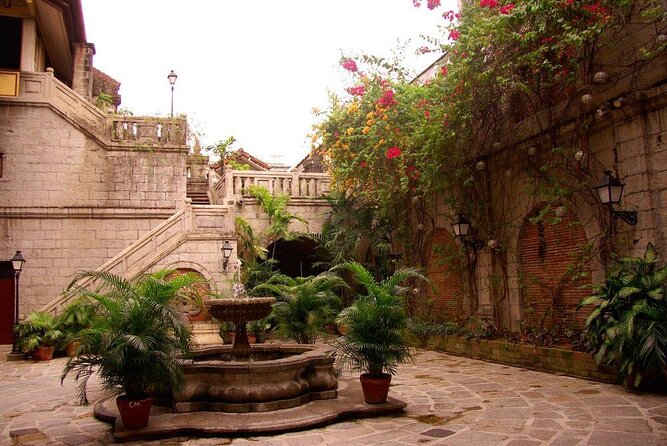
The tour starts at San Agustin Church, the oldest stone church in the Philippines. The building is also described as the only church in Intramuros to survive the bombing of Manila during World War II.
The scheduled stop is brief, about 10 minutes, so think of this as an introduction rather than a full architectural visit. Your guide sets the church in its wider story: Spanish settlement, Catholic power, and the long role religion played in Philippine public life.
The meeting point is one of the tour’s practical strengths. You do not need to search for a hotel pickup or wait for private transport. You meet at San Agustin Church, then continue on foot.
San Agustin Museum and the global galleon trade
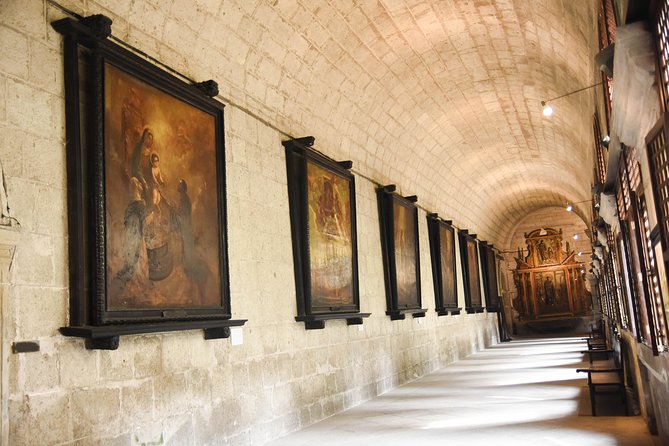
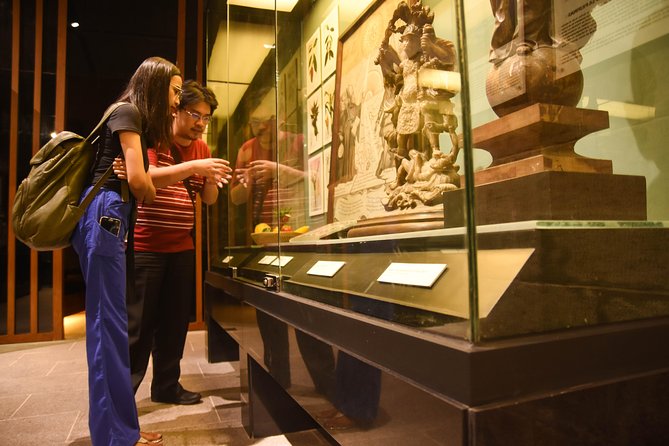
Next door, San Agustin Museum receives about 30 minutes. This is where the tour widens from local church history to international trade.
The Spanish Galleon Trade connected Manila with other parts of the world for centuries. At the museum, you learn how goods, people, religious ideas, and political power moved across that route. The displays also cover the Catholic Church and include artifacts from different periods.
This stop gives the tour useful scale. Intramuros was not simply a walled neighborhood serving Manila. It formed part of a wider Spanish network that crossed the Pacific and linked the Philippines to global commerce.
The museum admission is included in the tour price. That small detail makes the day easier, since you are not stopping to count extra entrance fees at each major site. Thirty minutes is enough for a guided overview, though you should not expect to examine every object at length.
Casa Manila and the world of old Manila’s upper class
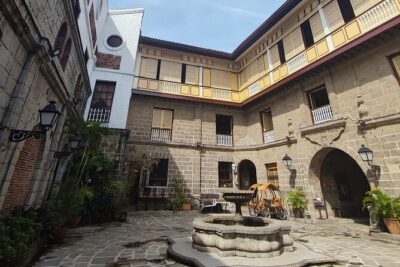
Casa Manila offers a different view of colonial life. The house recreates a turn-of-the-19th-century home belonging to Manila’s upper class, with rooms arranged to show how prosperous families lived.
After the church and museum, this stop helps you picture daily life. Religious institutions and government power tell only part of the story. Casa Manila adds furniture, domestic rooms, household routines, and social status to the picture.
The visit lasts around 30 minutes and admission is included. Your guide’s explanation is important here because a house museum can otherwise become a quick walk through attractive rooms without much context.
For me, Casa Manila is one of the stops that makes the tour feel balanced. You are not only hearing about wars and political leaders. You are also seeing how wealth and Spanish influence shaped home life in Manila.
A few more things to do in Manila worth a look
- Experience Manila’s Heritage: Intramuros & More in Half a Day!
★ 5.0 · 76 reviews - Half-Day Heritage Tour: Manila’s Historic Gems
★ 4.9 · 29 reviews - Tagaytay, Taal Volcano & Heritage Town: A Journey of Discovery
★ 5.0 · 29 reviews - The Original Cebu City Historical and Food Walking Tour
★ 4.5 · 81 reviews
Memorare Manila and the cost of World War II
The Memorare Manila Monument is a short stop of about 10 minutes. It honors innocent people who died during the Battle of Manila in World War II.
This part of the tour shifts the mood. The earlier sites focus on colonial foundations and social life. The monument reminds you that Intramuros is also a place marked by mass destruction and civilian loss.
The guide uses the memorial to explain the Philippines’ role in the war. That context is valuable because the walls and old buildings can make Intramuros seem preserved from the past, when much of Manila suffered terrible damage.
Do not expect a long memorial visit. The stop is short, but it gives the route a needed human focus before you continue to Manila Cathedral.
Manila Cathedral and the continuing role of Catholicism
Manila Cathedral is the seat of the Catholic Church in the Philippines. The stop lasts about 10 minutes and is free to enter as part of the route.
By this point, the church is more than another old building. You have already heard about Spanish Catholic influence at San Agustin and seen religious artifacts in the museum. Manila Cathedral helps connect that past to the continuing place of Catholicism in Philippine life.
The brief visit works best as part of the larger sequence. If you want a full examination of the cathedral’s design or religious art, you may want to return on your own. The tour is using the site to build a national story, not to provide a long church tour.
Fort Santiago and the road toward independence
The tour finishes at Fort Santiago, the old Spanish military stronghold inside Intramuros. This is the largest and most historically weighty stop, with about 30 minutes and admission included.
The fort brings together military rule, political imprisonment, Philippine nationalism, and the movement for independence from Spain. The tour also introduces one of the country’s major heroes, giving you a clearer sense of how the struggle for independence is remembered.
Ending here makes practical sense. The fort is the final destination, so you do not need to retrace your steps to the starting church. It also gives the tour a strong closing point after the earlier discussion of religion, trade, home life, and wartime loss.
The 30-minute visit provides a guided framework, but the fort can reward extra time. If you want to inspect every section at a slow pace, take photographs, or read all available displays, plan to return after the tour if your schedule allows.
What the guides add to the walk
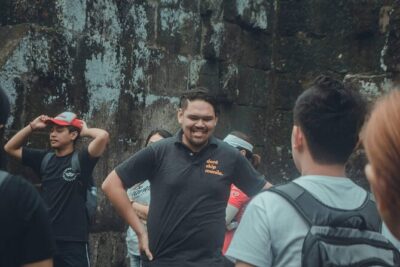
The guide is the main reason to choose this tour over walking Intramuros alone. Jian is repeatedly praised for his historical detail, local insight, patience, and ability to adjust the conversation to a small group or a single person. He also gives useful suggestions for seeing more of Manila after the tour.
Jerome brings a different strength. He is described as funny, warm, helpful, and especially good at making history easy to follow. He can also discuss Filipino languages and culture, which adds depth beyond the basic colonial timeline.
Patrick is also named as part of the guiding team. Since the experience is a group tour, your exact guide is not guaranteed from the information provided. The quality of the experience can depend on how much time the guide gives each stop and how closely the route follows the planned schedule.
One useful detail comes through clearly: some guides tailor the walk when the group is very small. Solo participants and pairs may receive more time for questions and personal interests. On the other hand, a small group does not automatically guarantee a slow pace. One account describes the route as rushed, with not every planned stop completed.
That is the main issue to keep in mind. At the start, tell your guide if you want a measured pace, time for photos, or more detail at a particular site.
Is $55 a fair price?
At $55 per person, this is not the cheapest way to walk around Intramuros. You can visit the district independently, and some sites have no entrance charge. The price needs to earn its place through organization, interpretation, and included admissions.
Here, the fee includes the English-speaking guide, bottled water, and entrance fees for San Agustin Museum, Casa Manila, and Fort Santiago. You also get a planned route covering six locations and a historical thread that would be difficult to assemble from signs alone.
The value is strongest for a first visit. If you want to understand what you are seeing rather than simply photograph old buildings, the guide can save you time and provide context. The small group, capped at 15, also offers a more personal setup than a large coach excursion.
The value is weaker if you already know Philippine colonial history or prefer to explore museums at your own pace. In that case, $55 may feel high for three hours, especially if the guide moves quickly or skips part of the route.
The current score is 4.9 from 80 ratings, with 96 percent recommending the experience. Those figures suggest a strong overall record, but they do not remove the need to manage your expectations about pace.
Timing, comfort, and what to bring
The tour lasts approximately three hours and requires walking between sites. Private transportation is not included, so you should be ready to move through Intramuros on foot.
Bottled water is provided, and the route includes a break according to the tour details. That pause matters in Manila’s heat, especially if you are not used to walking outdoors for several hours.
Wear comfortable shoes and bring sun protection. The tour is suitable for most people, but the information does not promise wheelchair access or a fully step-free route. If mobility is a concern, ask the provider before booking.
The tour requires good weather. If poor weather causes cancellation, you are offered another date or a full refund. You can also cancel for a full refund up to 24 hours before the start time. Changes or cancellations made inside that period are not refunded.
Who should book this Intramuros tour?
I would choose this tour if you are visiting Manila for the first time, have a half-day available, and want a clear introduction to Philippine history. It also suits solo visitors who prefer company, families with young adult children, and anyone who wants a guide to explain the meaning behind the sites.
It is a good match for curious people who enjoy asking questions. The strongest guides appear to bring humor and personal detail to the walk, rather than reciting a fixed script.
I would hesitate if you want a slow museum day, a private tour guaranteed from the start, or a detailed examination of every building. The maximum group size is reasonable, but the pace can vary. Ask at the beginning for the full route and let the guide know what interests you most.
Should you book Explore Intramuros?
Book it if you want a well-organized first look at Manila’s walled city and prefer history explained in plain language. The route covers a lot: Spanish rule, Catholicism, global trade, upper-class life, World War II, and the independence movement.
The best reason to go is the combination of key sites and strong guiding, particularly if you are paired with Jian or Jerome. The main caution is pace. Three hours gives you a useful framework, not an exhaustive visit.
For most first-time visitors, $55 is reasonable because admissions, water, and a small group are included. Treat the tour as your orientation to Intramuros, then return to Fort Santiago, San Agustin Museum, or Casa Manila later if one of them catches your interest.
FAQ
Where does the tour start?
The tour starts at San Agustin Church on General Luna Street in Intramuros, Manila.
Where does the tour end?
The tour ends at Fort Santiago, the old Spanish military stronghold inside Intramuros.
How long does the experience last?
The tour lasts approximately three hours.
What is included in the $55 price?
The price includes an English-speaking guide, bottled water, and all entrance fees.
Is transportation included?
No. Private transportation is not included. The experience is a walking tour between the historic sites.
What is the maximum group size?
The tour has a maximum of 15 participants.
Can I cancel for a refund?
Yes. You can cancel at least 24 hours before the start time for a full refund. If poor weather causes the tour to be canceled, you are offered another date or a full refund.
Just added in Manila
- From Manila: Villa Escudero Guided Tour★ 5.0 · 19 reviews
- Breathtaking Cultural Experience in Villa Escudero★ 4.5 · 15 reviews
- Solo Traveler Friendly Manila Walk w/ Mobile Photography★ 5.0 · 22 reviews
- Day hike to Mount Daraitan with Tinipak River 2024★ 5.0 · 22 reviews
- Manila Street food and Night Market Tour★ 4.7 · 21 reviews
- Manila: Binondo Chinatown Guided Walking Tour★ 5.0 · 27 reviews
- From Manila: 4-Day Sagada and Banaue Rice Terraces Tour★ 4.9 · 29 reviews
- From Manila: 2-Day Buscalan Tour with Apo Whang-od★ 3.6 · 29 reviews
Intramuros Heritage Walks, compared.

Intramuros, Manila: Historical Bamboo Bike Tour
Read our review →
Experience Intramuros with Bamboo Bicycle – Ecotours
Read our review →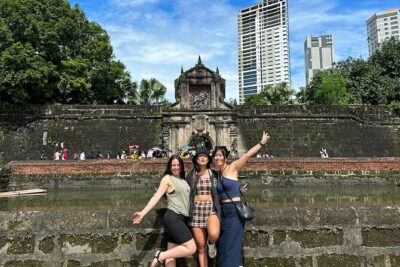
Intramuros, Chinatown, and Old Manila Half-Day Tour
Read our review →
Manila Food Tour: Explore World’s Oldest Chinatown
Read our review →
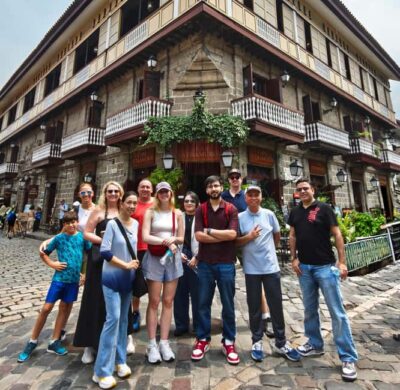
Experience Manila’s Heritage: Intramuros & More in Half a Day!
Read our review →Browse the lists this tour appears in