
Reviewed · TOURS IN MANILA
Manila: Guided Tuk Tuk Ride
Manila reveals itself best at street level, and this tour puts you right there. You ride a tuk tuk through the area around Divisoria, walk through markets and local neighborhoods, sample street food, and use everyday transport such as a jeepney or tricycle.
I like the mix of market life and local transport, and I like that guides such as Venus and Floyd add context instead of simply pointing out sights. The main drawback is that the route can feel intense: narrow streets, traffic, heat, crowds, and poor housing are part of the experience.
Key points
- Divisoria at street level: Shop for low-cost goods, watch market trade, and see how locals buy food and household supplies.
- Several ways to move: The experience may include a tuk tuk, jeepney, and Lamborghini tricycle, plus plenty of walking.
- Local food tasting: Expect street food, food stalls, beverages, and Filipino specialties, including a famous egg dessert.
- Strong local guiding: Venus, Floyd, and Frank are praised for their warmth, humor, local insight, and care with small groups.
- A look beyond the postcard Manila: The route includes working neighborhoods and modest housing areas, not only polished tourist sights.
Why this tuk tuk ride shows you a different Manila
A standard city tour can give you Manila’s major landmarks and a neat historical outline. This experience takes another route. It focuses on how the city works day to day, from wholesale shopping lanes and wet-market stalls to improvised housing areas and public transport.
That makes it a useful first-day activity. You get a quick sense of Manila’s scale, noise, prices, transport habits, and social contrasts. Instead of spending two hours behind a vehicle window, you stop, walk, taste, ask questions, and watch ordinary trade taking place around you.
The tone is practical rather than polished. You may see poor housing and working-class neighborhoods at close range. A good guide helps you understand these places as communities where people live, work, shop, and support one another, rather than treating them as scenery.
The experience is also flexible in spirit. It welcomes solo visitors, couples, and small groups, with a maximum of 12 participants. That size matters in market lanes, where a large party would be awkward and would make it harder to hear the guide.
Other trips people book in Manila:
- Intramuros, Manila: Historical Bamboo Bike Tour
★ 4.8 · 583 reviews - Experience Intramuros with Bamboo Bicycle – Ecotours
★ 5.0 · 508 reviews - Manila: Intramuros, Chinatown, and Old Manila Half-Day Tour
★ 4.8 · 475 reviews
Starting at Tutuban Center Mall
Your meeting point is the entrance to Tutuban Center Mall. Look for the Bonifacio Monument near the Lawson convenience store. This is an important detail because Tutuban is a busy area, and a clear landmark will save you from wandering around with a phone in hand.
From there, the route heads into Manila’s commercial streets. Tutuban places you close to Divisoria, a major shopping area known for low prices and a huge range of goods. You might see clothing, household items, food, small retail stalls, and shops aimed at local shoppers rather than international visitors.
The opening section helps you get used to the pace. People are buying, selling, carrying, bargaining, and moving through tight spaces. Keep your belongings close, wear comfortable shoes, and expect a city experience rather than a quiet sightseeing walk.
Divisoria markets, shopping, and the wet market
Divisoria is the heart of this outing. Its value is not simply that you can find cheap products. It gives you a look at how Manila’s local economy operates, with shopkeepers, market sellers, food vendors, and shoppers sharing crowded streets and narrow alleys.
The wet-market portion adds another layer. You can see fresh produce, seafood, and other daily goods being bought and sold. This is a working market, so the sights, smells, noise, and damp floors may be stronger than you expect. If you prefer tidy indoor attractions, this part may test your comfort.
I like this section because it answers questions that polished sightseeing often leaves out. Where do people shop for food? How do sellers display goods? What does a normal shopping trip look like when the city is built around small stalls and close contact?
You will also have time to browse and shop. Do not expect a carefully managed retail stop with fixed prices and a quiet place to compare products. The fun is in seeing the trade up close, and you may find useful bargains if you are prepared for a busy setting.
Walking through local neighborhoods
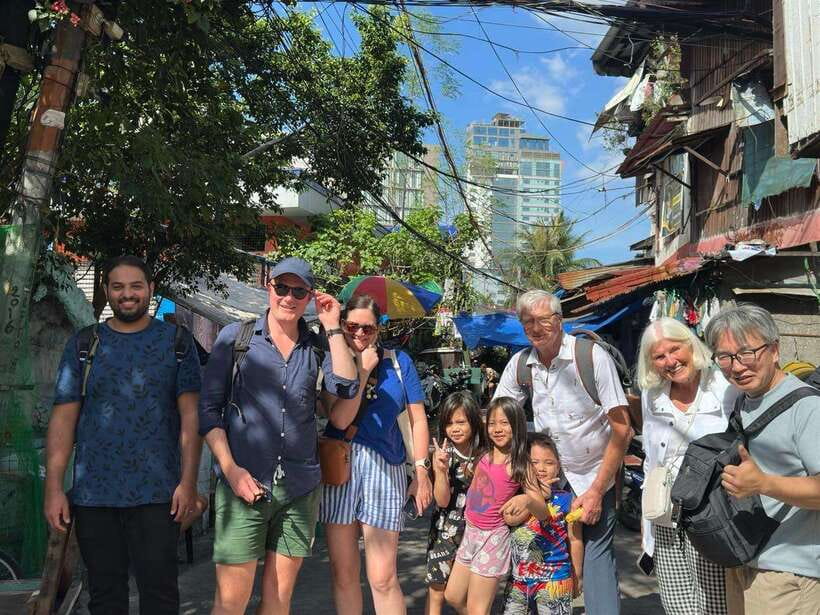
The walking sections are what give the tour its human scale. You pass through areas that many first-time visitors would not find on their own, including modest housing and neighborhoods connected to the market economy.
This can be eye-opening, but it deserves a respectful attitude. You are seeing people’s homes and daily routines, not a display arranged for sightseeing. Listen to your guide, ask questions with care, and avoid treating poverty as a photo opportunity.
The strongest guides help you make sense of the contrasts. Floyd is praised for explaining how different parts of Manila fit together, while Venus is noted for her warm, engaging manner and strong local knowledge. Frank is also described as offering useful information about the area and its past.
These walks may be especially useful if you want to understand how the middle class and poorer communities live in relation to one another. You will not get every answer in two hours, but you will leave with a more grounded sense of Manila than a quick drive past major sights can provide.
A few more things to do in Manila worth a look
- Manila: Guided Sunset Bamboo Bike Tour in Intramuros
★ 4.8 · 119 reviews - Manila: Guided Night Market Experience
★ 5.0 · 54 reviews - Manila: Hidden Gems Guided Tour
★ 4.8 · 47 reviews - Manila: Guided Food Tour of Binondo with Tastings
★ 4.8 · 38 reviews
Tuk tuk, jeepney, and tricycle rides
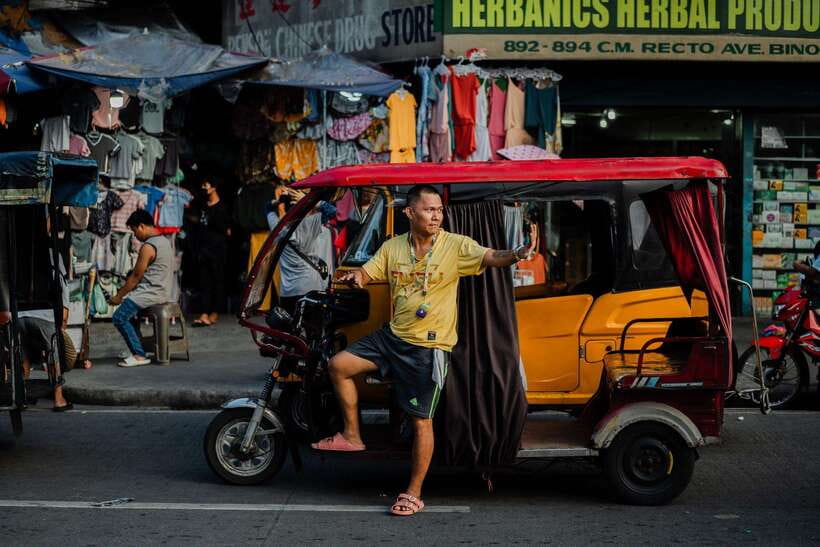
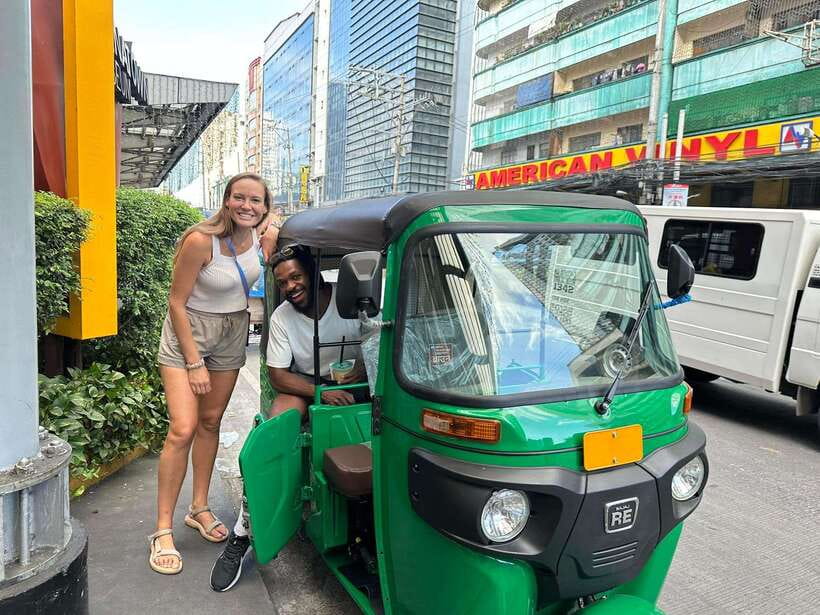
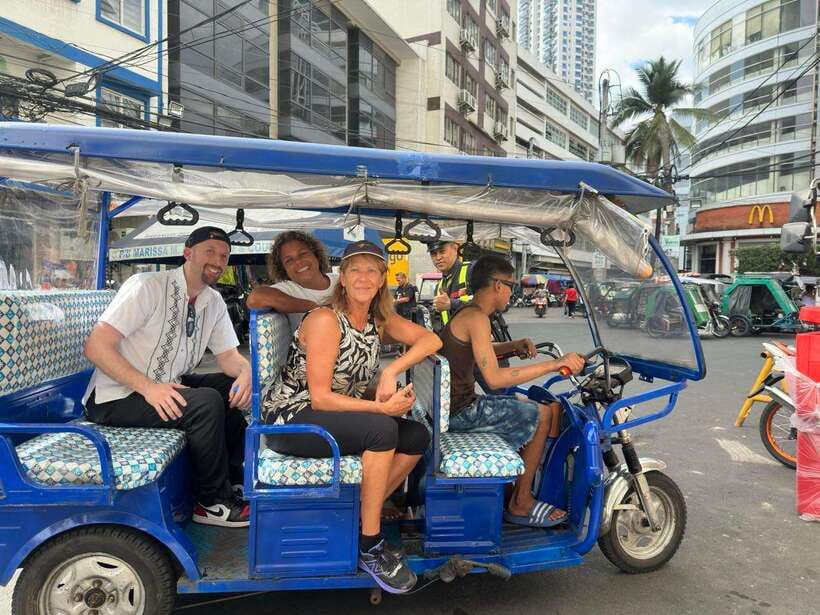
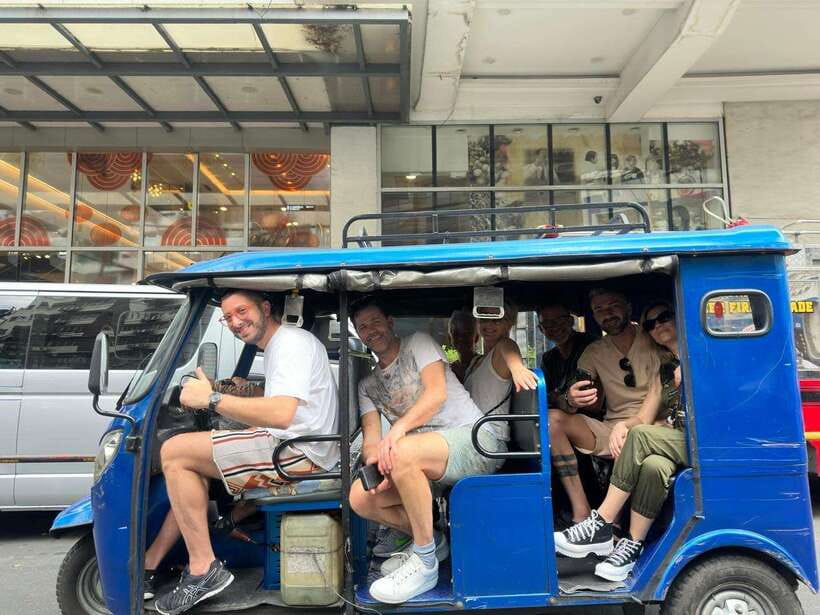
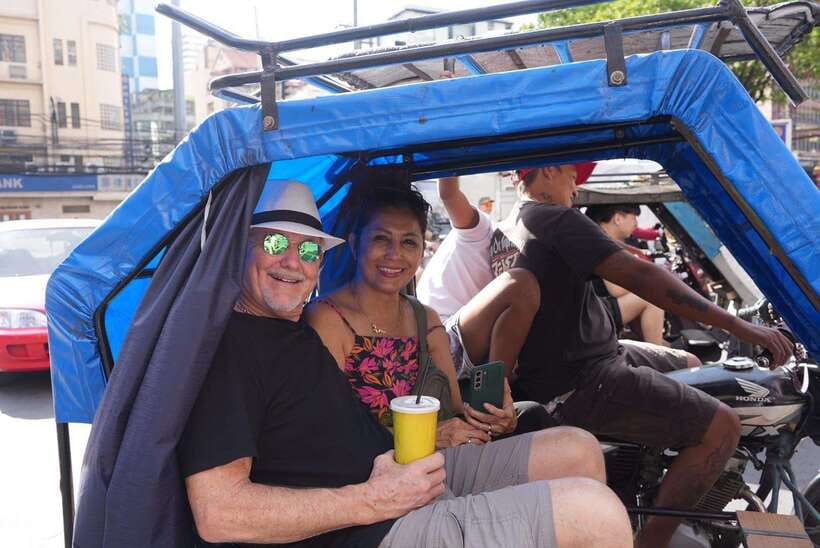
The transport is a major part of the appeal. Rather than using one vehicle for the entire route, you may ride several typical Manila vehicles, including a tuk tuk, a jeepney, and a Lamborghini tricycle.
The tuk tuk gives you an open, close-to-the-street view. You feel the traffic, hear the city, and see shop fronts and side streets at a slower pace than from a standard tour bus. It is fun, but it is not a luxury ride. Comfort can be limited, and traffic can make the journey noisy and bumpy.
The jeepney is just as important from a cultural point of view. It is one of the most recognizable forms of transport in the Philippines, and using one helps you understand how people move around Manila. The ride is part of the lesson, not just a way to get from one stop to the next.
The tricycle adds another local touch. Some descriptions call it a Lamborghini tricycle, a playful name for a small, practical vehicle rather than a high-end car. One of the strongest parts of the experience is the change in pace and viewpoint as you move between vehicles and walking.
Because the group is limited to 12, the transport changes should be easier to manage than they would be with a large tour party. Still, you should expect some waiting, close quarters, and the normal unpredictability of city traffic.
Street food and Filipino flavors
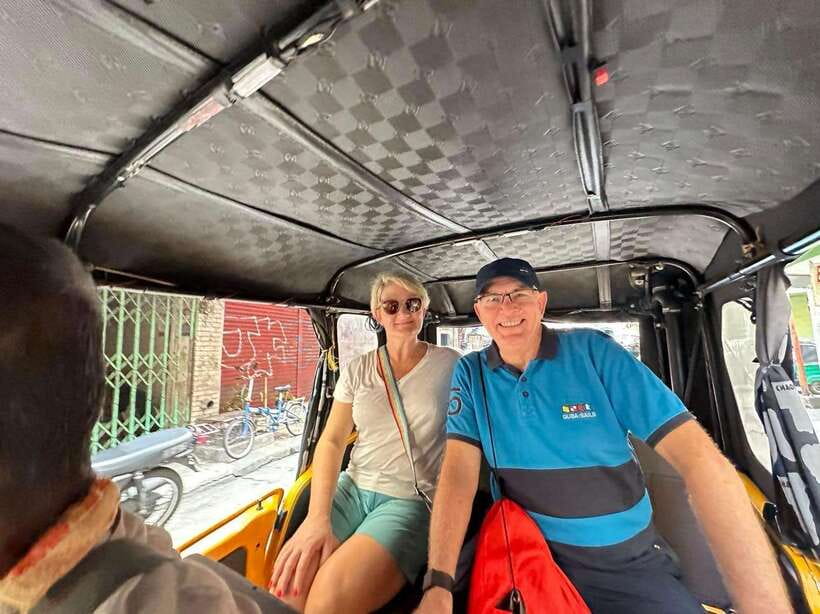
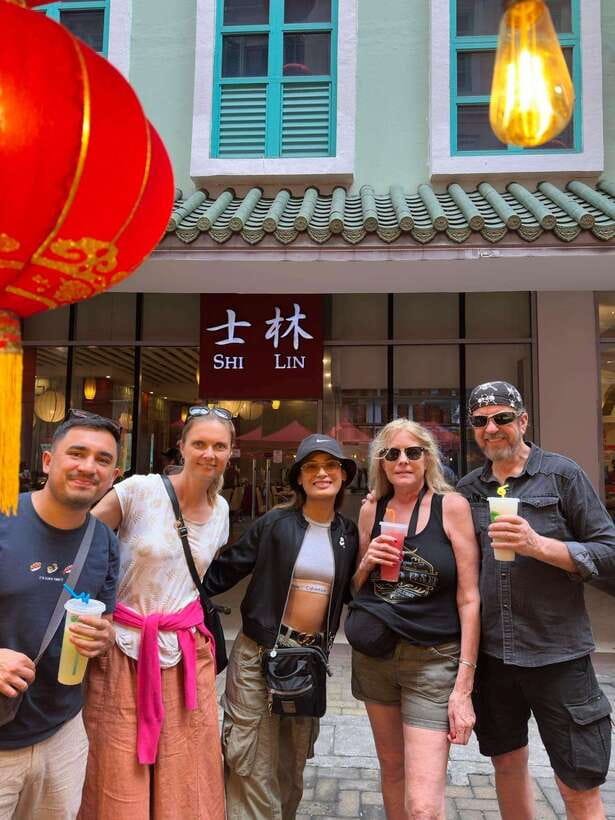
Food is woven into the route rather than treated as a separate restaurant meal. You may stop at food stalls, sample street food, and try Filipino snacks and beverages while moving through the market districts.
One experience includes a famous egg dessert, and other comments refer to food tasting and a rooftop drink. The exact food selection can change, so do not book this expecting a fixed tasting menu. The point is to try small local items in the places where people actually buy them.
Your guide is important here. If you are unsure about a dish, ask what it contains and how it is normally eaten. You can also tell the guide about allergies or foods you avoid, although the provided information does not promise special dietary arrangements.
I like this approach because food becomes part of the neighborhood story. You see what is sold, who is eating it, and how snacks fit into daily work and shopping. It feels more useful than stopping at a restaurant chosen only because it is easy for a tour group.
Still, street food requires common sense. Choose only what you are comfortable trying, follow your guide’s advice, and carry water. The tour’s heat, walking, food, and traffic together can make the two hours feel full.
The guides make the biggest difference
The guide can shape this experience more than any single stop. Venus is praised for her energy, friendliness, and ability to make people feel comfortable. Floyd is repeatedly described as warm, funny, attentive, and able to answer a wide range of questions. Frank is noted for his understanding of the local area and history.
That range of names suggests that the exact guide may depend on the date. You should expect an English-speaking local guide, but you may be led by Venus, Floyd, Frank, or another member of the team.
The best part of the guiding is the personal context. You can ask about market prices, transport, neighborhoods, food, and the differences between parts of Manila. One guide even stayed longer to help make the outing more memorable, though you should not assume extra time is guaranteed.
You also get reassurance in an unfamiliar setting. The markets can feel confusing at first, and the guide helps you move through them with more confidence. For a first visit to Manila, that support is worth a good share of the price.
Is $66 a fair price for two hours?
At $66 per person, this is not the cheapest way to walk through Divisoria. You could visit the shopping district on your own for far less, especially if your goal is simply to browse stalls or buy goods.
The price makes more sense if you value interpretation and practical support. It covers a local English-speaking guide, a small-group format, walking, and rides on local transport. You are also paying for the route design, the food stops, and the confidence of entering areas that may feel hard to read on your own.
The experience is particularly good value for a first day in Manila. It helps you understand the city before you tackle markets, jeepneys, and neighborhoods independently. It can also save time because you are not working out every turn and transport connection yourself.
I would not choose it if you want a relaxed scenic ride or a traditional list of famous landmarks. You are paying for access to daily city life, not for air-conditioning, grand interiors, or a long historical lecture.
Timing, comfort, and who should book
The activity is advertised as lasting two hours, with a start and finish at Tutuban Center Mall. The itinerary information also refers to a three-hour visit in Manila, so confirm the exact timing when you book and check the available start times for your date.
You will walk through markets and neighborhoods, sit in small local vehicles, and spend time in traffic. Wear light, comfortable clothing and shoes that handle uneven streets. Keep your schedule flexible enough that a short delay does not cause trouble with a flight or another fixed appointment.
The experience is not suitable for people with high blood pressure or pregnant women. The combination of walking, heat, traffic, close quarters, and transport changes may also be tiring for anyone who has trouble with long periods on their feet.
I would recommend it most to:
- First-time visitors who want help getting oriented
- Solo visitors who want a small group and local company
- Couples who prefer ordinary city life to formal sightseeing
- Food-minded visitors who enjoy trying small local dishes
- People curious about public transport and working neighborhoods
I would be more cautious if you dislike crowds, market smells, modest housing areas, or spontaneous street food. This is not a sanitized version of Manila, and that is precisely why it can be so useful.
Should you book the Manila tuk tuk ride?
Book it if you want to see Manila from close range and are willing to trade comfort for access. The best reasons are the mix of Divisoria shopping, wet-market activity, street food, local housing areas, and transport by tuk tuk, jeepney, and tricycle.
The guides are another strong reason to go. Venus, Floyd, and Frank are all associated with friendly, informative leadership, and the small group gives you a better chance to ask questions.
Skip it if your priority is famous landmarks, quiet streets, or a predictable schedule. For everyone else, especially on a first visit, $66 is a reasonable price for a guided introduction to the parts of Manila that are easiest to miss and hardest to understand alone.
Cancellation is free up to 24 hours before the activity, and you can reserve now and pay later. That gives you some flexibility while you decide how this energetic, street-level outing fits into your Manila plans.
FAQ
Where does the tour start and finish?
It starts and ends at Tutuban Center Mall in Manila. Meet at the entrance near the Bonifacio Monument and Lawson convenience store.
How long does the experience last?
It is advertised as a two-hour activity. The itinerary also refers to a three-hour visit in Manila, so confirm the exact duration and start time for your booking.
What languages are available?
The tour is conducted in English with a live local guide.
What transport is included?
The experience includes a walking tour and a ride on local transport. Depending on the route, this may include a tuk tuk, jeepney, or Lamborghini tricycle.
Is food included?
Food tasting is part of the experience. You may sample street food, food-stall items, Filipino specialties, and beverages, but the exact selection can vary.
Who should not take this tour?
The activity is not suitable for people with high blood pressure or pregnant women. It also involves walking, traffic, market conditions, and rides in small local vehicles.
Just added in Manila
- From Manila: Villa Escudero Guided Tour★ 5.0 · 19 reviews
- Breathtaking Cultural Experience in Villa Escudero★ 4.5 · 15 reviews
- Solo Traveler Friendly Manila Walk w/ Mobile Photography★ 5.0 · 22 reviews
- Day hike to Mount Daraitan with Tinipak River 2024★ 5.0 · 22 reviews
- Manila Street food and Night Market Tour★ 4.7 · 21 reviews
- Manila: Binondo Chinatown Guided Walking Tour★ 5.0 · 27 reviews
- Tagaytay, Taal Volcano & Heritage Town: A Journey of Discovery★ 5.0 · 29 reviews
- From Manila: 2-Day Buscalan Tour with Apo Whang-od★ 3.6 · 29 reviews
Tours in Manila, compared.

Intramuros, Manila: Historical Bamboo Bike Tour
Read our review →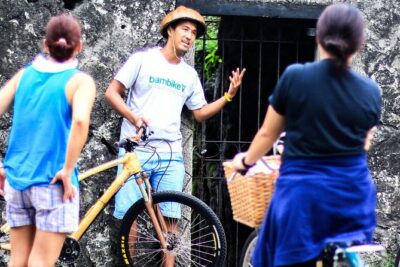
Experience Intramuros with Bamboo Bicycle – Ecotours
Read our review →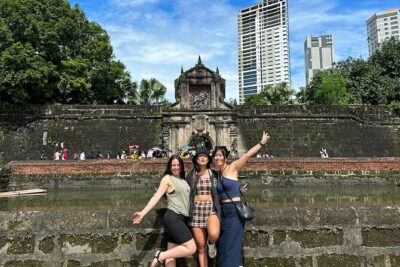
Intramuros, Chinatown, and Old Manila Half-Day Tour
Read our review →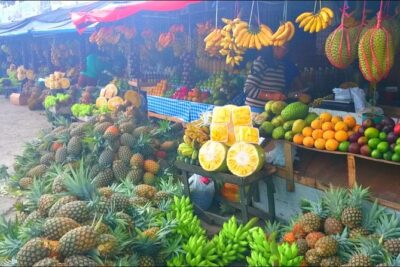
Spectacular Manila to Tagaytay: Full-Day Sightseeing Tour
Read our review →
Makati Nightlife: VIP Access to Clubs, Rooftops & Go-Go Bars
Read our review →
Discover Tagaytay’s Countryside: Half-Day Sightseeing Tour
Read our review →
Manila Food Tour: Explore World’s Oldest Chinatown
Read our review →Browse the lists this tour appears in