
Reviewed · INTRAMUROS HERITAGE WALKS
A Night in Old Manila: Intramuros Walking Tour
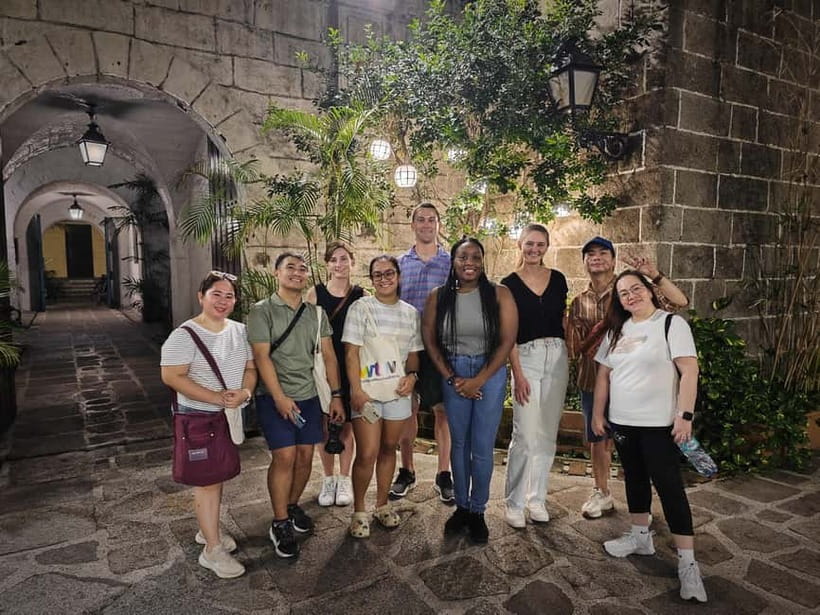
Fort Santiago changes character after sunset. Its walls, gates, and stone paths take on a quieter mood, while a good guide gives the old city a human voice. This two-hour walk covers the major sights of Intramuros, with the longest stop at Fort Santiago and a final look at colonial life in Casa Manila.
I like the mix of serious history and evening atmosphere, especially the dungeon and Dr. Jose Rizal’s chapel cell. I also like the guides’ practical style: Steven has helped families feel at ease, while Cedhie used old photographs to make difficult events easier to understand. The main consideration is the pace. You cover several sites in two hours, so this is an introduction rather than a slow, detailed study of Intramuros.
Key points at a glance
- Fort Santiago gets the most time: Plan on about one hour for the citadel, including its dungeon and Rizal’s final days.
- The evening setting matters: Lit streets and old walls give Intramuros a different feel from a daytime visit.
- Guides shape the experience: Steven, Steve, and Cedhie have been praised for clear explanations, local stories, and an easygoing manner.
- The route packs in major landmarks: You visit Manila Cathedral, Memorare Manila 1945, San Agustin Church, Plaza San Luis, and Casa Manila.
- The tour suits families: One parent brought an 8-year-old child, who enjoyed the walk despite the historical subject.
- Bring rain protection: An umbrella is sensible, and bottled water is included.
Why Intramuros works so well after dark
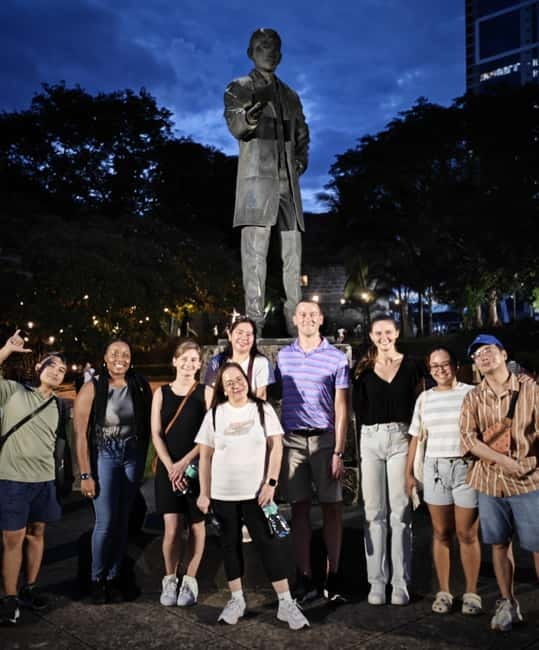
Intramuros is Manila’s walled city, and nightfall gives its stone streets a calmer setting. The tour begins at 5:30 PM, when the fading daylight can blend with the lights around the old fortifications. You get the atmosphere of an evening walk without giving up the structure of a guided sightseeing tour.
I like this timing for two reasons. First, the heat may be easier to manage than during the middle of the day, though the Philippines can still feel warm and humid. Second, the lights help you notice the mood of the place. Fort walls, churches, courtyards, and old buildings can feel more dramatic after sunset.
This is not a ghost tour, but the darker setting gives some of the wartime stories extra weight. Your guide discusses the dungeon, the violence connected with Manila’s past, and the final days of Jose Rizal. The tone is educational, not theatrical.
More history on foot in Manila:
- Intramuros, Manila: Historical Bamboo Bike Tour
★ 4.8 · 583 reviews - Experience Intramuros with Bamboo Bicycle – Ecotours
★ 5.0 · 508 reviews - Manila: Intramuros, Chinatown, and Old Manila Half-Day Tour
★ 4.8 · 475 reviews
Meeting at Fort Santiago and setting the pace
The stated meeting point is the Fort Santiago Ticket Booth, with a 5:15 PM call time and a 5:30 PM start. Another activity detail names United Philippine Lines as the starting location, so I would confirm the exact meeting pin with the operator before setting out. WhatsApp and Viber are available for arrival questions or assistance.
That small check matters in Intramuros. A late arrival can be awkward when a walking group has already entered the fort. Arrive early enough to find the booth, meet the guide, and deal with traffic or a wrong turn without starting the tour in a rush.
The group can include up to 25 people. That is large enough to give the tour a social feel, but it may mean standing close to the guide at busy points. A private group is available if you want a more personal pace or have a special interest in the area.
The route is wheelchair accessible, though the tour still involves walking around historic sites. Older stone surfaces, fortress areas, and changing ground conditions can affect comfort. The activity is not suitable for people over 95, according to the provided tour information.
Fort Santiago: one hour inside Manila’s citadel
Fort Santiago is the main event. You spend about an hour here, which gives the guide enough time to explain the site rather than simply lead you through it. This citadel played a major role in Philippine history, and its walls help make the past feel physical rather than abstract.
Expect stories about the fort’s military role, its place in Manila, and the people connected with it. The guide also takes you to the dungeon, where wartime stories become much darker. This is one of the strongest parts of the walk for anyone who wants more than pretty buildings.
The dungeon deserves a careful tone. It connects the fort to suffering and loss, so you should not expect a light sightseeing stop. A good guide can help you understand the setting without turning tragedy into entertainment. Cedhie’s use of old photographs is especially useful here, since images can make unfamiliar events easier to picture.
Fort Santiago also links closely with Dr. Jose Rizal. You visit the chapel cell associated with his final days, an important stop for understanding the national hero’s last hours before his execution. The visit is brief compared with a full museum tour, but the guide’s explanation gives the room a clear place in the larger story of the Philippines.
Manila Cathedral and the changing face of Intramuros
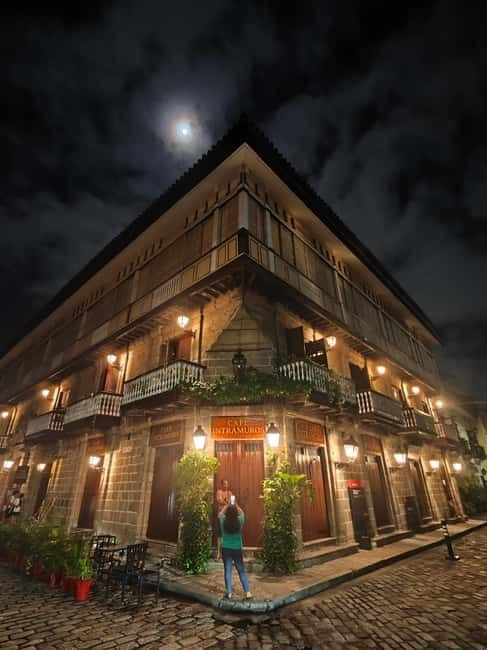
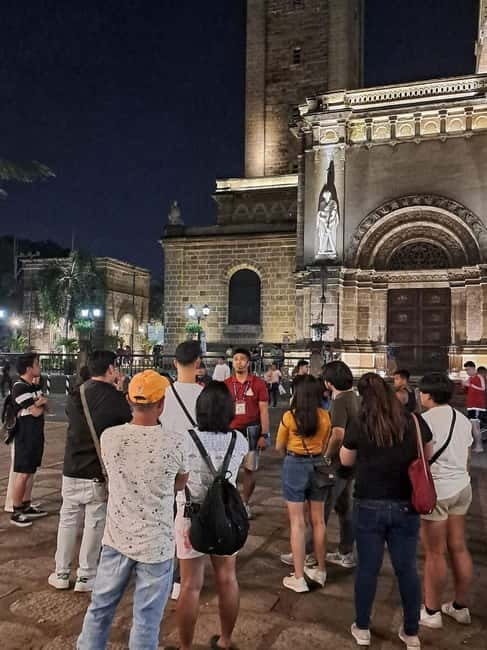
After Fort Santiago, the walk continues to Manila Cathedral for about 15 minutes. This is a short guided stop, so you should expect an overview rather than a long architectural lecture or extended time inside.
The cathedral helps show that Intramuros is not only a military site. Religious buildings shaped the walled city as much as its defenses did. Your guide can connect the cathedral to the role of Catholicism in colonial Manila and to the wider development of the old city.
Fifteen minutes is enough to orient yourself and take photographs, but not enough for a detailed study. If the cathedral is your main reason for visiting, you may want to return on your own. On this tour, it works best as part of the wider sequence.
A few more things to do in Manila worth a look
- Manila: Street Food and Drinks Walking Tour with Tastings
★ 4.8 · 114 reviews - Viva Old Manila: Intramuros Walking Tour
★ 4.9 · 104 reviews - Manila: Sightseeing and Food Walking Tour with Tastings
★ 4.7 · 68 reviews - Manila: Intramuros Walking Tour.
★ 4.9 · 63 reviews
Memorare Manila 1945 and the difficult wartime past
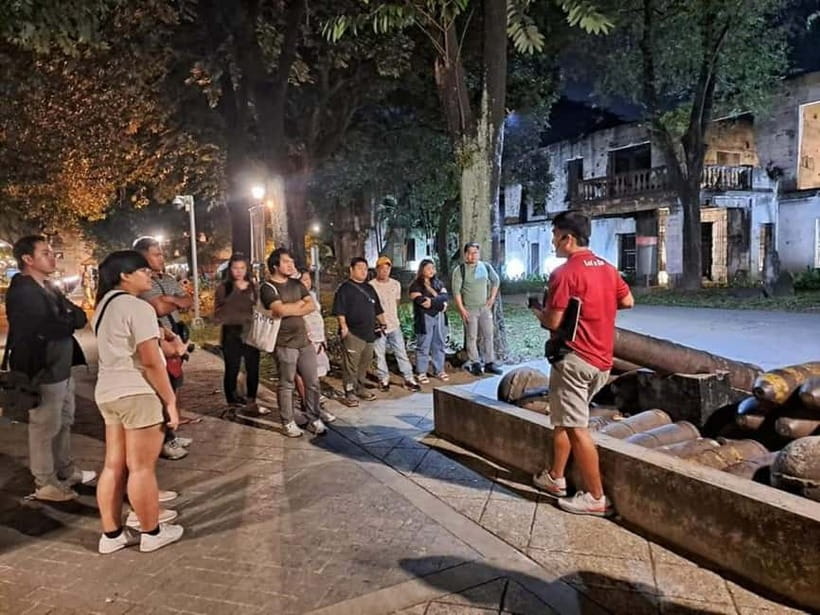
The next stop is Memorare Manila 1945, with about 15 minutes of guided time. This memorial addresses the destruction and civilian suffering associated with the Battle of Manila in 1945.
It is a quiet counterpoint to the fort and churches. The memorial asks you to think about the people affected by war, not only the buildings that survived. I value this kind of stop because it prevents the tour from presenting Intramuros as a preserved colonial stage set.
The subject can be heavy, especially when paired with the dungeon. Still, it gives the evening walk a useful balance. You are not just looking at attractive walls under lights. You are learning why so much of Manila’s old center had to be rebuilt and why memory remains part of the city’s identity.
San Agustin Church and a brief colonial pause
San Agustin Church receives another 15-minute guided visit. As part of the Intramuros route, it adds an important religious and architectural layer to the evening.
The short stop lets you see how church life fitted into the Spanish colonial city. Your guide can point out the building’s place within Intramuros and explain why it matters, but you should not expect a full church tour at this pace.
That time limit is the tradeoff throughout the experience. You see more landmarks than you could comfortably cover alone in two hours, but each stop receives a compact explanation. I find that useful on a first visit. You leave with a map in your head and can decide which places deserve a longer return visit.
Plaza San Luis and the look of old Manila
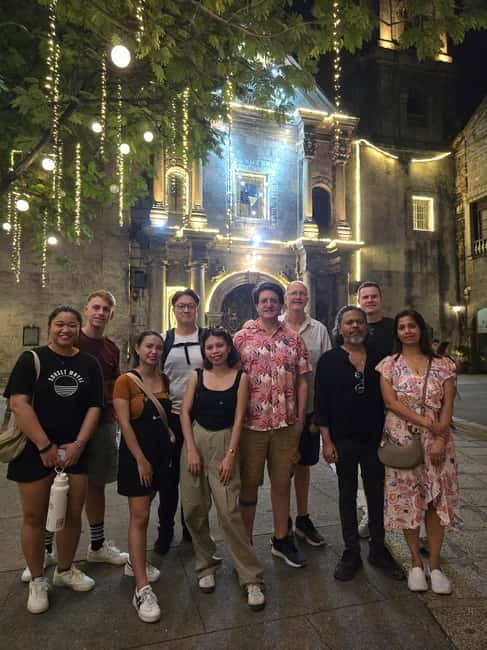
The route then reaches the Plaza San Luis Complex for about 15 minutes. This stop shifts attention from war and religion to colonial-era domestic life and urban design.
The complex helps you picture how old Manila may have looked beyond its fortifications. The guide’s stories can make the façades and courtyards more meaningful, especially if you are not already familiar with Spanish colonial architecture.
This is also where the tour’s evening mood works well. Lit buildings and quieter lanes can make the area feel removed from modern Manila, even though the city is close by. Keep your expectations sensible, though. A 15-minute stop gives you an introduction and photo time, not a full examination of every building.
Casa Manila: ending with colonial life
The tour finishes at Casa Manila. This is a smart ending because the walk moves from military power and public monuments toward the details of domestic life.
Casa Manila offers a glimpse of how an affluent colonial household might have been arranged. Furniture, rooms, and household objects can make social history easier to understand than dates alone. After hearing about forts, battles, churches, and national heroes, you get a more ordinary view of how people lived.
The finish also gives you a natural point to reflect on the route. You have seen Intramuros as a center of defense, religion, memory, and private life. Casa Manila does not erase the difficult parts of the tour, but it rounds out the picture.
The guides make the difference
This tour depends heavily on the person leading it. The available guide languages are English and Tagalog, and the guides named in the feedback include Steven, Steve, and Cedhie.
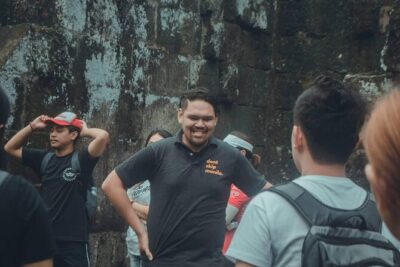
Steven comes across as particularly strong with families and first-time visitors. He has been described as easy to talk to, open to questions, and good at making people feel comfortable in the area. One useful detail is that he sent a message before the tour with clear instructions and an umbrella reminder. That kind of contact can save you a scramble when rain arrives.
Steve is a good fit if you want a structured introduction to Philippine history. His explanations helped one participant who started with little background knowledge, and the tour’s organization was a clear strength.
Cedhie used period photographs to make complex events more concrete. That is a helpful technique when a guide is explaining war, colonial rule, or political change in a short time.
Guides can vary, of course, but the repeated strength here is clear: the experience works best when you ask questions. Do not treat this as a silent photo walk. Ask about the buildings, the people connected with them, and the changes that shaped Intramuros.
What the $23 price really covers
At $23 per person, the tour offers reasonable value if you want an organized introduction to the walled city. The fee includes the English-speaking Department of Tourism accredited local guide, admission fees to the listed sites, the guide fee, bottled water, and photo opportunities at key landmarks.
You are paying mainly for context and access. Intramuros can be walked independently, but without help you may see a fort, church, or memorial without understanding its place in Philippine history. Here, the guide connects seven locations in a single two-hour route.
The price is less attractive if you prefer spending a long time at one site. Fort Santiago receives the largest share of the tour, while the cathedral, memorial, church, Plaza San Luis, and Casa Manila each receive about 15 minutes. Museum fans may want a longer visit elsewhere, while people who prefer a broad overview will get more from this format.
Transportation, hotel pick-up, food, and drinks are not included. You need to make your own way to the meeting point and arrange your return from Casa Manila. A private group costs more than the public option, but it may be worthwhile if you want to control the pace or keep the discussion focused on your interests.
Weather, walking, and what to bring
Bring an umbrella. The tour runs in the evening, and rain can arrive quickly. One family found the umbrella reminder useful when drizzle began during the walk.
Bottled water is included, but you should still dress for a warm outdoor stroll. Comfortable footwear matters because the route uses streets and historic surfaces rather than a single indoor venue.
Food and drinks are not included, so plan around the two-hour schedule. You may want to eat before the tour or arrange food afterward, especially if you are traveling with children.
The activity is open to public joiners, with a maximum of 25 people per group. It is wheelchair accessible, but a historic route can still feel less smooth than a modern attraction. If you need a slower pace, confirm whether a private group would be the better choice.
Free cancellation is available up to 24 hours before the activity for a full refund. You can also reserve now and pay later, which helps if your Manila schedule is still shifting.
Who should book this evening walk?
I would choose this tour for a first visit to Intramuros, especially if you want the major landmarks explained in plain language. It suits culture lovers, families, and people who prefer a guided walk to reading signs on their own.
It is also a good choice if you have only one evening available. In two hours, you get Fort Santiago, the dungeon, Rizal’s chapel cell, two major churches, a war memorial, a colonial complex, and Casa Manila.
You may want something else if you dislike group tours, need long periods for photography, or want a specialist lecture on architecture. The public group can reach 25 people, and the short stops leave little spare time.
Should you book A Night in Old Manila?
Book it if you want a clear, atmospheric introduction to Intramuros and value a guide who can explain difficult subjects without making the walk feel like a classroom. The strongest reasons are the one-hour Fort Santiago visit, the wartime context, the connection to Rizal, and the chance to see the old city lit after dark.
Skip it if you already know Intramuros well or want to explore each church and museum at length. For most first-time visitors, though, $23 is a fair price for the admissions, guide, and tightly planned route. Confirm the meeting point before you go, bring an umbrella, and arrive ready to walk and ask questions.
FAQ
Where does the Intramuros night tour meet?
The meeting details state that you should meet your guide at the Fort Santiago Ticket Booth. The call time is 5:15 PM, and the tour starts at 5:30 PM. United Philippine Lines also appears as a starting-location detail, so confirm the exact location with the operator before arrival.
How long does the tour last?
The tour lasts two hours. Fort Santiago receives about one hour, while Manila Cathedral, Memorare Manila 1945, San Agustin Church, and Plaza San Luis each receive about 15 minutes.
Which languages are available?
The live guide is available in English and Tagalog.
What does the price include?
The price includes a Department of Tourism accredited English-speaking local guide, admission fees to the sites, the tour guide fee, bottled water, and photo opportunities at key landmarks.
Is transportation included?
No. Hotel pick-up and drop-off, transportation, food, beverages, and other personal expenses are not included.
Can I cancel or pay later?
You can cancel up to 24 hours in advance for a full refund. Reserve now and pay later is also available.
Just added in Manila
- Private Tour: Tagaytay Midlands & Taal Volcano Boat Ride★ 4.5 · 15 reviews
- Tagaytay Adventure: Volcano Views, Countryside, Market & Cruise!★ 4.5 · 14 reviews
- 3 Days Private Tour in Banaue Ifugao visiting Batad Rice Terraces★ 3.5 · 3 reviews
- Tagaytay Day Tour sightseeing with Panoramic Taal volcano view★ 5.0 · 6 reviews
- Tagaytay + Hidden Valley Springs: A Scenic Escape w/ Transfers★ 4.0 · 4 reviews
- Unforgettable Manila Fishing Village Day Excursion 2024★ 5.0 · 4 reviews
- 5 Days Sagada Banaue Batad Discovery (PRIVATE GROUP TOUR Max 6 Travellers)★ 5.0 · 16 reviews
- Shared Old Manila Tour★ 5.0 · 5 reviews
Intramuros Heritage Walks, compared.

Intramuros, Manila: Historical Bamboo Bike Tour
Read our review →
Experience Intramuros with Bamboo Bicycle – Ecotours
Read our review →
Intramuros, Chinatown, and Old Manila Half-Day Tour
Read our review →
Manila Food Tour: Explore World’s Oldest Chinatown
Read our review →
Explore Intramuros: Introduction to Philippine History
Read our review →Browse the lists this tour appears in