
Reviewed · INTRAMUROS HERITAGE WALKS
Intramuros Walking Tour with Transportation by Don’t Skip Manila
Manila’s past comes into focus inside Intramuros, the old walled district where Spanish rule, Filipino resistance, and the destruction of World War II meet in a compact area. This tour adds Fort Santiago, José Rizal’s final prison, Manila Cathedral, Casa Manila, and a short horse-drawn carriage ride, so you get much more than a quick walk around old stone walls.
I like the small-group format, advertised for up to 12 people, because it gives you room to ask questions. I also like the guides’ personal style. Andre, Andrei, and Anne are praised for lively storytelling, pictures, music, humor, and strong knowledge of Manila’s past. The main drawback is heat and humidity, plus one practical limitation: the carriage driver may be harder to understand than the main guide.
Key points to know before booking
- Four to five hours covers Manila’s key historic sights: You visit Fort Santiago, Rizal Shrine, Manila Cathedral, Intramuros, and Casa Manila.
- A guide makes the history easier to follow: The tour traces Manila through Malay, Spanish, Japanese, and Filipino periods.
- Transport helps in Manila’s heat: An air-conditioned vehicle and bottled water are included.
- The horse-drawn carriage ride depends on group size: It is included when more than four people join.
- The group is designed to feel personal: The advertised small group is 12 people or fewer, though the stated maximum is 24.
- The price is $83.34 per person: Museum fees, guide service, transport, taxes, and the carriage ride under the stated condition are included.
Why Intramuros is the right place to begin
I find Intramuros valuable because it gives you a physical frame for Manila’s story. The walls, gates, churches, courtyards, and old buildings show how the Spanish colonial city was organized, while the guide connects those remains to the Malay, Japanese, and Filipino chapters that followed.
On your own, it is easy to treat Intramuros as a collection of photogenic ruins. A guide helps explain why this district mattered as the seat of government and political power during the Spanish colonial period. That context turns a pleasant walk into a better understanding of how Manila developed.
The tour also gives you a look at different kinds of historic places. Fort Santiago is military and political. The Rizal Shrine is personal and national. Manila Cathedral is religious. Casa Manila shows domestic life. That mix keeps the half-day moving.
The first part of the outing includes transportation in an air-conditioned vehicle. This matters in Manila, especially during hot and humid months. You will still spend time outdoors, but the vehicle gives you a break between sites and makes the route less tiring than walking the entire distance.
More history on foot in Manila:
- Intramuros, Manila: Historical Bamboo Bike Tour
★ 4.8 · 583 reviews - Experience Intramuros with Bamboo Bicycle – Ecotours
★ 5.0 · 508 reviews - Manila: Intramuros, Chinatown, and Old Manila Half-Day Tour
★ 4.8 · 475 reviews
Manila Bay views and the opening orientation
The itinerary includes a stop at Manila’s waterfront promenade along Manila Bay, a popular place for sunset views and coconut trees. The supplied details do not give a fixed duration for this stop, so I would treat it as an orientation or scenic pause rather than the main attraction.
This is a useful first look at the city. Manila is not only old walls and colonial buildings. The bayfront helps you see the wider setting before the tour moves into Intramuros.
Do not plan your expectations around a sunset unless your departure timing supports it. The regular meeting window is listed for Saturday and Sunday between 7:30 and 8:30 in the morning, so the promenade is more likely to be a daytime stop on this schedule.
Fort Santiago: Manila’s strongest history lesson
Fort Santiago receives about one hour, with admission included. It was first built by Miguel López de Legazpi for the newly established Spanish city of Manila, and it became part of the defenses of Intramuros.
I like this stop because it ties military power to personal memory. The fort is not just a wall or gate. It helps explain why the Spanish built and controlled the Walled City, and it later became linked to José Rizal’s final days.
Give yourself time to listen carefully here. The guide’s historical thread is one of the tour’s main strengths, and the setting gives those stories a clear place. Guides have used pictures and even music to set the mood for particular parts of Manila’s past, which can make a long sequence of dates and rulers easier to remember.
The fort is also a good test of the tour’s pace. You receive about an hour, enough for a guided visit, but not enough to examine every corner slowly. If you prefer extended museum time and quiet photography, this schedule may feel brisk.
The Rizal Shrine and the final night of José Rizal
The Rizal Shrine occupies the building where José Rizal spent his final night. It is also associated with the hiding place of his famous poem, Mi último adiós, or My Last Farewell, inside an oil lamp.
The visit lasts about 30 minutes and includes admission. That is a short stop, but the subject gives it considerable weight. José Rizal is central to Filipino national identity, and this site lets you connect his ideas and final hours with the larger story of colonial rule.
I would pay close attention to the guide here rather than rush for photographs. The historical meaning is the point. The tour’s strongest guides, including Andre, Andrei, and Anne, are praised for making difficult material clear, funny at times, and moving when the subject calls for it.
The 30-minute timing also makes this stop accessible to people who want a focused introduction rather than a long museum visit. If Rizal is your main interest, you may want extra time elsewhere after the tour, since this outing moves on to several other sites.
A few more things to do in Manila worth a look
- Manila: Street Food and Drinks Walking Tour with Tastings
★ 4.8 · 114 reviews - Viva Old Manila: Intramuros Walking Tour
★ 4.9 · 104 reviews - Manila: Sightseeing and Food Walking Tour with Tastings
★ 4.7 · 68 reviews - Manila: Intramuros Walking Tour.
★ 4.9 · 63 reviews
Manila Cathedral and the religious heart of Intramuros
The stop at Manila Cathedral lasts about 15 minutes. The cathedral is described as the first cathedral in the Philippines and a basilica dedicated to the Immaculate Conception, the country’s principal patroness.
Fifteen minutes is enough for a brief look and explanation, not a full architectural study. I would see this as a short pause that adds religious context to the military and political story of Intramuros.
The cathedral also shows how Spanish colonial power operated through more than government and fortifications. Churches were central institutions, and this stop gives the tour another angle on the old city.
Because the visit is brief, listen for the guide’s explanation and take a quick look around. The schedule is designed to give you a broad picture of Manila, not to linger at one building for an hour.
Casa Manila and the colonial home
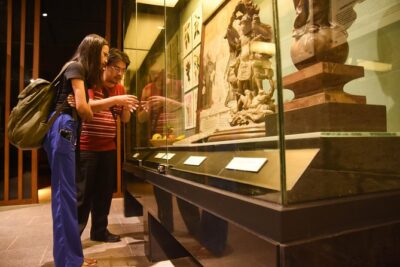
Casa Manila receives about 30 minutes and is a museum showing colonial lifestyle during the Spanish period. The building is a copy of an 1850s San Nicolas House that once stood on Calle Jaboneros.
This is one of the more useful stops for understanding daily life. Fort Santiago explains power and defense. Casa Manila shifts the focus to rooms, furnishings, and the way an affluent colonial home was presented.
I like the contrast. Without a domestic setting, a tour of Intramuros can feel too focused on officials, soldiers, churches, and famous figures. Casa Manila adds an everyday scale, even though the house represents a particular social setting rather than all Filipino life.
The visit is short, so you should not expect a complete study of Spanish-era society. Still, it rounds out the route well. You leave with a sense of how the district functioned as a city, not simply as a fortress.
The horse-drawn carriage ride
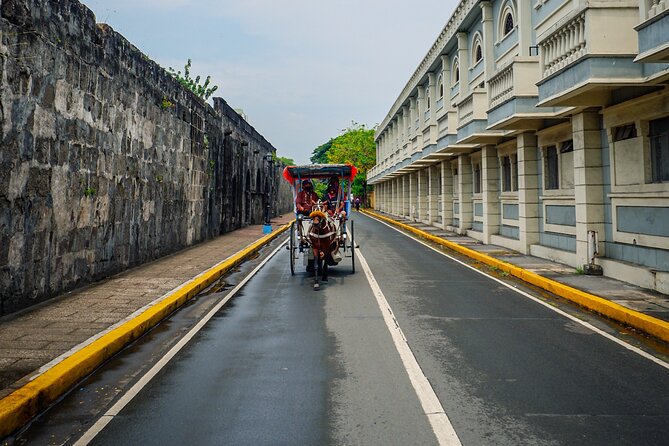
A horse-drawn carriage ride is included when more than four tourists join. The carriage offers a different way to see Intramuros and gives your feet a break after the walking portions.
There is one important practical catch. One account of the experience found it difficult to hear the carriage driver and see what he was pointing toward. I would treat this ride as a pleasant transport element, not as a replacement for the main guide’s historical explanations.
That distinction matters. The best storytelling appears to come from the primary guide, who may be Andre, Andrei, or Anne depending on the departure. During the carriage segment, keep your expectations modest and use it to observe the streets and buildings from a slower pace.
Since the ride depends on group size, confirm the condition if it is a must-have feature for you. The inclusion says more than four tourists are required, while the tour is advertised as a small group of 12 or fewer and allows up to 24 participants.
Guides who bring the past to life
The guide is the main reason to choose this experience over simply visiting Intramuros on your own. Andre and Andrei are described as animated, funny, friendly, and deeply informed about Manila and the Philippines. Anne is also praised for making the history interactive.
I particularly like the mention of pictures and a speaker with related music. Those tools show an effort to make the past feel concrete rather than recite a list of dates. You might also receive a small ice cream treat, such as cheese and avocado ice cream, though it is not listed as an included feature and should not be treated as guaranteed.
The guide’s personal connection to Manila matters here. The best parts of the tour appear to come from hearing why the city’s story matters to someone who cares about his country, not simply from walking between monuments.
The tone is not purely academic. The experience can be informative, funny, and moving in the same morning. That range suits you if history tours usually lose your attention.
Heat, timing, and the walking demands
The tour lasts roughly four to five hours. That is enough time for several major sights, but it also means you should prepare for a morning with steady movement and outdoor exposure.
June can be especially hot and humid, though Manila’s heat is a consideration year-round. Wear light clothing, bring sun protection, and take advantage of the supplied bottled water. The air-conditioned vehicle is a real benefit between stops.
The itinerary includes walking inside and around Intramuros. The supplied information says most people can participate, but it does not provide detailed accessibility information. If you have specific mobility needs, ask the operator before booking.
The listed meeting window is Saturday and Sunday from 7:30 to 8:30 in the morning. Pickup is offered, and one booking included hotel pickup from Taguig, but you should confirm the exact pickup arrangement for your address.
Is $83.34 a fair price?
At $83.34 per person, this is not the cheapest way to see Intramuros. The value comes from what is bundled together: an air-conditioned vehicle, guide service, museum entrance fees, taxes, bottled water, and the carriage ride when the group condition is met.
I think the price is reasonable if you want a structured introduction to Manila and prefer not to sort out transport or entrance fees yourself. It is also useful during a long layover. One person used the tour during a 17-hour stop in Manila, which suggests the four to five-hour duration can fit a carefully planned airport stop, though you must allow plenty of extra time for traffic and airport procedures.
The value is lower if you already know Manila’s history, want to explore at your own pace, or plan to spend a full day inside one museum or monument. The route is broad rather than slow and exhaustive.
The group-size wording deserves attention. The experience is promoted as a group of 12 or fewer, while the additional information gives a maximum of 24. I would ask which group size applies to your date if a small setting is important.
Who should book this experience?
I would choose this tour for a first visit to Manila, a short city stay, or a layover when you want the major Intramuros sights explained in one morning. It suits anyone who values a lively guide more than a silent, self-directed visit.
Families and mixed-age groups may appreciate the air-conditioned transport, short site visits, and changing subjects. The humor, pictures, and music can also help keep younger visitors interested, though the heat remains a factor.
History fans should book it if they want an overview of Manila’s Malay, Spanish, Japanese, and Filipino chapters. If your main interest is architecture or photography, the schedule may feel too quick.
You should also be comfortable with an outdoor walking route and a carriage ride that may offer limited commentary. The tour gives you a strong first layer of understanding, then leaves room for you to return to the places that caught your attention.
Booking, cancellation, and practical details
Confirmation is normally received at booking, unless you book within one day of departure. In that case, confirmation is sent as soon as possible and depends on availability.
You can cancel for a full refund up to 24 hours before the start time. Changes or cancellations made less than 24 hours before departure are not refunded. The experience depends on suitable weather and a minimum number of participants, so a cancellation by the operator may result in another date, another experience, or a full refund.
Personal snacks and souvenirs are not included. Museum entrance fees, all taxes and fees, guide service, bottled water, the air-conditioned vehicle, and the qualifying carriage ride are included.
Should you book the Intramuros Walking Tour?
I would book this tour if you want Manila’s old city explained by an engaging local guide, with transport and admissions handled for you. The mix of Fort Santiago, the Rizal Shrine, Manila Cathedral, Casa Manila, and the bayfront gives you a useful first picture of the city in four to five hours.
The strongest reason to book is the guide-led storytelling, especially with Andre, Andrei, or Anne. The main reasons to hesitate are the heat, the fairly quick visits, the uncertain carriage commentary, and the need to confirm the actual group size.
For a first introduction to Manila, the $83.34 price offers solid value. Bring water-ready clothing, protect yourself from the sun, and book it for the historical overview rather than a slow, independent exploration.
FAQ
How long does the Intramuros Walking Tour take?
The experience lasts approximately four to five hours.
What sights are included?
The route includes a Manila waterfront promenade, Fort Santiago, the Rizal Shrine, Manila Cathedral, Intramuros, and Casa Manila.
Are museum entrance fees included?
Yes. Museum entrance fees and all listed taxes and fees are included.
Is transportation provided?
Yes. An air-conditioned vehicle is included, and pickup is offered.
Is the horse-drawn carriage ride included?
The carriage ride is included when more than four tourists join the experience.
How many people can join the tour?
The tour is promoted as a small group of 12 people or fewer, while the stated maximum is 24 participants.
Does the tour operate every day?
The provided meeting hours list Saturday and Sunday departures, with the meeting window running from 7:30 AM to 8:30 AM.
Can I cancel for a refund?
Yes. You can cancel at least 24 hours before the start time for a full refund. Cancellations or changes made less than 24 hours before departure are not refunded.
Just added in Manila
- Breathtaking Cultural Experience in Villa Escudero★ 4.5 · 15 reviews
- From Manila: Villa Escudero Guided Tour★ 5.0 · 19 reviews
- Manila Street food and Night Market Tour★ 4.7 · 21 reviews
- Solo Traveler Friendly Manila Walk w/ Mobile Photography★ 5.0 · 22 reviews
- Day hike to Mount Daraitan with Tinipak River 2024★ 5.0 · 22 reviews
- Half-Day Heritage Tour: Manila’s Historic Gems★ 4.9 · 29 reviews
- Manila: Intramuros Walled City Guided Walking Tour★ 4.5 · 30 reviews
- Half-Day Manila City Tour★ 5.0 · 29 reviews
Intramuros Heritage Walks, compared.

Intramuros, Manila: Historical Bamboo Bike Tour
Read our review →
Experience Intramuros with Bamboo Bicycle – Ecotours
Read our review →
Intramuros, Chinatown, and Old Manila Half-Day Tour
Read our review →
Manila Food Tour: Explore World’s Oldest Chinatown
Read our review →

Explore Intramuros: Introduction to Philippine History
Read our review →Browse the lists this tour appears in