
Reviewed · INTRAMUROS HERITAGE WALKS
Private Half-Day Makati (Old Manila) with Intramuros
The most useful thing about this private Old Manila tour is how much ground it covers in half a day. You move from Rizal Park to the Spanish walls of Intramuros, then on to Fort Santiago, San Agustin Church, and Binondo’s Chinatown. It gives you a clear first look at Manila’s story without asking you to manage the city’s traffic and landmarks alone.
I like the one-on-one guide time, especially for a first visit, and I like the route’s range: national history, Spanish colonial buildings, wartime memory, Catholic art, and Chinese-Filipino culture. The main consideration is pace. Four to five hours is enough for an introduction, not enough for a slow study of every church, museum, and old street.
Key points to know before booking
- Rizal Park begins the story with the life and execution site of Dr. Jose Rizal, the Philippines’ national hero.
- Intramuros and Fort Santiago provide the strongest look at Manila’s Spanish colonial past.
- San Agustin Church and Museum add important religious art and architecture, not just another photo stop.
- Binondo brings a different Manila with Chinatown, Binondo Church, and a calesa ride.
- The private format matters if you want questions answered, a flexible pace, or help moving through Manila traffic.
- The $160.26 price is easier to justify for a small group, since it includes a private guide, driver, selected-hotel pickup, admissions, and drop-off.
Why this half-day route works for first-time visitors
Old Manila can feel scattered on a map. Rizal Park, Intramuros, Fort Santiago, San Agustin Church, and Binondo are close enough to combine, but the experience makes more sense when someone explains how the pieces fit together.
This tour gives you that framework. You begin with the national story at Rizal Park, enter the walled Spanish city, visit a fortress at the Pasig River, step into Manila’s oldest stone church, and finish in Chinatown. The sequence moves across several periods and communities rather than showing you one narrow side of the city.
The private setup is especially useful here. You can ask about Dr. Jose Rizal, Spanish rule, the destruction of Manila, Catholic traditions, or Filipino-Chinese life as questions come up. Guides such as Joan, Jonas, Jezzy, Jesse, Lori, Raymond, and Jen have been praised for clear explanations, good humor, and a conversational style rather than a long lecture.
That personal approach can make a big difference. Manila’s past includes Spanish colonization, the struggle for independence, the Japanese occupation, and the destruction of much of the old city during World War II. A good guide can give those events a human scale instead of leaving you with a pile of dates.
More history on foot in Manila:
- Intramuros, Manila: Historical Bamboo Bike Tour
★ 4.8 · 583 reviews - Experience Intramuros with Bamboo Bicycle – Ecotours
★ 5.0 · 508 reviews - Manila: Intramuros, Chinatown, and Old Manila Half-Day Tour
★ 4.8 · 475 reviews
Rizal Park: a short stop with national meaning
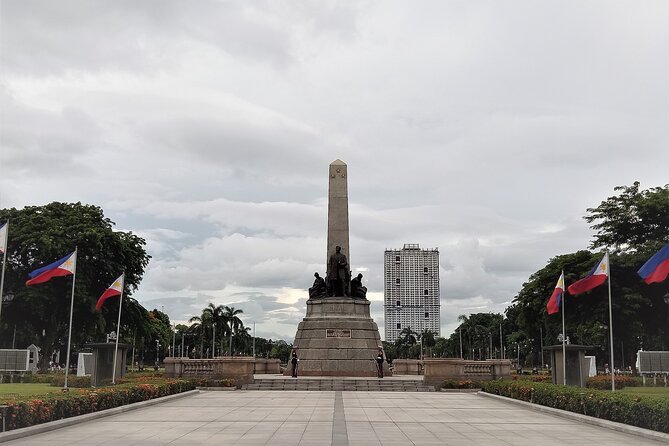
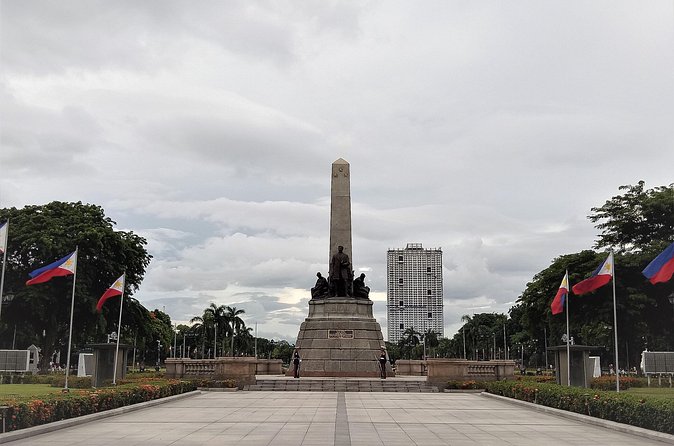
The tour opens at Rizal Park, named for Dr. Jose Rizal, the Philippines’ national hero. The planned stop is about 15 minutes, so think of it as an orientation and photo stop rather than a long park visit.
The park matters because Rizal’s life is tied closely to the formation of Filipino national identity. Your guide can help explain why he remains such a central figure and how his writing and execution affected the country’s independence movement.
The short timing is both a strength and a limitation. It keeps the morning moving, but you will not have time for a long walk through every part of the park. If Rizal is a major interest for you, make that clear at the start and ask your guide how much time is practical.
This first stop also gives you a useful mental key for the rest of the tour. The buildings and fortifications that follow are not just old structures. They are part of a larger story about control, resistance, faith, and national identity.
Intramuros: entering the old walled city
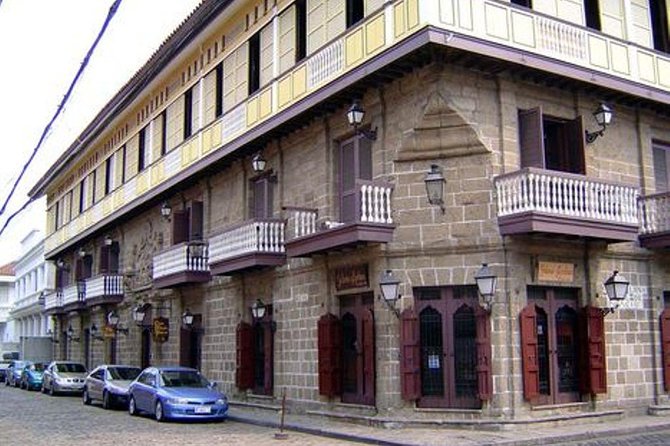
From Rizal Park, you continue to Intramuros, Manila’s famous walled district and a UNESCO World Heritage Site. The name means within the walls, and the setting feels sharply different from modern Manila outside.
The visit is listed at about 30 minutes, with admission included. You can expect to see remnants of Spanish colonial planning, old defensive walls, historic streets, and surviving buildings within the district. The tour description also points to the Plaza San Luis complex, which has been included on some visits.
Intramuros is the heart of the tour. It gives you a sense of how Spanish Manila was organized and protected, while also showing how much was lost and rebuilt over time. Walking through the old streets, you are not simply looking at handsome stone buildings. You are seeing the former center of colonial power.
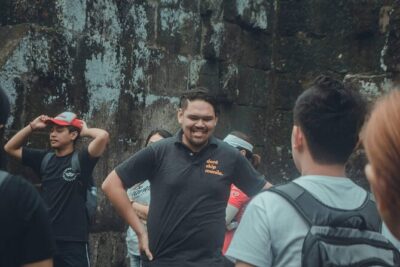
A guide is valuable here because the walls do not explain themselves. Without context, Intramuros can become a string of quick photographs. With an experienced local guide, you can better understand how the district functioned and why its remaining churches, plazas, and fortifications matter.
Thirty minutes is enough for a solid introduction, but not a leisurely architectural study. If you want to return later to explore museums, courtyards, or side streets, this tour helps you decide where to spend that extra time.
Fort Santiago: Manila’s most powerful historical stop
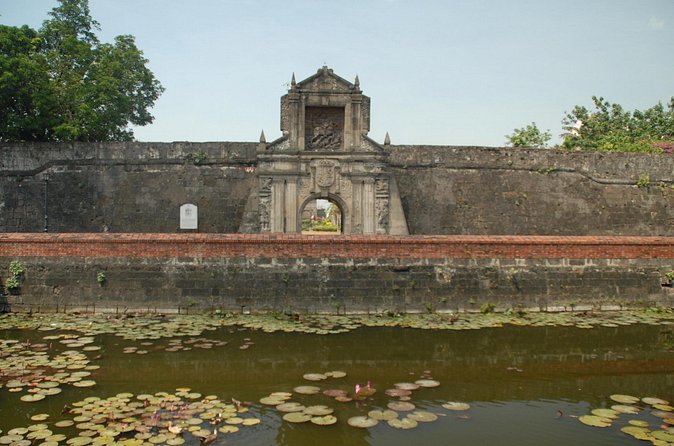
Fort Santiago sits at the mouth of the Pasig River and is one of the tour’s strongest stops. The visit lasts about 30 minutes, with admission included.
The fortress is closely linked with major moments in Philippine history, including the imprisonment of Dr. Jose Rizal. Its walls and grounds also connect to the destruction of Manila during World War II and the suffering caused by the Japanese occupation.
This is where the tour’s historical narrative gains emotional weight. Your guide can connect the fortress to the Spanish period, the independence movement, and the wartime destruction of Manila. One guide, Jesse, was especially praised for explaining the history of Manila, the Philippine Islands, and Fort Santiago in a way that made the visit feel more immediate.
The short visit means you should listen closely. There is no time to wander every corner at a relaxed pace. I would keep your camera ready, but give your attention to the guide while the main story is being explained. Fort Santiago is more valuable for the meaning attached to it than for simply checking off another old fort.
A few more things to do in Manila worth a look
- Discover Tagaytay’s Countryside: Half-Day Sightseeing Tour
★ 4.5 · 207 reviews - From Manila: Tagaytay Countryside Wonders: A Half-Day Tour
★ 4.4 · 187 reviews - MANILA HALF-DAY TOUR (4HRS)
★ 4.7 · 43 reviews - Half-Day Heritage Tour: Manila’s Historic Gems
★ 4.9 · 29 reviews
San Agustin Church and Casa Manila area
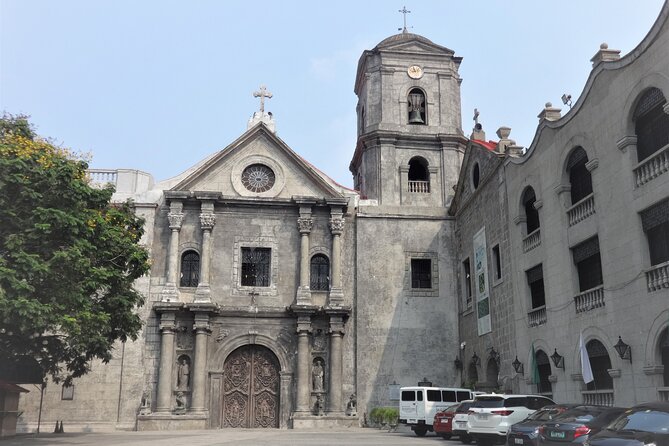
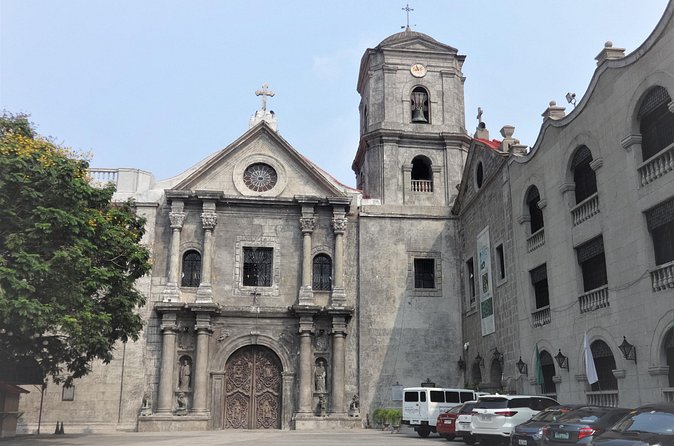
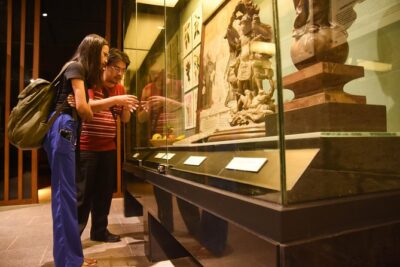
Next comes San Agustin Church, described as the country’s oldest stone church. The visit takes about 30 minutes and includes the church museum, where you can see ecclesiastical icons, vestments, and other religious objects.
This stop gives the tour a different texture. Fort Santiago is military and political. San Agustin is religious, artistic, and architectural. Its collection helps explain the role of Catholicism in Spanish-era Manila and the visual traditions that grew around church life.
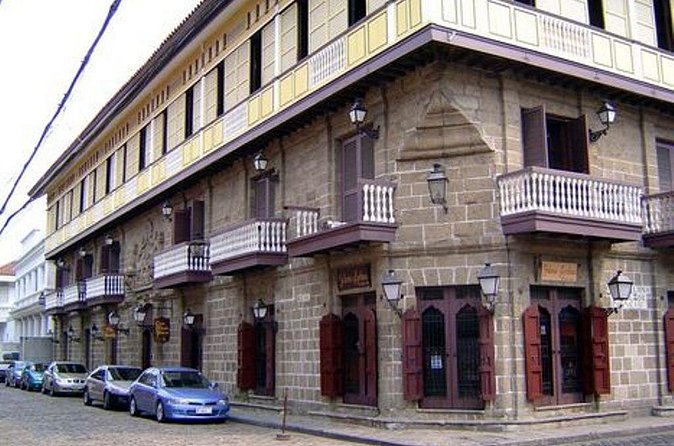
You also travel along cobbled streets and cross toward the Casa Manila area. That setting helps you see Intramuros as a district rather than a collection of isolated sights. The old streets, church, museum, and nearby historic buildings work together.
The time is again brief. If you have a strong interest in church art or colonial architecture, you may want to return independently for a longer visit. For a first look, though, this stop adds much more than another exterior photograph.
Binondo and the calesa ride
The final major part of the route takes you across the Pasig River to Binondo, Manila’s Chinatown. The planned time is about one hour, making it the longest single stop.
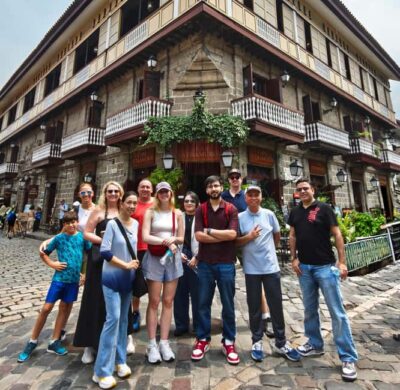
You board a horse-drawn carriage called a calesa and continue toward Binondo Church, another historic landmark built by the Spanish. The change of setting is welcome. After the formal walls, forts, and churches of Intramuros, Binondo offers a more everyday urban atmosphere, shaped by Chinese-Filipino culture, commerce, food, and religion.
The calesa ride is a distinctive touch, though it also means you should keep expectations practical. This is not a long carriage excursion through a quiet old town. It is part of a compact city tour, and traffic or timing may affect how much ground you cover.
The Binondo portion can also be the most flexible in feel. Guides have included food stops and local explanations here, and some visits have included snacks or meals purchased in Chinatown. Food and drinks are not included in the price, so carry money if you want to try something along the way.
Binondo is important because it widens your understanding of Manila. Old Manila is not only Spanish walls and Catholic churches. The Chinese-Filipino community has played a major role in the city’s trade and daily life, and Binondo gives you a brief look at that side of the capital.
How the private format changes the experience
A private tour is most useful when you want to ask questions or need help managing a complicated city. Only your group participates, so you are not tied to the interests of a large busload.
That does not mean every stop becomes fully flexible. The advertised duration remains about four to five hours, and the route covers several places. Still, a private guide can adjust explanations, answer follow-up questions, and help your group stay together as you move between sites.
The guide quality is central to the value. Names associated with this experience include Joan, Jonas, Jezzy, Jesse, Lori, Raymond, Jen, and Jon. Their strengths have included clear English, humor, patience, and the ability to explain history as a conversation. Jonas, in particular, has been praised for making the history engaging and for helping families with children stay interested.
The driver matters too. Pickup and drop-off are included at selected hotels, and the tour uses a private vehicle between locations. One driver, JR, was specifically praised for taking extra care with a passenger who had a disability. You should still discuss mobility needs before booking, since the tour requires a moderate level of physical fitness and includes walking on old streets.
Price, timing, and what you receive
At $160.26 per person, this is not the cheapest way to see Old Manila. Its value depends heavily on group size. For one person, the price may feel high for a half-day. For a couple, family, or small group, a private guide and vehicle make the cost easier to defend.
The price includes all taxes, fees, handling charges, a professional guide, selected-hotel pickup and drop-off, private transport, and admission to the paid sights listed in the route. Food, drinks, and souvenirs are extra.
The 8:30 am start is sensible. A morning departure gives you a better chance of covering the route before the day becomes more difficult for traffic and heat. The tour is still active, with walking through historic areas and time in and out of the vehicle, so wear comfortable shoes and bring water.
The itinerary adds up to roughly three hours of named stops, leaving time for driving, pickup, traffic, and transitions. That explains why the total experience lasts four to five hours. Do not schedule a tight airport transfer immediately afterward unless you have a large buffer.
Who should book this tour
I would recommend it most strongly to first-time visitors, history fans, families, and people staying in Manila for a short time. It is also a good choice if you are arriving by cruise ship and want a private pickup near the port, provided your pickup arrangement is confirmed in advance.
Families may appreciate the mix of forts, churches, carriages, and Chinatown. Children are allowed, but child pricing applies only when sharing with two paying adults, and children must be accompanied by an adult.
The tour also suits anyone who feels uneasy navigating Manila alone. The combination of private transport and a local guide removes much of the work involved in connecting separate historic districts.
It is less suitable if you want long museum visits, slow photography, or a detailed study of every building in Intramuros. The route is broad and fast. You see many important places, but each receives only a short visit.
What to know before you go
Hotel pickup and drop-off are included only at selected hotels, so confirm that your accommodation qualifies. The tour requires good weather. If poor weather forces cancellation, you are offered another date or a full refund, but the booking itself is otherwise non-refundable and cannot be changed for personal reasons.
Bring comfortable footwear, water, and some spending money for food or souvenirs in Binondo. Keep the morning focused, since the route works best when you arrive ready to move between stops.
I would also tell the guide what interests you most. If you care about Rizal, wartime Manila, church art, family history, or Filipino-Chinese culture, saying so early can help shape the conversation. The private format is worth more when you use it actively.
Should you book it?
Book this tour if you want a well-organized first look at Manila’s major historic districts and prefer a local guide to explain what you are seeing. The mix of Intramuros, Fort Santiago, San Agustin Church, and Binondo is strong, and the private vehicle saves time in a city where short distances can still take patience.
Skip it if you prefer to spend an entire day in one museum or explore Intramuros at a very slow pace. At $160.26 per person, the price makes the most sense for a small group that values private attention, included transport, and a clear introduction to Philippine history.
FAQ
How long does the Old Manila tour last?
The tour lasts approximately four to five hours, including the visits and travel between stops.
What time does the tour start?
The stated start time is 8:30 am.
Which places are included?
The route includes Rizal Park, Intramuros, Fort Santiago, San Agustin Church and Museum, and Binondo. The Binondo portion includes a calesa ride and a visit toward Binondo Church.
Is hotel pickup included?
Hotel pickup and drop-off are included for selected hotels only. You should confirm that your hotel qualifies when booking.
Are food and drinks included?
No. Food, drinks, personal expenses, and souvenirs are not included.
Is this a private tour?
Yes. Only your group participates, and the tour includes a professional guide and private transport.
Just added in Manila
- From Manila: Villa Escudero Guided Tour★ 5.0 · 19 reviews
- Breathtaking Cultural Experience in Villa Escudero★ 4.5 · 15 reviews
- Solo Traveler Friendly Manila Walk w/ Mobile Photography★ 5.0 · 22 reviews
- Day hike to Mount Daraitan with Tinipak River 2024★ 5.0 · 22 reviews
- Manila Street food and Night Market Tour★ 4.7 · 21 reviews
- From Manila: 2-Day Buscalan Tour with Apo Whang-od★ 3.6 · 29 reviews
- Tagaytay, Taal Volcano & Heritage Town: A Journey of Discovery★ 5.0 · 29 reviews
- Anilao Snorkel Safari: Explore the Amazing Underwater World★ 5.0 · 25 reviews
Intramuros Heritage Walks, compared.

Intramuros, Manila: Historical Bamboo Bike Tour
Read our review →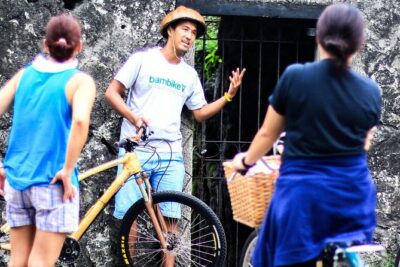
Experience Intramuros with Bamboo Bicycle – Ecotours
Read our review →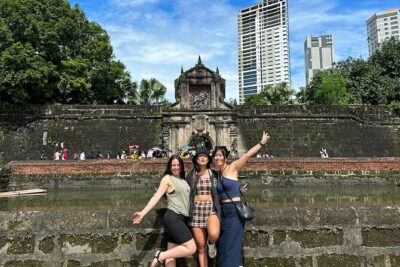
Intramuros, Chinatown, and Old Manila Half-Day Tour
Read our review →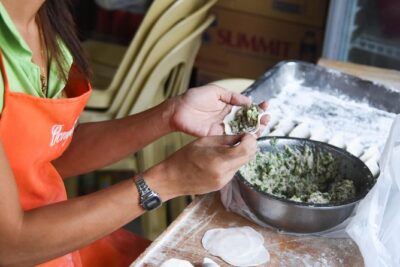
Manila Food Tour: Explore World’s Oldest Chinatown
Read our review →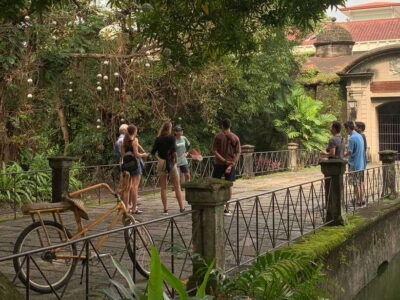
Explore Intramuros: Introduction to Philippine History
Read our review →Browse the lists this tour appears in