
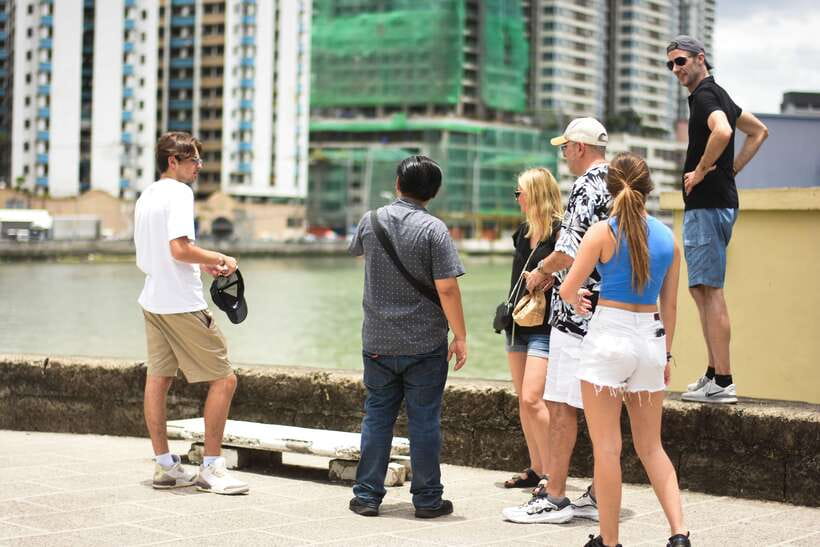
Reviewed · INTRAMUROS HERITAGE WALKS
Manila: Filipino Historic Walking Tour in Intramuros
Intramuros is more than old walls and grand churches. This three-hour walk shows how Spanish rule, Catholic power, war, and the Filipino fight for independence shaped Manila. You begin at San Agustin Church, the country’s oldest stone church, then work through aristocratic homes, military defenses, and wartime memory.
I like the way the route mixes famous sights with quieter corners of the old city wall. I also like that entrance fees are covered, so you can focus on the stories rather than counting extra costs. The main drawback is the walking: narrow streets, uneven surfaces, and a full three hours make this a poor fit for anyone with limited mobility.
Key points before you book
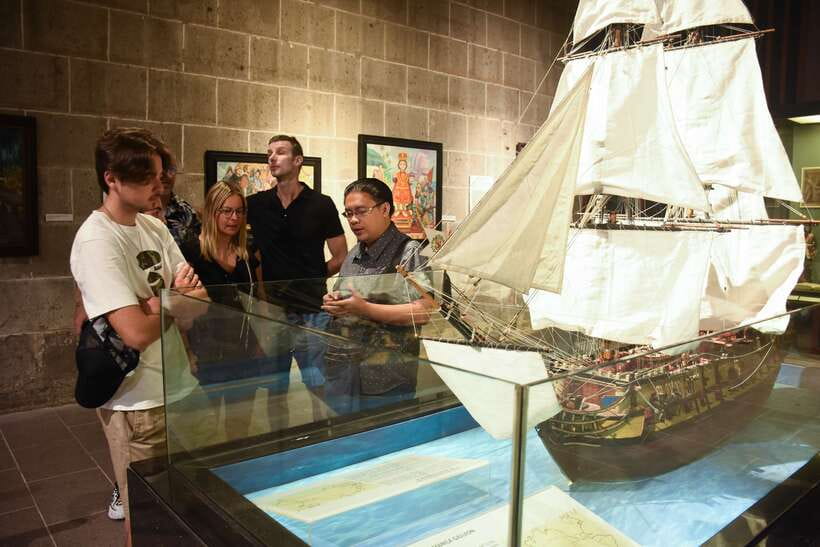
- San Agustin begins the story: Start at the oldest stone church in the Philippines and learn why Spain came to the region.
- Casa Manila adds daily life: See a restored 19th-century home where European, Filipino, and Asian design meet.
- Fort Santiago ends the walk: Explore the old garrison and connect colonial rule with the fight for independence.
- Small groups help: The maximum group size is 15, with English and Tagalog guiding available.
- Jerome has earned praise: One highly rated tour was led by Jerome, who was friendly, flexible, and clear.
- Dress and shoes matter: Wear comfortable shoes, and avoid short skirts and sleeveless shirts.
Why Intramuros makes a strong first history tour
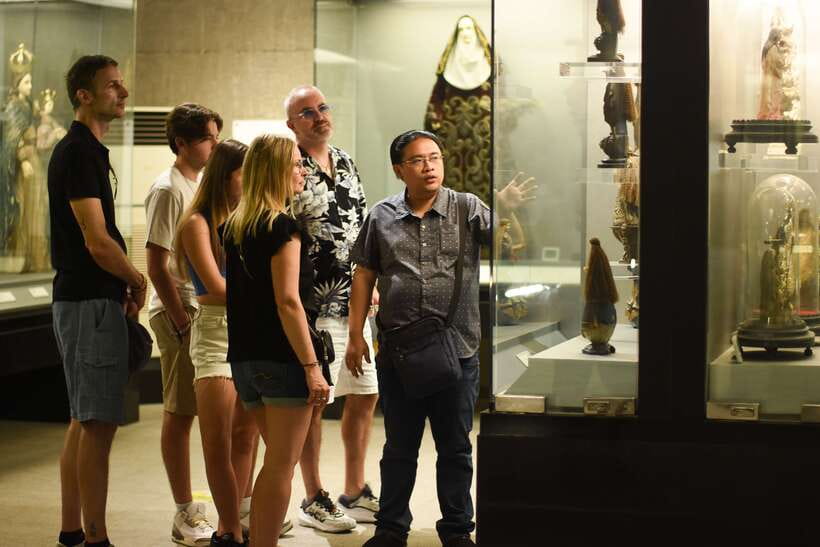
I like Intramuros because its history is easy to read on foot. You move from church to mansion, from defensive wall to military garrison, and from colonial power to wartime loss in a compact area. The route gives you a useful frame for understanding Manila instead of presenting isolated buildings with no connection.
The guide is important here. A self-guided walk can show you stone walls and old facades, but it cannot easily explain why Spain came to the Philippines, how more than 300 years of Spanish occupation shaped local culture, or how Catholic institutions became so influential. The tour is designed to join those pieces together.
The experience lasts about three hours and accepts no more than 15 people. That is a sensible size for streets and indoor sites. You should be able to hear the guide without the outing feeling like a large group march.
The meeting point is the lobby of the San Agustin Church Museum. You contact the guide through the supplied WhatsApp number, so have that information ready before you arrive. The tour ends at Fort Santiago, not back at the church, which is useful if you want to continue exploring the old city from there.
One practical note deserves attention: the supplied activity information identifies the meeting area as Intramuros in Manila, while the location field lists Nueva Vizcaya. Because those details do not match, check the exact meeting location before booking and again before setting out.
More history on foot in Manila:
- Intramuros, Manila: Historical Bamboo Bike Tour
★ 4.8 · 583 reviews - Experience Intramuros with Bamboo Bicycle – Ecotours
★ 5.0 · 508 reviews - Manila: Intramuros, Chinatown, and Old Manila Half-Day Tour
★ 4.8 · 475 reviews
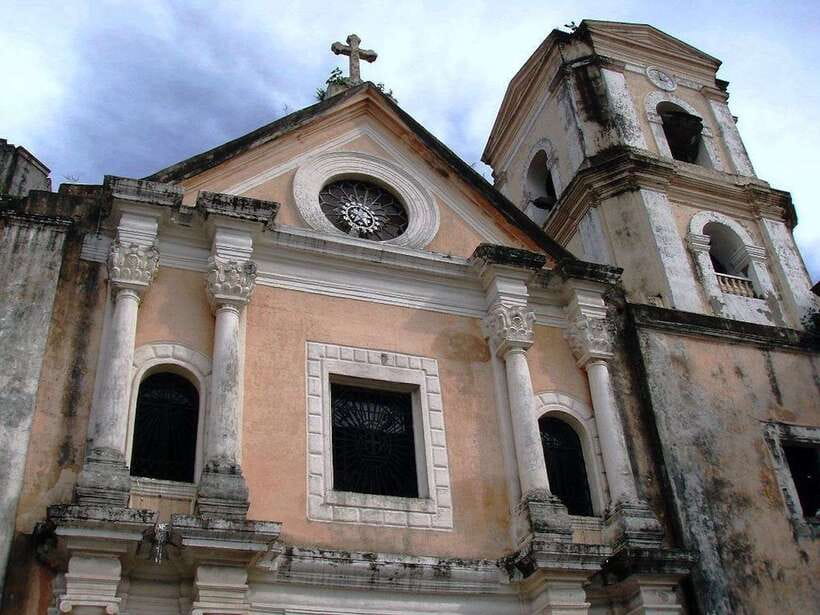
San Agustin Church, where the route starts
The first stop is San Agustin Church, described as the oldest stone church in the Philippines. That gives the tour a strong opening. You are not beginning with a general lecture. You are standing inside one of the places that helped define Spanish Manila.
The guide explains why Spain reached this part of the world and what followed after Spanish control took hold. That background matters because the church is not just an architectural stop. It opens a discussion about religion, government, trade, and the lasting marks of colonial rule.
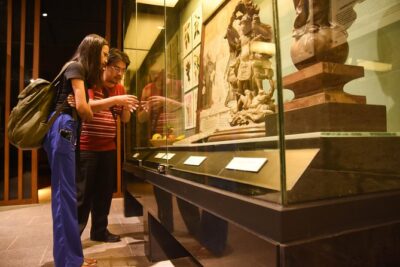
The church visit is paired with the San Agustin Museum. Entrance to both is included in the price. Inside, old artifacts add physical detail to the stories you hear outside. Objects can make the past easier to grasp, especially when the tour moves quickly across several centuries.
I would give this first section your full attention. It sets up the rest of the walk. Once you understand the role of the Catholic Church and Spanish authority, later stops at Manila Cathedral and Fort Santiago carry more weight.
Wear respectful clothing from the start. Short skirts and sleeveless shirts are not allowed, so this is not the place for a beach-style outfit. Comfortable shoes are just as important, since the tour continues on foot through old streets and outdoor areas.
Casa Manila and the meeting of east and west
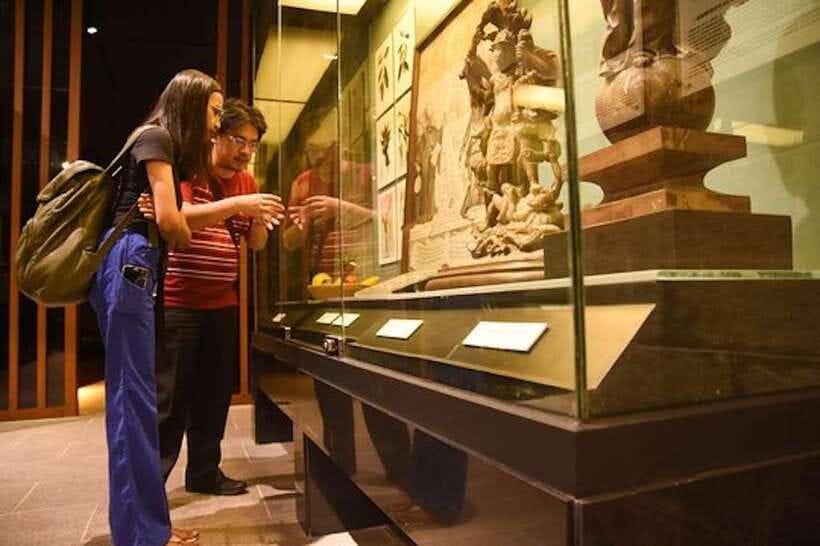
After San Agustin, you cross the street to Casa Manila. This restored 19th-century home was built for aristocratic life, and the interiors offer a change of pace from the church and museum.
Here, I like the chance to see how power and taste worked inside a wealthy home. The design reflects a meeting of eastern and western influences, which makes Casa Manila more useful than a simple display of furniture. It gives you a sense of how colonial culture was lived, not only preached or enforced.
The guide leads you through the home and explains the furnishings and design. You can expect a more domestic view of the past: rooms, decoration, and status rather than fortifications and religious authority. That contrast helps the tour avoid becoming a string of similar churches and walls.
Casa Manila is also a good reminder that colonial history was not experienced in one way. The home represents an elite setting. It should not be mistaken for a complete picture of everyday Filipino life, but it adds an important layer to the broader story.
Because the tour includes both Casa Manila and the San Agustin sites, the $55 price offers more than a simple outdoor walk. You are paying for a guide and several admission fees, including Fort Santiago, San Agustin Church and Museum, and Casa Manila Museum. The value is strongest if you want context and would otherwise pay separate entrance fees while trying to piece the story together yourself.
A quieter section of the Intramuros wall
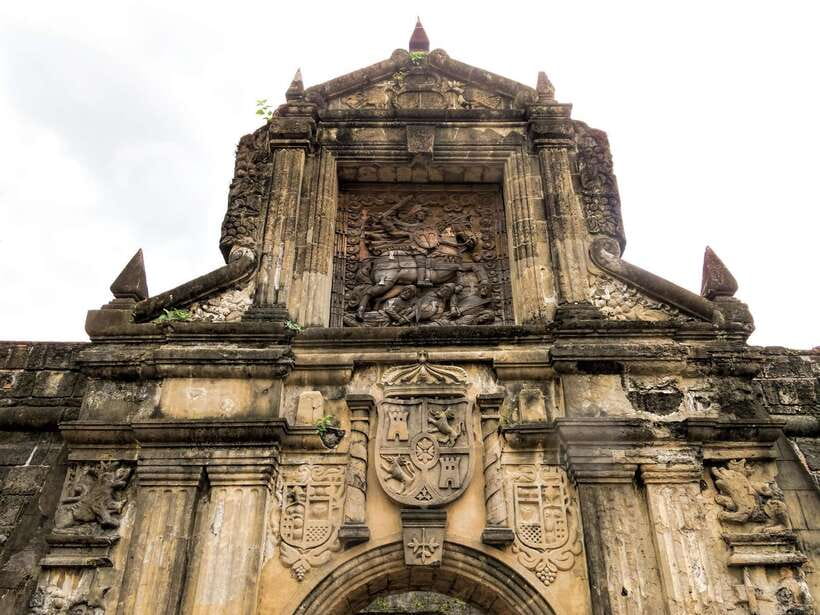
The walk then heads toward a less frequently visited part of Intramuros’ historic wall. This is one of the more appealing parts of the route for me. The major churches and gates draw attention, but a quieter section of wall can help you picture Intramuros as a defended city rather than a collection of preserved attractions.
Your guide explains the wall’s past and its role in the old city. The setting also gives you a break from indoor exhibits. You can look closely at the defensive structure while hearing how Manila’s colonial center was protected and organized.
Do not expect a long, separate wall hike. The full tour has several stops, and the wall section is one part of a larger three-hour route. Still, it adds useful variety and gives the walk a physical sense of scale.
This is also where sturdy footwear pays off. The supplied information warns that the activity is not suitable for people with mobility impairments or wheelchair users. That limitation is worth taking seriously. Even when the route is manageable for most walkers, historic districts can involve uneven ground and tight passages.
A few more things to do in Manila worth a look
- Explore Intramuros: Introduction to Philippine History
★ 5.0 · 80 reviews - Experience Manila’s Heritage: Intramuros & More in Half a Day!
★ 5.0 · 76 reviews - Half-Day Heritage Tour: Manila’s Historic Gems
★ 4.9 · 29 reviews - Tagaytay, Taal Volcano & Heritage Town: A Journey of Discovery
★ 5.0 · 29 reviews
Memorare Manila 1945 and the cost of war
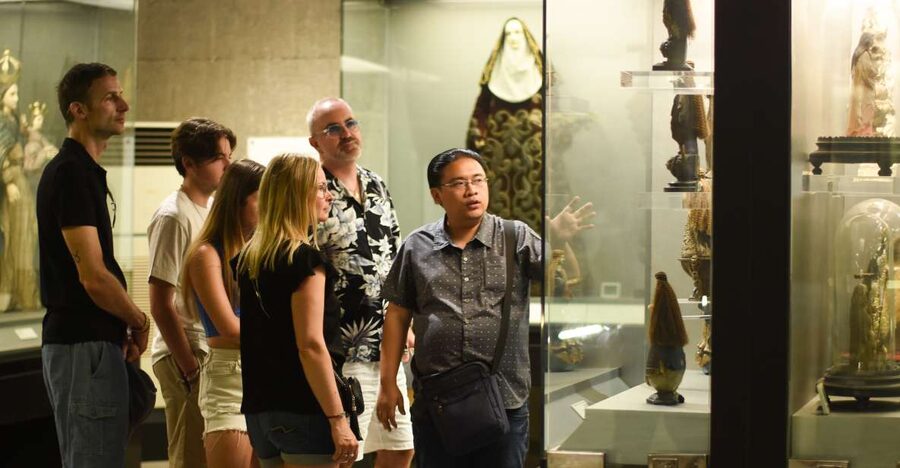
The stop at Memorare Manila 1945 shifts the focus from colonial rule to World War II. It is a short sightseeing stop, but it plays an important role in the route because it shows how the Philippines was caught up in a much later conflict.
The guide discusses the role of the Philippines during the war and the destruction connected with Manila. This section keeps the tour from treating history as something that ended when Spanish rule ended. The city’s past continued to change through invasion, battle, and loss.
I appreciate the placement of this memorial between the older colonial sites and the final visit to Fort Santiago. The route moves forward in time, so you can see that Intramuros carries several layers of memory. A church may recall Spanish rule, a mansion may show colonial privilege, and a memorial may point to the damage caused centuries later.
The stop is brief, so you should not expect a long museum visit here. Its value comes from the guide’s explanation and its place in the wider story.
Manila Cathedral and the power of the Catholic Church
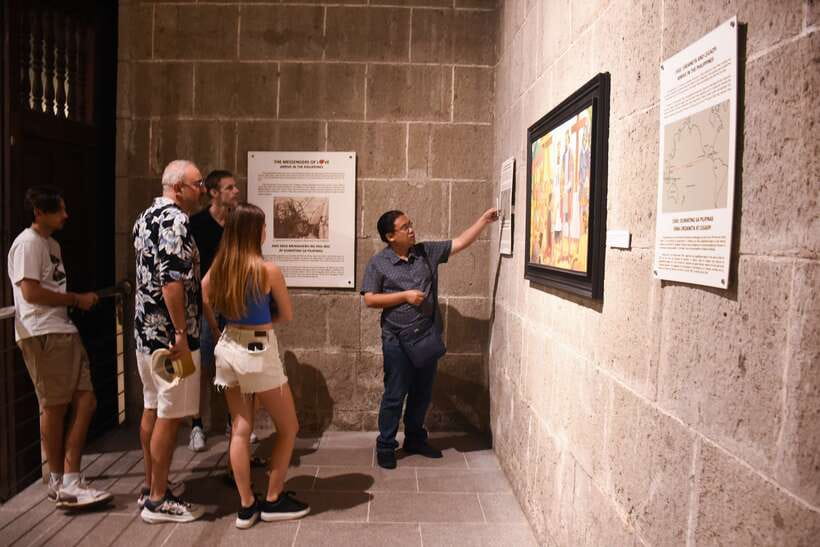
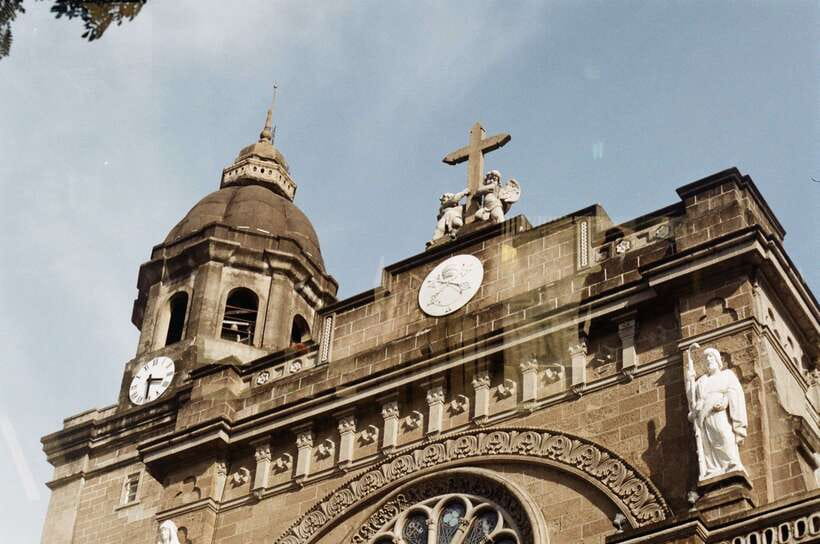
The next stop is Manila Cathedral, the seat of the Catholic Church in the Philippines. Like San Agustin, the cathedral connects architecture with institutional power.
The tour has already introduced the church’s role at the opening stop. At Manila Cathedral, you get another chance to understand how Catholicism became central to the country’s colonial story and remains important in Filipino society.
This is a sightseeing stop rather than a listed guided interior visit, so your time here may focus on the building and its historical position. That makes the earlier San Agustin Museum visit especially helpful. You have already seen artifacts and heard the wider background before arriving at this major church.
If you want a tour centered only on architecture, this route may feel broader than expected. It moves between religion, politics, war, and independence. I see that as a strength for first-time visitors who want a basic map of Philippine history, but specialists may prefer a narrower church or architecture tour.
Fort Santiago and the Filipino fight for independence
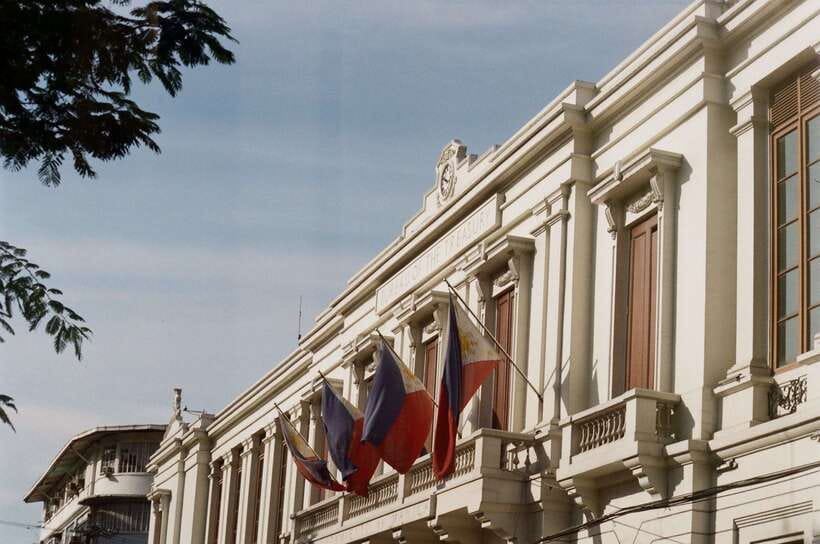
The tour finishes at Fort Santiago, the old military garrison. This is the route’s final guided stop and one of its most important.
The fort gives the earlier discussion of Spanish authority a physical setting. Its walls, military purpose, and location within Intramuros help you understand how colonial power was defended. The guide also explains the Filipino fight for independence, bringing the walk toward the question of how the country moved from colonial rule toward self-government.
I like ending here rather than beginning at the fort. By this point, you have heard about the church, elite homes, city defenses, wartime suffering, and Catholic authority. Fort Santiago then works as a final link between control and resistance.
Admission to Fort Santiago is included. The tour ends here, so plan your next step in advance if you want to continue around Intramuros. You will not need to return to San Agustin Church with the group.
The fort is also a useful place to think back over the entire route. The tour does not present the Philippines as a simple story of one foreign power ruling for a long time. It shows how institutions, homes, walls, churches, battles, and independence movements all shaped modern Filipino identity.
The guide makes the difference
The strongest part of this activity is the human explanation. The route covers a lot in three hours, and a good guide keeps it connected.
One guide named Jerome received especially strong praise for being friendly, informed, and flexible about what the group wanted to see. The tour also received praise for being funny, engaging, motivated, and worth the cost. Another booking received a four-star rating after an unusual Marian parade caused some confusion, but the guide was still described as well informed. That is a useful reminder that live tours can be affected by local events and changing conditions.
Your guide may not be Jerome, so do not book on the assumption that he will lead your group. The activity offers English and Tagalog, and the maximum group size is 15. A guide who can answer questions and adjust the pace is particularly valuable here because Intramuros contains many sites within a small area.
The tour has a rating of 4.8 from 17 reviews, which points to a consistently positive experience, though the sample is not large. The most repeated strengths are clear: strong historical explanation, friendly guiding, an engaging style, and better value than walking alone.
Is $55 a fair price?
At $55 per person, this is not the cheapest way to see Intramuros. The price makes more sense when you count what is included: a professional guide plus entrance to Fort Santiago, San Agustin Church and Museum, and Casa Manila Museum.
You are also buying structure. Without a guide, you would need to find each place, pay applicable admission costs, read the displays, and build the historical links yourself. If you already know Philippine history or prefer wandering at your own speed, the price may feel high.
For a first visit, I think the value is solid if you want an organized introduction. You receive a broad look at Spanish colonial rule, Catholic influence, wartime history, and independence in one outing. The three-hour length is also practical. One highly praised tour lasted just under three hours, which was considered a good fit for the amount of material.
The tour does not include hotel pickup or drop-off. You need to reach San Agustin Church Museum on your own, and the activity finishes at Fort Santiago. That is not a major issue if you are already planning time in Intramuros, but it is worth factoring into your day.
Who should book this walking tour?
I would choose this tour if you are visiting Manila for the first time and want historical context without spending a full day in museums. It suits curious adults, couples, families with older children who can manage the walking, and anyone who wants a guide to explain the links between buildings.
It is especially useful if you are unsure how to approach Intramuros. The route gives you a clear sequence and covers the area’s major historical sites. The English option also makes it practical for international visitors.
I would think twice if you have mobility limitations, use a wheelchair, dislike walking, or want to explore at a very slow pace. The group visits several locations in three hours, and the narrow streets and old surfaces may be tiring.
Book with the right expectations. This is an introductory history walk, not a private architectural study or a leisurely photography outing. Its strength is the guide’s ability to connect many parts of Manila’s past in a short time.
Practical details that affect your day
The activity depends on good weather. If poor weather cancels the tour, you can receive a different date or a full refund. You can also cancel up to 24 hours before the start for a full refund, and the reserve-now, pay-later option keeps your plans flexible.
Bring comfortable shoes and dress for religious sites. Short skirts and sleeveless shirts are not allowed. Since there is no hotel pickup, allow enough time to reach the San Agustin Church Museum lobby.
Check availability for the starting time, since the activity runs for three hours but the start varies. Contact the guide through WhatsApp using the number provided with your booking. Also confirm the meeting point carefully because the supplied location information lists Nueva Vizcaya while the actual route and meeting instructions refer to Intramuros in Manila.
Should you book it?
Book this tour if you want a focused, well-organized introduction to Intramuros and the colonial forces that shaped Manila. The combination of San Agustin, Casa Manila, the city wall, a WWII memorial, Manila Cathedral, and Fort Santiago gives you more substance than a basic sightseeing stroll.
The main reasons to choose it are the included admissions, the small group limit, and the guides’ record for friendly, engaging explanations. Skip it if you need a wheelchair-accessible route, want hotel transport, or prefer to set your own pace.
For most first-time visitors who can walk comfortably, this is a sensible way to meet Intramuros. You leave with a clearer sense of how church, empire, war, and independence continue to shape the Philippines.
FAQ
Where does the tour begin?
The tour begins in the lobby of the San Agustin Church Museum in Intramuros.
Where does the tour finish?
The tour finishes at Fort Santiago.
How long does the tour last?
The tour lasts three hours. Starting times vary, so check availability when booking.
What languages are available?
The live guide speaks English or Tagalog.
What entrance fees are included?
Admission to Fort Santiago, San Agustin Church and Museum, and Casa Manila Museum is included.
Is hotel pickup included?
No. Hotel pickup and drop-off are not included.
What should I wear and bring?
Wear comfortable shoes. Short skirts and sleeveless shirts are not allowed.
Is the tour suitable for wheelchair users?
No. The activity is not suitable for people with mobility impairments or wheelchair users.
More Walking Tours in Manila
- Manila: Street Food and Drinks Walking Tour with Tastings
★ 4.8 · 114 reviews - Viva Old Manila: Intramuros Walking Tour
★ 4.9 · 104 reviews - Manila: Sightseeing and Food Walking Tour with Tastings
★ 4.7 · 68 reviews - Manila: Intramuros Walking Tour.
★ 4.9 · 63 reviews
Just added in Manila
- Private Tour: Tagaytay Midlands & Taal Volcano Boat Ride★ 4.5 · 15 reviews
- Tagaytay Adventure: Volcano Views, Countryside, Market & Cruise!★ 4.5 · 14 reviews
- 3 Days Private Tour in Banaue Ifugao visiting Batad Rice Terraces★ 3.5 · 3 reviews
- Tagaytay Day Tour sightseeing with Panoramic Taal volcano view★ 5.0 · 6 reviews
- Tagaytay + Hidden Valley Springs: A Scenic Escape w/ Transfers★ 4.0 · 4 reviews
- Unforgettable Manila Fishing Village Day Excursion 2024★ 5.0 · 4 reviews
- 5 Days Sagada Banaue Batad Discovery (PRIVATE GROUP TOUR Max 6 Travellers)★ 5.0 · 16 reviews
- Shared Old Manila Tour★ 5.0 · 5 reviews
Intramuros Heritage Walks, compared.

Intramuros, Manila: Historical Bamboo Bike Tour
Read our review →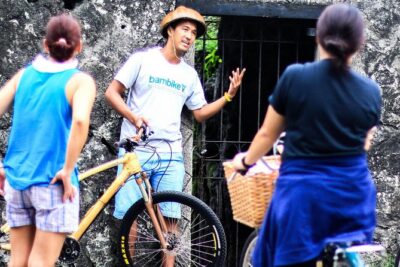
Experience Intramuros with Bamboo Bicycle – Ecotours
Read our review →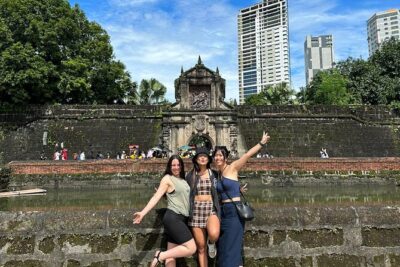
Intramuros, Chinatown, and Old Manila Half-Day Tour
Read our review →
Manila Food Tour: Explore World’s Oldest Chinatown
Read our review →
Explore Intramuros: Introduction to Philippine History
Read our review →Browse the lists this tour appears in