
Reviewed · INTRAMUROS HERITAGE WALKS
Intramuros Walking Tour by Don’t Skip Manila | Shore Excursion
Intramuros is Manila’s best place for making sense of the Philippines’ long, complicated past. This half-day tour links Fort Santiago, Rizal’s final prison, colonial churches, and Casa Manila into one clear story, instead of sending you from sight to sight with little context.
I like the focus on storytelling and the useful mix of walking, museum visits, and transport. I also like that the tour includes entrance fees, bottled water, an air-conditioned vehicle, and a horse-drawn carriage for groups of more than four. The main trade-off is time: four to five hours is enough for a strong introduction, but not enough for an unhurried look at every corner of Intramuros.
Key points to know before you book
- 400 years of history in one morning: The guide connects Spanish rule, Philippine nationalism, José Rizal, and Manila’s wartime past.
- Fort Santiago gets the most time: Plan on about one hour at Intramuros’ major citadel, including the area connected with Rizal’s imprisonment.
- Rizal is central to the tour: Rizal Park and the Rizal Shrine show both the public memory and private final days of the national hero.
- A good mix of transport and walking: The package includes an air-conditioned vehicle, and groups larger than four receive a horse-drawn carriage ride.
- Small enough to stay personal: The maximum group size is 24, with guides named Anne, Andrew, and Andrei associated with different departures.
- Best for history-minded visitors: This is a better match for you if you prefer explanation and context over a fast photo stop at many places.
Why Intramuros makes a strong half-day stop
Intramuros means within the walls. During the Spanish colonial period, it functioned as the political center of Manila, protected by stone defenses and organized around churches, government buildings, and private homes.
The district today is not a perfectly preserved old town. Manila’s wars and modern growth left their mark. That is part of the point. You see colonial buildings, reconstructed sites, religious landmarks, museums, and streets where several periods of Philippine history overlap.
The tour gives you a guide to connect those pieces. Instead of treating Intramuros as a collection of old buildings, it presents the area as a place shaped by conquest, Catholicism, resistance, national identity, and war.
That approach suits me better than a quick city tour. You get fewer stops than on a broad Manila sightseeing circuit, but the stops have a clear relationship to one another. By the end, you should understand why Rizal matters, why Intramuros mattered to Spanish Manila, and how the old walled city fits into the country’s national story.
More history on foot in Manila:
- Intramuros, Manila: Historical Bamboo Bike Tour
★ 4.8 · 583 reviews - Experience Intramuros with Bamboo Bicycle – Ecotours
★ 5.0 · 508 reviews - Manila: Intramuros, Chinatown, and Old Manila Half-Day Tour
★ 4.8 · 475 reviews
Starting at Rizal Park

The first stop is Rizal Park, Manila’s central park and the place where José Rizal was executed in 1896. The visit lasts about 10 minutes, so think of it as an introduction rather than a full park tour.
That short pause gives the guide a chance to place Rizal in the story before you visit the prison site connected with his final hours. Rizal was a writer, doctor, and reformist whose work helped shape Filipino national identity. You do not need a detailed background in Philippine history to follow the tour, since the storytelling format is designed to build the context as you go.
Ten minutes is enough for orientation and a look at the memorial area. It is not enough for a long stroll through the park, so you should not book this excursion expecting a separate garden visit.
Fort Santiago and Rizal’s final night
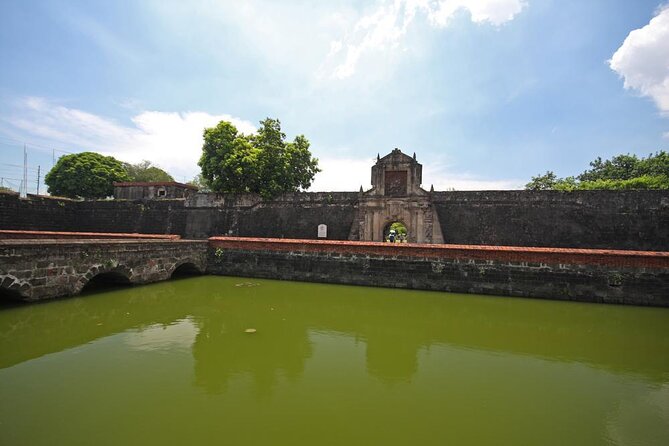
Fort Santiago receives about an hour, making it the main historical stop. Miguel López de Legazpi first built the citadel for the newly established Spanish city of Manila. Its walls and military purpose show how important Intramuros was to colonial rule.
The fort is also closely linked with José Rizal. The tour includes the place where he was held before his execution, giving the political story a human scale. This is one of the reasons the stop works so well in a half-day format. You are not just hearing about Spanish authority in general. You are standing in a place used to control the city and imprison a figure who became central to the Philippine nation.
Your guide’s role matters here. Anne has been described as friendly and clear, while Andrew has been praised for his humor and accommodating manner. Andrei has also led departures, with an emphasis on explaining the historical story. Names and guides can vary, but the experience depends heavily on how well the guide turns the fort from a set of walls into a readable chapter of Philippine history.
Fort Santiago can also be emotionally heavy. The subject matter includes imprisonment, execution, and the pressure of colonial rule. If you want only light sightseeing, this may feel more serious than expected. If you want the historical reasons behind Manila’s landmarks, it is the strongest part of the tour.
The Rizal Shrine and the story of Mi último adiós
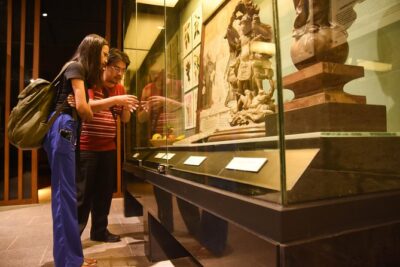
The Rizal Shrine is a museum devoted to José Rizal’s work and life. You spend about 30 minutes here, inside the building where Rizal spent his final night.
The museum preserves the connection between the public hero and the private man. Rizal hid his famous poem Mi último adiós, or My Last Farewell, in an oil lamp. That small detail gives the visit a memorable human touch. It shows the care and secrecy surrounding his last hours, rather than presenting him only as a name on a monument.
The shrine works best after Fort Santiago because you have already heard about his imprisonment. The museum then adds personal detail and helps explain why Rizal remains such a powerful figure in the Philippines.
Thirty minutes is a sensible amount of time for a guided visit, though you may want longer if you enjoy reading every display. The tour is built for a group moving through several sites, so this is not a slow museum afternoon.
A few more things to do in Manila worth a look
- Shared Cruise Shore Excursion of Manila Old and New City Tour
★ 4.0 · 10 reviews - Private Half-Day Shore Excursion in Manila
★ 5.0 · 7 reviews - Shore excursion: Puerto Princesa Island Hopping Tour
★ 4.0 · 27 reviews - Puerto Princesa Honda Bay Island Hopping Shore Excursion
★ 5.0 · 16 reviews
Manila Cathedral and San Agustin Church
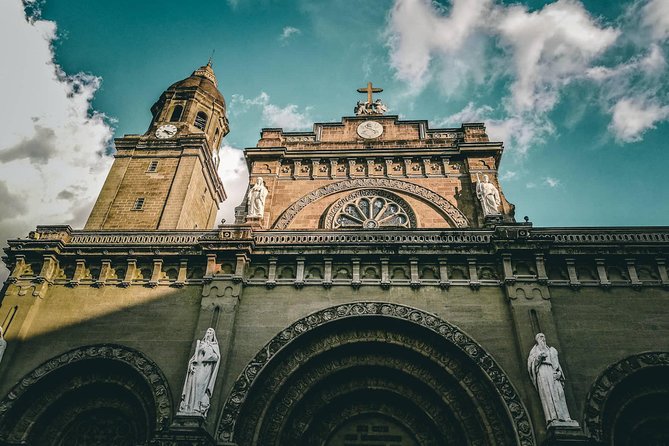
Manila Cathedral is the first cathedral in the Philippines and a basilica dedicated to the Immaculate Conception, the country’s principal patroness. The scheduled visit lasts about 15 minutes.
This is a brief look, not an extended religious architecture tour. The stop helps you see the role of Catholicism in Intramuros and gives the guide a chance to explain how religion and government were closely linked during the Spanish colonial period.
San Agustin Church is another important stop, although the supplied schedule does not assign it a separate duration. It is one of four Philippine churches recognized by UNESCO under the collective title Baroque Churches of the Philippines.
The two churches give you a useful contrast in scale and purpose. Manila Cathedral is the grand cathedral at the heart of the district, while San Agustin is valued for its place in the country’s Baroque church tradition. You should expect a quick, organized visit rather than a long architectural study.
Because these are active religious places, the pace and access may depend on services or local conditions. Dress and behave respectfully, and listen to the guide’s instructions inside the churches.
Casa Manila and colonial domestic life
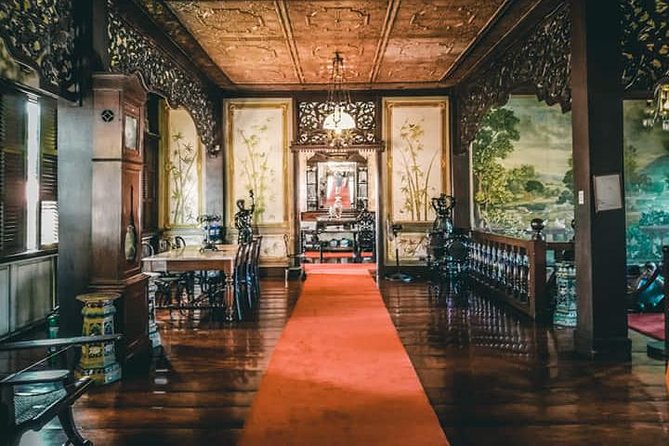
Casa Manila is the tour’s look at life inside a colonial-era home. The museum recreates an 1850s San Nicolas House that once stood on Calle Jaboneros.
You spend about 30 minutes here, moving from military and religious history into domestic life. Furnishings and room arrangements help show how the colonial period affected daily routines, social rank, and the design of wealthy homes.
This is an important change of pace. Fort Santiago tells you about power and confinement. The churches show public faith. Casa Manila lets you think about how colonial society worked at home.
The museum is a recreation rather than an untouched original house, so you should approach it as an interpretation of the period. That does not make it less useful. It gives the tour a practical way to discuss social life when many original homes and interiors are no longer available.
Walking, transport, and the carriage ride
The experience is not a nonstop walking tour. An air-conditioned vehicle is included, which matters in Manila’s heat and helps the group cover the route within four to five hours.
The description also includes a horse-drawn carriage ride when there are more than four participants. Some accounts of the tour refer to an open bus, so the transport arrangement may vary by departure. If the carriage ride is important to you, confirm the exact plan before booking.
This mixed format is one of the tour’s practical strengths. You walk through the important sites, then use transport when distance, weather, or timing makes it sensible. You still get close to the buildings and museums, but you avoid turning the entire morning into a hot road march.
The group limit is 24 people. That is not a private tour, but it is small enough for a guide to keep the group together and answer questions. If you want a completely flexible pace or long photography stops, a private option would likely suit you better. If you want a planned route with transport and a guide, the group format keeps things simple.
What the $83.34 price includes
At $83.34 per person, this is not the cheapest way to see Intramuros. The value depends on how much you want arranged for you.
The price includes:
- Air-conditioned transportation
- Museum and entrance fees
- Guide services
- All listed taxes and fees
- Bottled water
- A horse-drawn carriage ride for groups of more than four
That package removes several small costs and decisions. You do not need to work out which sites require tickets, find transport between the port and Intramuros, or build a route that fits into a cruise day.
For a shore excursion, the organized timing has real value. The meeting point is Pier 15 South Harbor, with departures between 8:00 and 8:30 a.m. from Tuesday through Sunday. Pickup is offered, but you should check the exact meeting instructions after booking.
The price makes the most sense for you if you want a guide who explains the setting and a vehicle that handles the city connections. It makes less sense if you mainly want to enter one or two sites and explore on your own.
Who will enjoy this tour most
I would choose this tour if you have only half a day in Manila and want a useful first introduction to Philippine history. It is especially well suited to people who enjoy museums, political history, religious buildings, and guide-led storytelling.
It also works well for cruise passengers. The departure from South Harbor and the planned four to five-hour schedule give you a structured way to visit Intramuros during a port call.
Families and mixed-age groups may appreciate the variety. You are not inside a museum for four straight hours. The route includes a park, fortress, shrine, cathedral, church, historic district, museum, vehicle ride, and possibly a carriage ride.
You should think twice if you dislike set schedules or prefer to spend an hour photographing one building. The tour moves through several locations, and the guide’s narration is a major part of what you are paying for.
You should also be ready for warm weather and walking between stops. The air-conditioned vehicle helps, but this is still a historic district tour, not a ride where you remain seated the whole time.
Booking details and useful timing
Confirmation is sent within 48 hours of booking, subject to availability. The tour runs Tuesday through Sunday during the listed 2025 and 2026 operating periods, with the morning meeting window beginning at 8:00 a.m.
The experience requires good weather. If poor weather causes cancellation, you are offered another date or a full refund. You can cancel for a full refund up to 24 hours before the start time, but changes or cancellations inside that 24-hour window are not accepted.
Most people can participate, and the tour is near public transportation. Personal snacks and souvenirs are not included, and gratuities are optional.
Should you book Intramuros Walking Tour by Don’t Skip Manila?
Book it if you want an honest, story-led introduction to Manila rather than a quick checklist of photo stops. Fort Santiago, the Rizal Shrine, Manila Cathedral, San Agustin Church, and Casa Manila give you a strong range of subjects in a manageable morning.
The tour earns its price through included admission, transport, a guide, and a route that is difficult to assemble efficiently during a short port visit. Anne, Andrew, and Andrei are among the guides associated with the experience, and the strongest part of the tour is clearly the guide’s ability to explain the past in plain language.
Skip it if you want complete freedom, a very slow museum visit, or a tour built mainly around modern Manila. For everyone else, especially first-time visitors with limited time, this is a well-planned way to understand why Intramuros matters.
FAQ
How long does the Intramuros tour last?
The tour lasts approximately four to five hours.
Where does the tour start?
The listed meeting point is Pier 15 South Harbor in Manila.
What time does the tour begin?
The meeting window is from 8:00 to 8:30 a.m., Tuesday through Sunday, during the listed operating periods.
What sites are included?
The route includes Rizal Park, Fort Santiago, the Rizal Shrine, Manila Cathedral, Intramuros, San Agustin Church, and Casa Manila.
Are entrance fees included?
Yes. Museum and entrance fees, along with all listed taxes and fees, are included.
Is transportation included?
Yes. An air-conditioned vehicle is included. A horse-drawn carriage ride is included when there are more than four tourists.
Is bottled water provided?
Yes. Bottled water is included.
How large can the group be?
The maximum group size is 24 people.
Can I cancel for a refund?
Yes. You can cancel at least 24 hours before the start time for a full refund. Cancellations made less than 24 hours before the experience are not refunded.
More Walking Tours in Manila
- Manila: Street Food and Drinks Walking Tour with Tastings
★ 4.8 · 114 reviews - Viva Old Manila: Intramuros Walking Tour
★ 4.9 · 104 reviews - Manila: Sightseeing and Food Walking Tour with Tastings
★ 4.7 · 68 reviews - Manila: Intramuros Walking Tour.
★ 4.9 · 63 reviews
Just added in Manila
- Private Tour: Tagaytay Midlands & Taal Volcano Boat Ride★ 4.5 · 15 reviews
- Tagaytay Adventure: Volcano Views, Countryside, Market & Cruise!★ 4.5 · 14 reviews
- 3 Days Private Tour in Banaue Ifugao visiting Batad Rice Terraces★ 3.5 · 3 reviews
- Tagaytay Day Tour sightseeing with Panoramic Taal volcano view★ 5.0 · 6 reviews
- Tagaytay + Hidden Valley Springs: A Scenic Escape w/ Transfers★ 4.0 · 4 reviews
- Unforgettable Manila Fishing Village Day Excursion 2024★ 5.0 · 4 reviews
- 5 Days Sagada Banaue Batad Discovery (PRIVATE GROUP TOUR Max 6 Travellers)★ 5.0 · 16 reviews
- Shared Old Manila Tour★ 5.0 · 5 reviews
Intramuros Heritage Walks, compared.

Intramuros, Manila: Historical Bamboo Bike Tour
Read our review →
Experience Intramuros with Bamboo Bicycle – Ecotours
Read our review →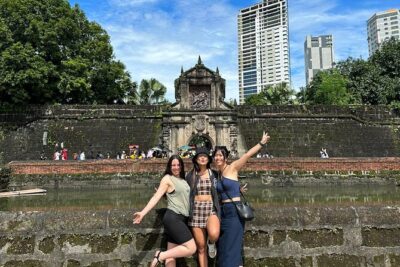
Intramuros, Chinatown, and Old Manila Half-Day Tour
Read our review →
Manila Food Tour: Explore World’s Oldest Chinatown
Read our review →

Explore Intramuros: Introduction to Philippine History
Read our review →Browse the lists this tour appears in