
Reviewed · INTRAMUROS HERITAGE WALKS
MANILA: HISTORICAL KALESA RIDE TOUR EXPERIENCE IN INTRAMUROS
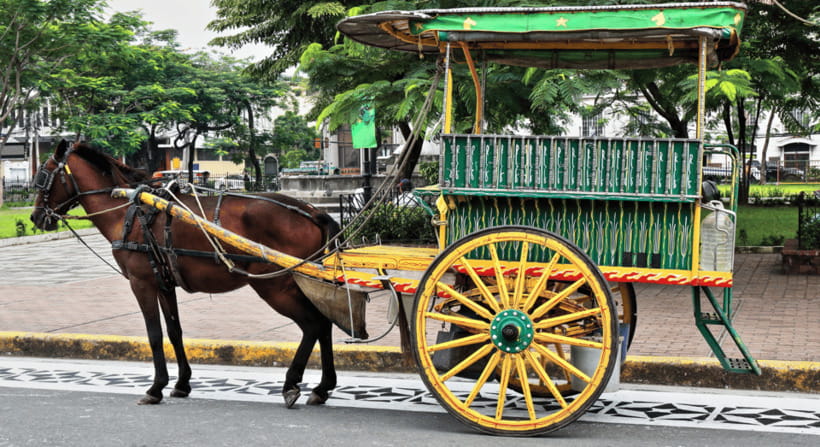
A traditional kalesa ride gives Intramuros a proper sense of time travel. You move between stone walls, churches, old mansions, and leafy ruins at a slow pace, with a guide explaining what you are seeing instead of simply ticking off photo stops. I especially like the private format for a family or small group, and the route includes both major landmarks and quieter corners such as Baluarte de San Diego Gardens.
I also like that Fort Santiago entrance is included, along with a full four-hour route. The main drawback is practical: one guest found it hard to hear the guide over traffic because the guide faced forward, and the carriage has no microphone or speaker. I would also confirm entrance fees and age or weight limits before booking, since the published restrictions are unusually repetitive and inconsistent.
Key points to know before you book
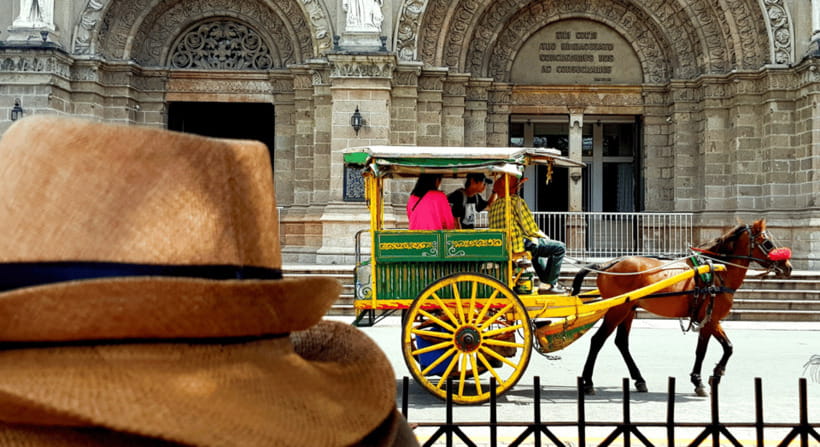
- Ride in a genuine kalesa: A horse-drawn carriage gives you a slower, more atmospheric way to see Intramuros than a standard vehicle.
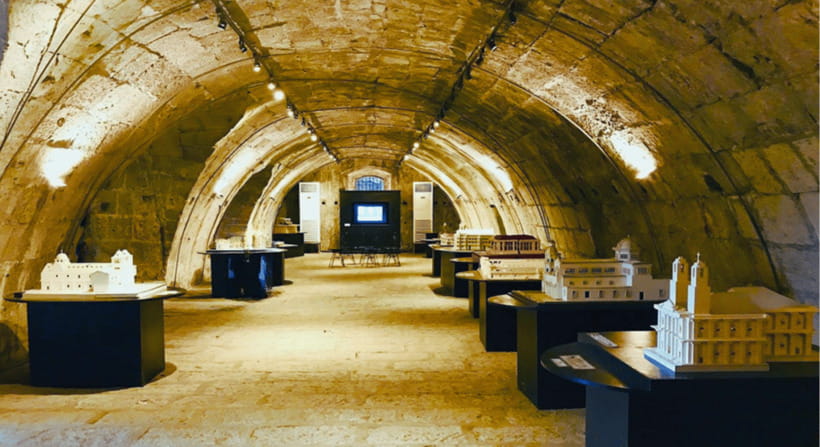
- Start at Fort Santiago: The tour includes the fort entrance, its chambers, dungeon, American barracks ruins, White Cross memorial, and iMake History Lego Museum.
- Visit Manila’s major old churches: The route includes Manila Cathedral and San Agustin Church, with time for both sightseeing and guided visits.
- Private group value: The $135 price covers up to four people, making the cost easier to justify when shared by a family or small party.
- Expect traffic noise: Ask your guide to repeat key points or pause when the carriage is stopped, especially if anyone in your group has difficulty hearing.
- Allow for extra fees: Fort Santiago is included, but other entrance charges and meals are not.
Why a kalesa is a good way to see Intramuros
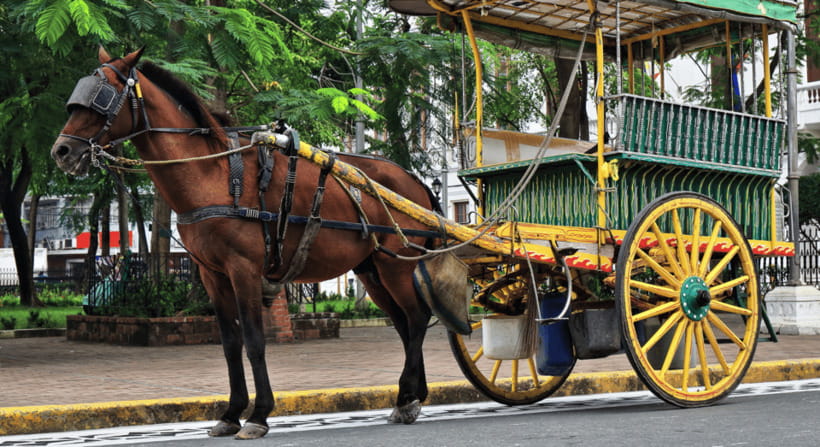
Intramuros is best understood at a walking pace. Its Spanish-era walls, plazas, churches, and stone buildings are close together, but the details can blur when you rush from one stop to the next. A kalesa slows the outing down and gives you time to look up at old facades, watch the streets pass by, and hear stories from your guide.
This is not just a carriage transfer between attractions. The ride is part of the experience. You are seated in a traditional horse-drawn vehicle while moving through Manila’s old walled district, which gives the tour a clear sense of place.
The group is private and limited to four people. That matters if you are traveling with family or friends, since you can ask questions without competing with a large group. The price is $135 per group, not per person. For four people, that works out to $33.75 each before any extra entrance costs. For one or two people, it is a more expensive outing, but you are paying for a private ride, driver, guide, and a four-hour route.
The experience provider is ATR Travel and Rent a Car. No guide name is supplied, so you cannot request a particular guide from the information provided. The available feedback points to guides who are respectful, patient, and well informed about the district. One guide was especially patient with an elderly mother, which is useful to know if your party includes someone who needs a slower pace.
More history on foot in Manila:
- Intramuros, Manila: Historical Bamboo Bike Tour
★ 4.8 · 583 reviews - Experience Intramuros with Bamboo Bicycle – Ecotours
★ 5.0 · 508 reviews - Manila: Intramuros, Chinatown, and Old Manila Half-Day Tour
★ 4.8 · 475 reviews
Starting at Fort Santiago
The meeting point is in front of Fort Santiago, where the tour begins. Three pickup descriptions are provided: Fort Santiago, the Fort Santiago parking area, and Metro Manila. Since these labels are not perfectly precise, I would confirm the exact meeting spot with the operator and arrive at least 10 minutes early.
Fort Santiago receives the longest visit, about one hour. This is the anchor of the tour, and the included entrance fee adds real value. You can see the fort’s chambers, dungeon, and the ruins of the American barracks. The White Cross memorial adds a more serious note, while the iMake History Lego Museum offers a lighter, creative way to view important events.
The fort is not only a photo stop. Its mix of military remains, memorial spaces, and museum material gives your guide several ways to explain Manila’s past. You should expect walking here, so comfortable shoes matter. The tour later returns to a carriage, but this first stop involves a guided visit on foot.
If you have only a short time in Intramuros, Fort Santiago is a sensible place to begin. It gives you the setting for the rest of the route, and the hour here is longer than the brief stops at Plaza Roma and Manila Cathedral.
Plaza Roma and the colonial center
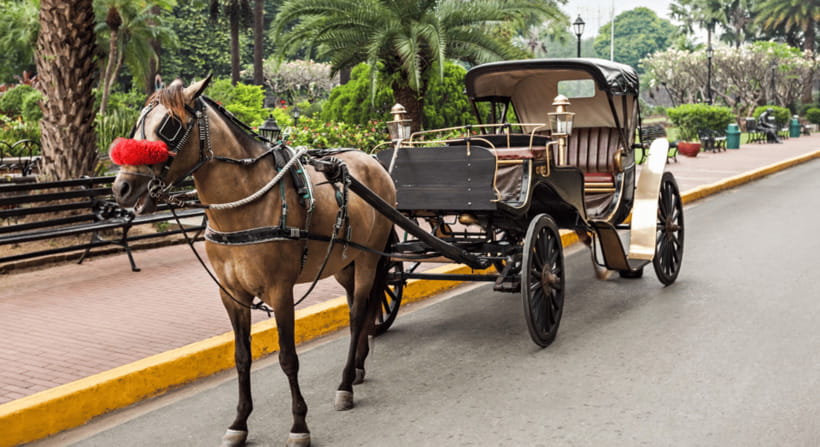
The kalesa then takes you to Plaza Roma for about 15 minutes. The focus is the statue of King Carlos IV, a reminder of the district’s Spanish colonial connections.
This is a short stop, so think of it as a guided orientation rather than a long visit. Your guide can place the surrounding buildings and streets in context, while you take photographs and get a feel for the formal layout of old Intramuros.
The value here comes from the connection between sites. Fort Santiago shows the defensive side of the old city. Plaza Roma shifts the focus to civic and colonial life. At 15 minutes, the stop will not satisfy anyone looking for a long historical lecture, but it fits well into a moving tour.
Manila Cathedral and San Agustin Church
Manila Cathedral is scheduled as a 15-minute photo and sightseeing stop. Its Romanesque Revival design and quiet interior make it one of the route’s most recognizable buildings.
Because the time is brief, you should not expect a detailed visit. The stop is useful for seeing the cathedral’s exterior and getting a short look inside if access and timing allow. Your guide can explain its place in Intramuros, but you may need to keep questions focused.
The longer church visit comes at San Agustin Church, where you have about 30 minutes. It is the oldest stone church in the Philippines and is known for its Baroque design. This is one of the most important stops for anyone interested in architecture, religious history, or old Manila.
I like the balance between these two churches. Manila Cathedral gives you a quick look at a grand Romanesque Revival building, while San Agustin offers more time for close attention to Baroque details. The schedule is still fairly tight, so do not expect to linger indefinitely.
Church visits also require respectful clothing and behavior. The tour information asks you to wear comfortable clothes, but visitors should also dress in a way suitable for religious sites. The available details do not specify a formal dress code, so modest clothing is the sensible choice.
A few more things to do in Manila worth a look
- Explore Intramuros: Introduction to Philippine History
★ 5.0 · 80 reviews - Experience Manila’s Heritage: Intramuros & More in Half a Day!
★ 5.0 · 76 reviews - Tagaytay, Taal Volcano & Heritage Town: A Journey of Discovery
★ 5.0 · 29 reviews - Half-Day Heritage Tour: Manila’s Historic Gems
★ 4.9 · 29 reviews
Seeing old Manila at Plaza San Luis
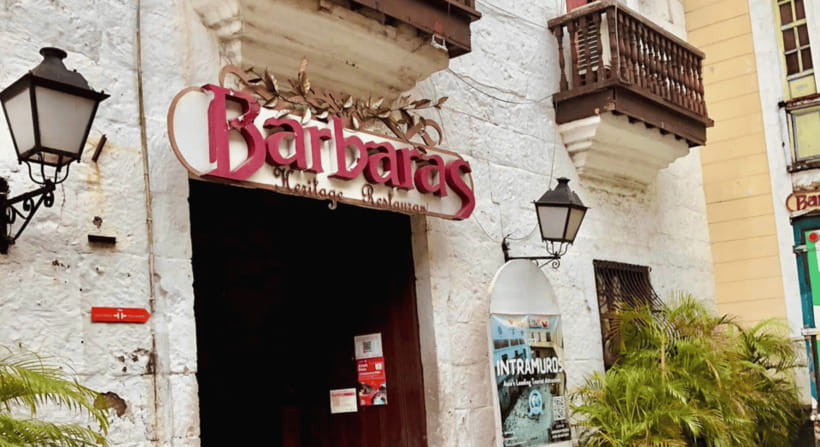
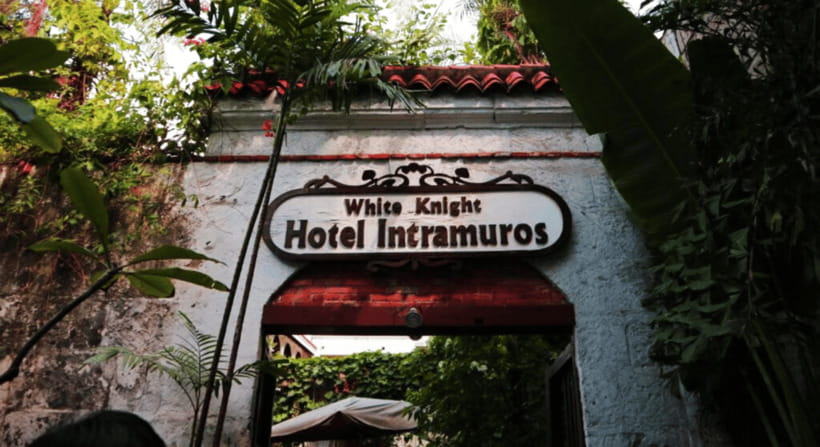
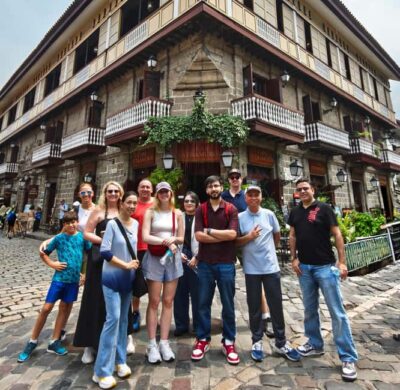
The tour continues to the Plaza San Luis Complex for around 30 minutes. The complex includes Barbara’s Restaurant, White Knight Hotel, and the Patio Wedding Reception Area.
This stop helps you picture domestic and social life in 19th-century Manila. The focus is not only on forts and churches. You also see spaces linked to dining, lodging, and celebrations, which gives the route a more personal side.
The complex is a useful contrast with the heavy stone defenses of Fort Santiago. It lets you consider how people lived, ate, entertained themselves, and received visitors in the old city.
Because the stop is guided, you can ask how the buildings fit together and what each space represents. Meals are not included, so do not assume the visit includes lunch or a restaurant allowance. Barbara’s Restaurant is part of the complex named in the route, but the package does not cover personal spending.
Casa Manila and the life of Manila’s elite
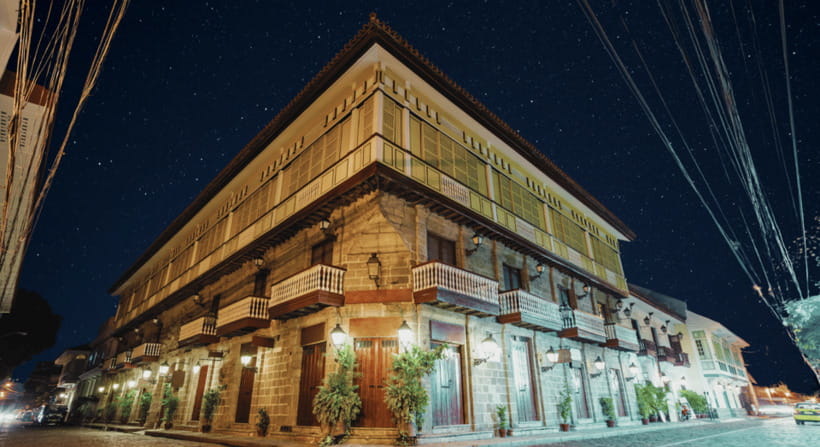
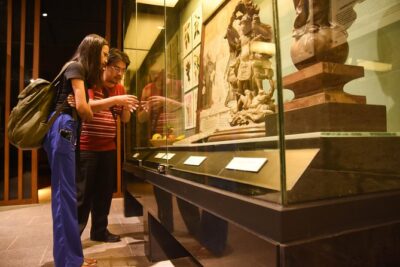
Casa Manila provides about 30 minutes inside a museum devoted to the opulent lifestyle of Manila’s colonial elite. This is where the tour shifts from public buildings to interiors and household life.
The museum setting gives you a chance to see how status was expressed through rooms, furnishings, and domestic arrangements. It is a useful stop if you want more than military landmarks and church exteriors.
I would pay attention to the contrast between Casa Manila and the kalesa itself. The carriage is simple and traditional, while the museum presents the world of people who had wealth and social power. That contrast helps make the old city feel like a place where different classes lived and worked, rather than a collection of preserved buildings.
Thirty minutes is enough for a focused visit, but not enough for a slow examination of every detail. If you are particularly interested in interiors, ask your guide which rooms or objects deserve the most attention.
Ending among the ruins at Baluarte de San Diego
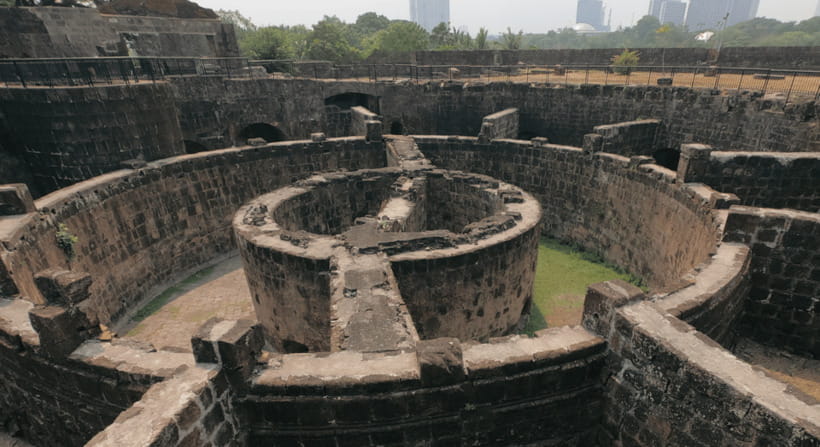
The final stop is Baluarte de San Diego Gardens, with roughly 30 minutes for a guided visit. The old fortification ruins and greenery offer a calmer end to the route.
After the churches, plazas, and formal buildings, this stop gives you room to pause. The gardens are suited to photographs and quiet reflection, and the ruined walls show another part of Intramuros’ defensive past.
Ending here makes sense. The route begins with Fort Santiago, a major fortress, and closes with a smaller fortified area set among gardens. You get one large military site at the start and a more peaceful ruin at the end.
The itinerary can change without notice, so the order or exact timing may shift. Still, the route includes a good mix of forts, religious buildings, colonial homes, public spaces, and gardens. That variety is one of the tour’s strongest features.
How the four-hour schedule feels
Four hours is enough to see the main points without turning the day into a rushed checklist, but the schedule leaves little room for long unscheduled stops. Fort Santiago receives about an hour. Plaza Roma and Manila Cathedral are short visits, while San Agustin Church, Plaza San Luis, Casa Manila, and Baluarte de San Diego each receive about 30 minutes.
The kalesa ride itself connects the stops, but the supplied timing does not give separate travel times between them. Traffic, pedestrian movement, and site access can affect the pace.
The main practical issue is sound. One guest traveling with an elderly mother found the guide patient and well informed, but difficult to hear because the guide faced forward and traffic noise surrounded the carriage. I would sit where you can hear clearly, ask the guide to speak toward the group when possible, and request a repeat if a key explanation gets lost.
There is no microphone or speaker listed. That may not matter on a quiet stretch, but it can matter near busy roads. If hearing every word is important to you, this is worth considering before you pay.
What the price includes, and what it does not
The $135 group price covers up to four people. Included are the kalesa, kalesa driver, tour, and Fort Santiago entrance fee.
The value is strongest for a small group of three or four. You receive private transport around Intramuros, a driver, an English-speaking guide, and a four-hour sightseeing plan. Splitting the price among four people makes it reasonable for a private experience.
The price does not include meals, personal expenses, or entrance fees to other locations. Since several stops are described as guided visits, you should confirm which sites require payment on the day. The information clearly confirms that Fort Santiago is included, but it does not list admission for Manila Cathedral, San Agustin Church, Casa Manila, or Baluarte de San Diego.
Reserve-and-pay-later booking is available, and cancellation is free up to 24 hours before the start time. Starting times depend on availability. Those terms are helpful if your Manila schedule is still moving around.
Who will like this tour most
I would recommend this tour to a small group that wants history with a strong sense of atmosphere. It suits families, couples, and friends who prefer a private outing to a large walking group.
It also makes sense for anyone who finds a long walking tour tiring. You still need to walk at Fort Santiago and the various sites, but the kalesa carries you between them. Comfortable shoes remain important.
The tour may work well for an older family member, based on the guide’s patience with one elderly guest. However, the operator lists several restrictions that need clarification. The experience is not suitable for wheelchair users, babies under one year, or people above the stated weight limits. The information lists limits of 130 kg, 140 kg, and 150 kg, as well as age limits above 70, 75, and 95. Because these details conflict, contact the provider before booking if age, weight, or mobility is a concern.
Smoking, vaping, alcohol, drugs, feeding animals, and smoking in the vehicle are not allowed. Electric wheelchairs and some electronic devices are also listed as prohibited. Bring an ID or passport, including identification for children. A copy is accepted according to the provided information.
Should you book the Intramuros kalesa ride?
Book it if you want Intramuros to feel like a place rather than a series of disconnected attractions. The kalesa, private format, included Fort Santiago admission, and broad route give you a pleasant four-hour introduction to Manila’s old walled district.
I would be more cautious if you want a fully flexible museum day, long visits inside every landmark, or a guide you can hear clearly in all conditions. The schedule is fixed enough to keep you moving, and traffic noise may affect the commentary.
For a group of four, the price is easier to justify. For two people, compare it with other private Intramuros options. Before booking, confirm the exact pickup point, extra entrance fees, age and weight rules, and how the guide will handle commentary from the carriage.
FAQ
Where does the Intramuros kalesa tour start?
Pickup is in front of Fort Santiago, where the tour begins. The listed pickup descriptions also include the Fort Santiago parking area and Metro Manila. Arrive 10 minutes early and confirm the exact meeting point.
How long does the tour last?
The tour lasts four hours, including the guided visits and kalesa transportation between stops.
How many people can join the private group?
The price covers one private group of up to four people.
What language does the guide speak?
The live tour guide speaks English.
Is Fort Santiago admission included?
Yes. The Fort Santiago entrance fee is included in the package.
Are other entrance fees included?
No. Entrance fees for other locations are not included. Meals and personal expenses are also excluded.
Is the kalesa ride suitable for wheelchair users?
No. The activity is listed as unsuitable for wheelchair users.
What should I bring?
Bring a passport or ID card, comfortable shoes, comfortable clothing, and a towel. Children also need a passport or ID card, and a copy is accepted according to the provided information.
Can I cancel the booking?
Yes. You can cancel up to 24 hours in advance for a full refund. Reserve-and-pay-later booking is also available.
Just added in Manila
- Private Tour: Tagaytay Midlands & Taal Volcano Boat Ride★ 4.5 · 15 reviews
- Tagaytay Adventure: Volcano Views, Countryside, Market & Cruise!★ 4.5 · 14 reviews
- 3 Days Private Tour in Banaue Ifugao visiting Batad Rice Terraces★ 3.5 · 3 reviews
- Unforgettable Manila Fishing Village Day Excursion 2024★ 5.0 · 4 reviews
- Tagaytay Day Tour sightseeing with Panoramic Taal volcano view★ 5.0 · 6 reviews
- Tagaytay + Hidden Valley Springs: A Scenic Escape w/ Transfers★ 4.0 · 4 reviews
- 5 Days Sagada Banaue Batad Discovery (PRIVATE GROUP TOUR Max 6 Travellers)★ 5.0 · 16 reviews
- Shared Old Manila Tour★ 5.0 · 5 reviews
Intramuros Heritage Walks, compared.

Intramuros, Manila: Historical Bamboo Bike Tour
Read our review →
Experience Intramuros with Bamboo Bicycle – Ecotours
Read our review →
Intramuros, Chinatown, and Old Manila Half-Day Tour
Read our review →
Manila Food Tour: Explore World’s Oldest Chinatown
Read our review →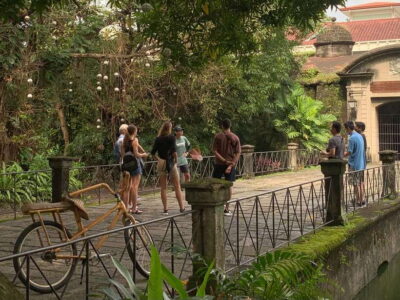
Explore Intramuros: Introduction to Philippine History
Read our review →Browse the lists this tour appears in