
Reviewed · INTRAMUROS HERITAGE WALKS
Private Half-Day Manila with Rizal Park and Fort Santiago
Manila’s story comes into focus through its monuments, churches, and wartime sites. This private tour links Fort Santiago, Rizal Park, and the American Cemetery in about four hours, giving you a useful first look at the capital without wrestling with city traffic on your own.
I like the private format and the included hotel pickup, especially if you have only a morning or a long airport layover. I also like the mix of grand national memorials and smaller interiors such as Casa Manila. The main drawback is pace: fifteen minutes at some stops is enough for photos and a short explanation, not a slow visit.
I also appreciate that the tour puts a guide beside you for the history. Guides Joan and Jonas received especially warm praise for their English, humor, and explanations of José Rizal and the Second World War. At $121.80 per person, the price makes the most sense for a small private group that values convenience.
Key points to know before booking
- Six major stops in four hours: You cover the American Cemetery, Rizal Park, Intramuros, San Agustin Church, Casa Manila, and Fort Santiago.
- Private transport matters in Manila: Pickup and return are included for hotels in Manila and Makati, with an air-conditioned vehicle between sites.
- Casa Manila is a highlight for interiors: The reproduction 19th-century home uses East Asian and European decoration with Philippine antique furniture.
- Fort Santiago brings the history into sharp focus: The old stone defense at the entrance to Manila Bay is tied to some of the country’s most painful episodes.
- The guide can shape the experience: Joan and Jonas are named in past feedback, with special praise for their history lessons and friendly manner.
- The schedule is brisk: Several stops last only 15 minutes, while Casa Manila and Fort Santiago receive about 30 minutes each.
A useful first look at Manila in half a day
This is not a wandering tour through every corner of Manila. It is a compact introduction to the places that help explain the country: the national hero José Rizal, Spanish colonial rule, Catholic tradition, wartime sacrifice, and Manila’s old defensive walls.
That focus is useful if you are staying in the capital for a short time. It also works well if you want an organized morning before a later flight, though you should allow plenty of separate time for airport plans. The tour lasts roughly four hours and begins at 8:30 a.m.
Because the activity is private, your group is not tied to strangers or a fixed public bus. You can ask questions as you go, which matters in a city where a quick view of a church or monument can leave you wondering what you just saw. The English-speaking guide is included, along with the driver and vehicle arrangements.
The tradeoff is that this is a highlights tour, not a slow cultural walk. You will see important places, but you will not have long stretches to browse, eat, shop, or explore side streets.
More history on foot in Manila:
- Intramuros, Manila: Historical Bamboo Bike Tour
★ 4.8 · 583 reviews - Experience Intramuros with Bamboo Bicycle – Ecotours
★ 5.0 · 508 reviews - Manila: Intramuros, Chinatown, and Old Manila Half-Day Tour
★ 4.8 · 475 reviews
Starting in Makati and reaching the American Cemetery
Pickup is offered from hotels in Manila and Makati. The tour begins from the financial district of Makati, then moves toward Fort Bonifacio and the Manila American Cemetery and Memorial.
The cemetery is given about 15 minutes, with admission included. That is a short visit, but the site carries considerable weight. It provides a clear connection to the Second World War and gives the tour a solemn opening before the colonial-era sights later in the morning.
A guide can help you understand what you are seeing rather than treating the cemetery as a quick roadside photo stop. One particularly positive account singled out the American Cemetery and Memorial as an impressive part of the tour, with the Second World War forming an important thread in the morning’s history lesson.
You should know what 15 minutes means here. You can pause, take in the memorial grounds, and hear an introduction, but you should not expect an extended cemetery visit. If this is the site you most want to study, you may wish to arrange additional time separately.
Rizal Park and the story of José Rizal
The next major stop is Rizal Park, named for Dr. José Rizal, the Philippine national hero. The visit lasts about 15 minutes and includes the Rizal Shrine.
This is one of the most useful stops for understanding national identity. Rizal’s name appears throughout the country, but a short explanation at the park helps connect the person to the wider story of the Philippines. A guide can explain why he matters and how his life fits into the country’s struggle and memory.
One account specifically praised the explanation of Rizal’s life and importance. That is a good reason to ask questions rather than simply take a picture at the park. The setting gives you a physical place to connect with a figure you will likely encounter again during your time in the Philippines.
Still, the stop is brief. You will get an introduction and a chance to see the main area, not an in-depth tour of every feature. Think of Rizal Park as a history lesson with a place attached to it.
Entering Intramuros, Manila’s walled district
After a brief picture stop, the tour proceeds into Intramuros, the historic walled city. The listed stop lasts about 15 minutes, so the experience is more of an orientation than a full walking exploration.
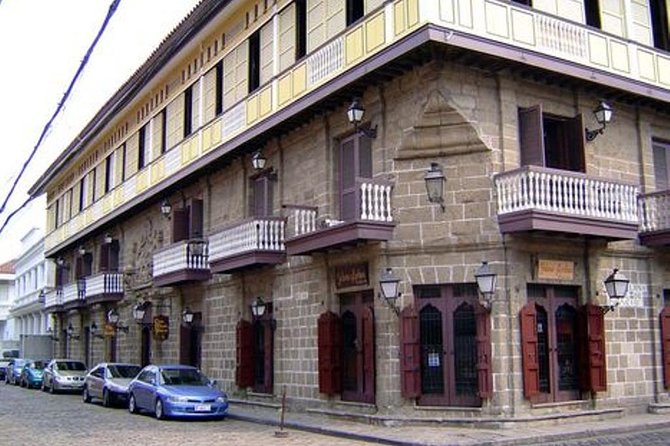
Intramuros gives the tour its strongest Spanish colonial setting. The old walls, cobbled streets, churches, and surviving buildings create a sharp contrast with the modern districts of Manila. This is where the morning shifts from national memorials to the city’s older built environment.
The short timing is both helpful and limiting. You can see the character of the district without spending the entire day inside it, but you may leave wanting more. If you enjoy architecture, old churches, or street photography, this is the part of the tour most likely to make you wish for extra hours.
The private vehicle also helps here. You are not expected to figure out the route between Makati, the cemetery, Rizal Park, and Intramuros on your own. The guide can provide the thread connecting each place, while the driver handles the transfers.
A few more things to do in Manila worth a look
- Discover Tagaytay’s Countryside: Half-Day Sightseeing Tour
★ 4.5 · 207 reviews - From Manila: Tagaytay Countryside Wonders: A Half-Day Tour
★ 4.4 · 187 reviews - MANILA HALF-DAY TOUR (4HRS)
★ 4.7 · 43 reviews - Half-Day Manila City Tour
★ 5.0 · 29 reviews
San Agustin Church and a living Catholic tradition
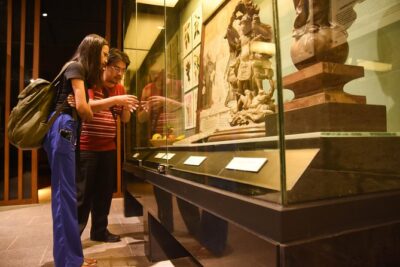
San Agustin Church is described as the country’s oldest stone church. The tour takes you through its cobbled surroundings and gives you a view of its collection of ecclesiastical icons, vestments, and other religious articles.
This stop adds more than another old building. It shows how Catholic worship and Spanish colonial influence shaped Manila. The church is also a working religious site, not simply a preserved monument. One account noted seeing a baptism in progress, a reminder that the building remains part of daily life.
That kind of moment can be more revealing than a perfectly empty room. It also means you should behave respectfully, keep voices low, and understand that access may be affected by a service or ceremony. The supplied details do not promise a private church visit, so the exact experience may depend on what is happening when you arrive.
The church stop is listed at about 15 minutes. That is enough for an introduction and a look at the collection, but not a long period of quiet study. If religious art is important to you, listen closely to the guide and use the short visit well.
Casa Manila, with a look inside a 19th-century home
Across from San Agustin Church is Casa Manila, a reproduction of a 19th-century house. It is furnished with East Asian and European decoration and Philippine antique furniture, and the tour allows about 30 minutes here.
I consider this one of the better-balanced stops because it moves the history from public monuments into domestic life. Churches and forts tell you about power, religion, and defense. Casa Manila gives you a sense of how an upper-class home was presented and furnished during the colonial period.
The blend of East Asian, European, and Philippine elements is the main point. You are not looking at a simple Spanish copy. The house reflects the many influences that shaped Manila, and the furnishings give the guide useful material for explaining customs and daily life.
One account singled out Casa Manila as a favorite, along with the Chinese Cemetery. The Chinese Cemetery is not part of the listed itinerary, so do not book this tour expecting to visit it. Still, that comment suggests the broader appeal of Manila’s unusual historic sites: the city’s story is not limited to one colonial influence.
Thirty minutes is a better allowance than the shorter stops, though it remains an introduction. You can see the rooms and details without having time to linger over every object. Ask your guide to point out the items that best show local life and outside influence.
Fort Santiago, where Manila’s defenses and tragedies meet
The tour continues to Fort Santiago, described as Manila’s main defense against invaders from the sea. The stone fort guards the entrance to the city from Manila Bay and is linked to many tragic moments in Philippine history.
This is likely to be the emotional center of the morning. The fort is not just a military structure. Its position and surviving stonework help explain how Manila was defended, while its historical associations give the visit a darker tone.
The scheduled visit lasts about 30 minutes. That gives you enough time for the guide to explain the fort’s purpose and for you to take in the main areas, but the site deserves attention rather than a hurried checklist. Listen for the connections between the fort, the city, and the country’s wartime experience.
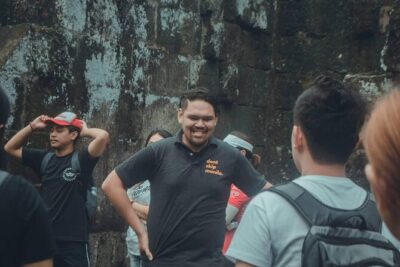
A guide is especially valuable here. Without context, a fort can become a series of walls and courtyards. With a clear account, the space becomes easier to read. Past guide feedback highlighted strong history lessons and a good sense of fun, a useful combination for a subject that can otherwise feel heavy.
The tour does not promise every corner of Fort Santiago or a long independent walk. If you have a strong interest in military history, you may want to return on your own with more time. For a four-hour introduction, though, this is the right kind of final stop.
What the guide and private format add
The guide may be as important as the route. Joan was praised for leading an effective introduction during a long airport layover, while Jonas was praised for his history knowledge and sense of fun. The tour provider assigns the guide, so those names are examples rather than a guarantee.
The best use of the guide is to ask focused questions. Ask about José Rizal at Rizal Park, the wartime story at the American Cemetery and Fort Santiago, or the mix of influences inside Casa Manila. These sites reward explanation, and the short schedule makes clear storytelling important.
The private setup also gives you a little breathing room. Only your group participates, so the guide can respond to your interests. A family can keep children engaged with shorter explanations, while a history-minded group can ask for more detail. Children must be accompanied by an adult, and the child rate applies only when sharing with two paying adults.
Most people can participate, but the provided details do not promise special accessibility arrangements. If anyone in your group has mobility needs, confirm the practical details before booking rather than assuming every cobbled street, church area, or fort passage will be easy.
Is $121.80 per person fair?
The price is $121.80 per person. That is not a bargain-priced city bus tour, but this is a private activity with hotel pickup and return, an English-speaking guide, an air-conditioned vehicle, included taxes and fees, and admission to the listed paid sites.
The value depends mainly on group size. For one or two people, the cost is significant. For a larger private group, the per-person value improves because you are paying for a dedicated guide and vehicle rather than a seat on a large shared outing.
I would also factor in the value of time. Manila is a large, busy capital, and the route connects sites in different areas. If you have only one morning, the service saves you from arranging transport and deciding which places can fit. The tour also gives you a clear historical framework, which can make the rest of your stay easier to understand.
Food and drinks are not included, and personal expenses are your responsibility. Plan to eat before or after the tour rather than expecting a meal during the four-hour schedule.
Who should book this Manila tour?
I would choose this tour if I had a short stay, a long airport layover, or a first morning in Manila and wanted the main historical sights handled efficiently. It is also a good match for people who prefer a private guide over a large group.
Families may like the direct transport and short visits, though the amount of historical explanation may need to be adjusted for younger children. Couples and small groups can make good use of the private format by asking the guide to focus on architecture, wartime history, José Rizal, or religious sites.
I would not choose it if I wanted a full day inside Intramuros, long museum visits, an unhurried food experience, or a broad look at modern Manila. The tour gives you a selected set of historic places, not a complete picture of the city. One direct assessment was that it delivers what it promises while leaving other parts of Manila unexplored. That is a fair reading.
Because the experience is non-refundable and cannot be changed after booking, check your hotel location, date, party size, and morning plans carefully before paying.
Should you book it?
Book it if you want efficient access to Manila’s main historic sights, especially with hotel pickup, a private vehicle, and a guide who can connect the stops. Casa Manila, San Agustin Church, and Fort Santiago give the morning variety, while Rizal Park and the American Cemetery add national and wartime context.
Skip it if you want to explore at a slow pace or spend most of your time walking through Intramuros. For a first look, a layover, or a tightly planned morning, it offers solid practical value. Just arrive ready for a quick rhythm, and treat the four hours as an introduction rather than the final word on Manila.
FAQ
How long does the tour last?
The tour lasts approximately four hours.
What time does the tour start?
The listed start time is 8:30 a.m.
Is hotel pickup included?
Yes. Free hotel pickup and drop-off are included for hotels in Manila and Makati.
Is this a private tour?
Yes. Only your group participates in the activity.
What transport is used?
The tour uses an air-conditioned vehicle for transfers between the sites.
Is a guide included?
Yes. An English-speaking local tour guide is included.
Which places are visited?
The route includes the Manila American Cemetery and Memorial, Rizal Park, Intramuros, San Agustin Church, Casa Manila, and Fort Santiago.
Are admission tickets included?
Admission is included for Intramuros, San Agustin Church, Casa Manila, and Fort Santiago. The American Cemetery and Rizal Park stops are listed with free admission.
Are food and drinks included?
No. Food and drinks are not included.
Can I cancel or change the booking?
No. The experience is non-refundable and cannot be changed for any reason after booking.
Just added in Manila
- Private Tour: Tagaytay Midlands & Taal Volcano Boat Ride★ 4.5 · 15 reviews
- Tagaytay Adventure: Volcano Views, Countryside, Market & Cruise!★ 4.5 · 14 reviews
- 3 Days Private Tour in Banaue Ifugao visiting Batad Rice Terraces★ 3.5 · 3 reviews
- Tagaytay + Hidden Valley Springs: A Scenic Escape w/ Transfers★ 4.0 · 4 reviews
- Unforgettable Manila Fishing Village Day Excursion 2024★ 5.0 · 4 reviews
- Tagaytay Day Tour sightseeing with Panoramic Taal volcano view★ 5.0 · 6 reviews
- 5 Days Sagada Banaue Batad Discovery (PRIVATE GROUP TOUR Max 6 Travellers)★ 5.0 · 16 reviews
- Shared Old Manila Tour★ 5.0 · 5 reviews
Intramuros Heritage Walks, compared.

Intramuros, Manila: Historical Bamboo Bike Tour
Read our review →
Experience Intramuros with Bamboo Bicycle – Ecotours
Read our review →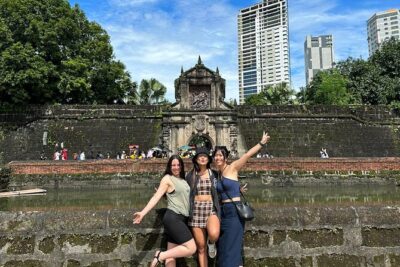
Intramuros, Chinatown, and Old Manila Half-Day Tour
Read our review →
Manila Food Tour: Explore World’s Oldest Chinatown
Read our review →
Explore Intramuros: Introduction to Philippine History
Read our review →Browse the lists this tour appears in