
Reviewed · FILIPINO FOOD & STREET FOOD TOURS
The Ultimate Cebu Food Tour: Local Tastes & Cultural Journey
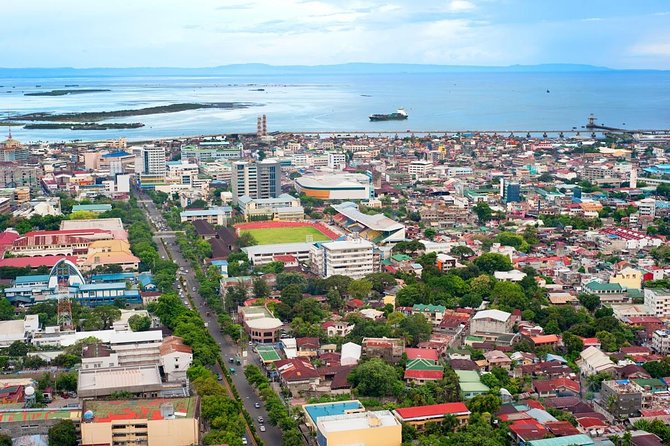
Cebu’s food story is best understood on foot, with smoke from roadside grills, fruit piled high in market stalls, and old streets still doing everyday work. This private tour links Colon Street with Carbon Market, giving you a close look at Cebu’s food and city life rather than keeping you inside a restaurant.
I like the generous food allowance, which can include lechon, barbecue, pungko-pungko dishes, fruit, and ice cream. I also like the guides’ personal touch. Cyrus helped one group recover from a meeting-point problem, while Jesriel was praised for being friendly, helpful, and informative. The main caution is that this is more than light sampling, and the balance may lean sweet for some people.
Key points to know before booking
- Colon Street begins the story: Cebu’s oldest street gives you a quick look at shopping, bargaining, street food, and daily city life.
- Carbon Market takes up most of the tour: Expect about two and a half hours among produce, spices, snacks, vendors, and food stalls.
- This is a real meal, not just a few bites: Come hungry, especially if you want to try lechon and pungko-pungko.
- Private touring keeps the pace flexible: Only your group participates, so questions and food preferences are easier to discuss.
- Cyrus, Shana, and Jesriel are named guides: Their role is central to making the market stops understandable and comfortable.
- Check the meeting point before you go: One participant found the listed Pusô Village location permanently closed, though Cyrus had another plan ready.
Why Cebu food makes a good walking tour
Cebu’s cuisine makes sense when you see where the ingredients are sold and how people eat them. Geography, history, and outside cultural influences have all shaped the island’s cooking, but the clearest explanation may come from a market stall or a shared plate of food.
This tour gives you that setting. Instead of simply arriving at a restaurant and receiving a finished dish, you move through Colon Street and Carbon Market while seeing produce, spices, tropical fruit, and prepared food in the same local setting. The connection between ingredient and meal becomes easier to understand.
The tour starts at 4:00 pm and lasts about three hours. That timing is useful. You avoid the heat of midday, and the food naturally builds toward dinner. You also get a look at Cebu as the afternoon shifts into evening, when the streets remain active and food stalls become especially important.
I would not book this expecting a quiet culinary seminar. This is a city walk through working commercial areas. You will encounter noise, crowds, bargaining, changing sidewalks, and plenty of visual activity. That is part of the point, but it also means comfortable shoes matter.
More places to eat your way through Cebu:
- Cebu City: Historical Street and Food Tour
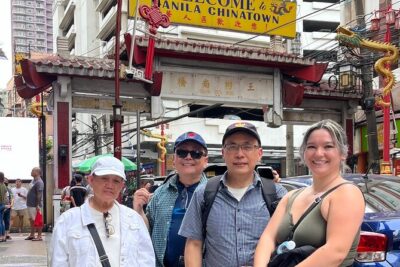
★ 4.9 · 31 reviews - Manila Food Tour: Explore World’s Oldest Chinatown
★ 5.0 · 158 reviews - Manila: Street Food and Drinks Walking Tour with Tastings
★ 4.8 · 114 reviews
Colon Street: 30 minutes in Cebu’s oldest commercial corridor
The first stop is Colon Street, known as the oldest street in the Philippines. The tour spends about 30 minutes here, enough time to introduce the area without letting the opening walk take over the food experience.
Colon is a working street lined with shops and everyday businesses. You may see people browsing, bargaining, and moving between stores while the smells of street food drift through the area. The value of this stop is not a single monument or formal attraction. It is the chance to see how commerce, food, and local movement share the same space.
Your guide can help connect the street’s past with its present. Cebu’s older areas are not frozen museum pieces, and Colon Street is a good example. It remains useful to local people, even as it carries historical importance.
The drawback is that 30 minutes is not long enough for a detailed historical tour. If you want a full architectural study or an extended account of Cebu’s past, this stop will feel brief. Here, Colon functions mainly as an introduction to the city’s character and food culture.
Pay attention to the transitions. Shops, people, traffic, and food stalls appear side by side. That mixture prepares you for Carbon Market, where the tour becomes more focused on ingredients and eating.
Carbon Market: the main course of the afternoon
Carbon Market receives about two and a half hours, so this is the heart of the experience. It is described as Cebu’s oldest and biggest market, with stalls selling fresh produce, fruit, spices, textiles, handicrafts, and ready-to-eat food.
This is where the tour earns its price. A guide is useful in a market because you can easily walk past unfamiliar ingredients without knowing what they are or how they are used. Your guide can explain food traditions, point out local favorites, and help you understand how vendors prepare and sell their products.
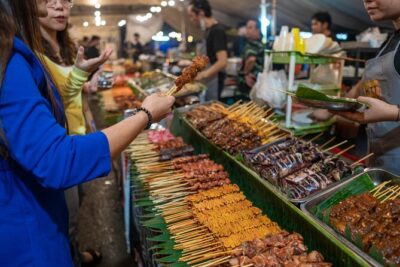
You will likely spend much of this part walking, stopping, tasting, and asking questions. The market’s colors and smells change from one area to the next. One stall may focus on fresh ingredients, while another offers cooked food ready for a quick meal.
The social side matters, too. Meeting vendors and hearing about their work gives the food a human scale. You are not just checking off dishes. You are seeing the people who sell, prepare, and preserve the tastes that shape Cebu’s daily life.
Still, you should set your expectations correctly. Carbon Market is a working market, not a polished food hall. The walk may feel crowded and untidy in places. That can be tiring, especially after several tastings, but it is also what makes the stop feel connected to ordinary Cebuano life.
Lechon, pungko-pungko, and the food on your plate
Lechon is one of the most important named foods on the tour. Cebu is widely associated with roasted pig, and tasting it here gives you a direct connection to one of the island’s best-known specialties.
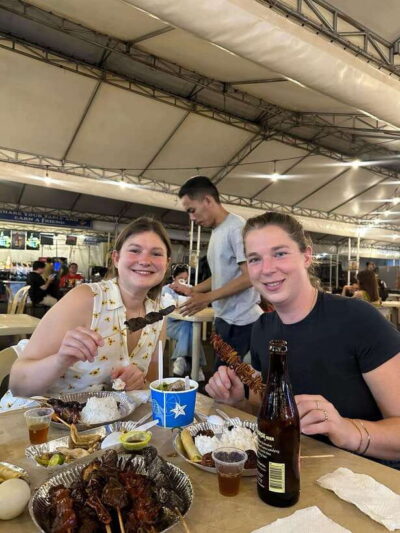
Pungko-pungko is another key experience. The term is tied to casual eating, often involving low seating and simple shared dishes. The tour presents this as more than a quick nibble. One participant specifically advised arriving without eating beforehand because the portions felt like meals rather than samples.
That advice is worth taking seriously. The included food covers dinner and snacks, and the tour may also provide bottled water and soda. If you eat a full meal immediately before the 4:00 pm start, you may have less room to try the dishes that make the walk worthwhile.
The food selection is not limited to savory dishes. It can include sweet fruit, ice cream, and other treats. One person felt the tour offered more sweet tastings than savory ones, so keep that in mind if your main goal is a meat and street-food crawl.
I see this as a benefit for people who want variety. You may try familiar Filipino favorites alongside foods that are less recognizable. But if you want a tightly planned menu with an even split between savory courses and dessert, this may feel less precise.
Because the exact food lineup can depend on what is available, your guide’s judgment matters. Cyrus, Shana, and Jesriel are the named guides connected with the experience, and the food stops work best when you ask questions and explain what you like. The guides can share the reasoning behind the choices and help make the experience easier to follow.
A few more things to do in Cebu worth a look
- The Original Cebu City Historical and Food Walking Tour
★ 4.5 · 81 reviews - Cebu Steet food, historical and mountain tour
★ 5.0 · 15 reviews - Food, Historical and Mountain Tour in Cebu City
★ 4.5 · 8 reviews - Boracay Sunset Cruise with Party DJ & Unlimited Food and Drinks
★ 5.0 · 211 reviews
What the guide adds to a private group
This is a private activity, so only your own group participates. That changes the feel of the tour. You can ask more questions without holding up a large party, and the guide can spend more time explaining a dish or helping you decide what to try.
The guides also appear to be an important part of the practical experience. Cyrus handled a meeting-place problem by having another plan ready. That does not erase the inconvenience, but it shows why having a responsive guide matters in a busy city.
Jesriel is described as friendly, informative, and helpful. Cyrus and Shana are also associated with working hard to make the experience go well. I would not assume every guide will use the same route or explain every dish in exactly the same way, but the named staff give you a useful idea of the personal approach.
A private format is especially helpful if your group has different comfort levels with street food. You can ask about ingredients, request more explanation, or pace yourself. The tour is not advertised as a specialized allergy or dietary program, so you should raise any food concerns before booking and confirm what can be accommodated.
Is $69.98 good value?
At $69.98 per person, this is not the cheapest way to buy street food in Cebu. If your only goal is to eat a few inexpensive snacks, you can spend less by exploring on your own.
The value comes from what is bundled with the food. You receive about three hours of guiding, dinner, snacks, bottled water, and soda. You also get help navigating Colon Street and Carbon Market, along with explanations of food traditions and local life.
A private tour can also be worthwhile for a first visit. You avoid spending time guessing what to order or trying to work out the market on your own. The guide provides a route and context, which lets you focus on tasting and observing.
I would consider the price fair for someone who wants a substantial food outing with a guide. It is less attractive for a confident independent eater who already knows Cebu’s markets and prefers to choose every dish personally.
Transportation to and from the meeting point is not included, though it may be arranged for an extra fee. That cost should be added to your budget if you are staying far away or do not want to make your own way to the start.
Meeting point, timing, and walking comfort
The stated starting point is Pusô Village on M.L. Quezon Boulevard in the Santo Niño area of Cebu City. The end point is Pier 1 Service Road. Since the tour is point to point, you should plan for the finish rather than assuming you will return to your hotel.
There has been a reported problem with the meeting point, with Pusô Village described as permanently closed at one point. Cyrus had an alternative plan, but I would still confirm the exact start location shortly before the tour. This is the most important practical issue to check.
The tour is near public transportation, but transport to and from the meeting point is not part of the included price. You should also carry a little money for incidental needs, including toilet use at tourist spots and stopovers.
Wear comfortable shoes. The tour includes a substantial market walk, and Carbon Market occupies most of the three-hour schedule. The description says most people can participate, but it does not promise a step-free route or a special accessibility setup.
The tour requires good weather. If poor weather causes cancellation, you can receive a different date or a full refund. If the minimum number of participants is not reached, the operator offers another date or experience, or a full refund.
Who will enjoy this Cebu food tour?
I would recommend it to first-time Cebu visitors who want a guided introduction to local food without spending an entire day on a formal culinary course. It also suits people who enjoy markets, street scenes, and conversations with vendors.
Families and small private groups may like the format because they can move at their own pace. People who are curious but cautious about street food may also benefit from having a guide explain what they are seeing and eating.
This is not the best match for someone seeking a quiet, seated dinner or a carefully designed tasting menu. It may also disappoint you if you want only savory food, since sweets and fruit play a noticeable role.
Arrive hungry, wear good walking shoes, and keep your schedule open after the tour in case the substantial food leaves you ready for an early night rather than another meal.
Should you book it?
Book this tour if you want a generous, private food walk that combines Cebuano dishes with Colon Street and Carbon Market. The included dinner and snacks make it more substantial than a quick sample tour, while the guides add local context and practical help.
I would pause only if you dislike busy markets, need a strictly savory menu, or prefer to explore food stalls independently. Confirm the meeting point before setting out, then arrive hungry. For most visitors looking for a friendly first taste of Cebu’s everyday food culture, the three-hour route offers solid value.
FAQ
How long does the Cebu food tour last?
The tour lasts approximately three hours.
What time does the tour start?
The scheduled start time is 4:00 pm.
Where does the tour begin?
The stated meeting point is Pusô Village on M.L. Quezon Boulevard in Santo Niño, Cebu City.
Where does the tour end?
The tour ends at Pier 1 Service Road in Cebu City.
Is transportation included?
Transportation to and from the meeting point is not included. It may be arranged for an additional fee.
What food and drinks are included?
Dinner, snacks, bottled water, and soda are included.
Is this a private tour?
Yes. Only your group participates in the activity.
Which places are included?
The route includes Colon Street and Cebu Carbon Market.
Can most people participate?
The activity states that most people can participate. It does not provide specific accessibility details for the walking route.
What happens if the weather is poor?
If poor weather cancels the experience, you will be offered another date or a full refund.
What is the cancellation policy?
You can cancel at least 24 hours before the start time for a full refund. Cancellations or changes made within 24 hours are not refunded or accepted.
Just added in Cebu
- Whale Shark Watching & Tumalog Falls & Kawasan Falls★ 5.0 · 16 reviews
- Whale Shark Watching and Sumilon Sandbar Private Tour Package★ 5.0 · 17 reviews
- Whale Shark Watching with Sumilon Sandbar and Kawasan Falls Tour★ 5.0 · 8 reviews
- Full Day Shark Watching and Canyoneering in Cebu★ 5.0 · 15 reviews
- Cebu Whale Shark Encounter, Moalboal Sardines & Tumalog Falls★ 4.0 · 18 reviews
- Bohol Chocolate Hills & Tarsiers with roundtrip ferry from Cebu★ 5.0 · 7 reviews
- Half day tour with Snorkel at Sancturary and Sulpa island★ 5.0 · 3 reviews
- Transfer Cebu City – Bantayan Island★ 3.5 · 4 reviews
Filipino Food & Street Food Tours, compared.
Manila Food Tour: Explore World’s Oldest Chinatown
Read our review →
Street Food and Drinks Walking Tour with Tastings
Read our review →
Makati Street Food Experience end with a Rooftop Bar
Read our review →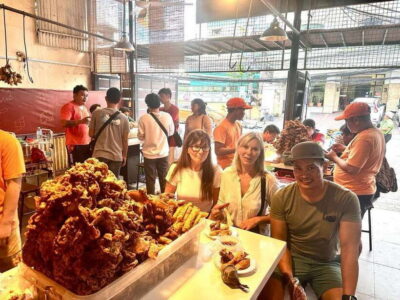
Browse the lists this tour appears in