
Reviewed · INTRAMUROS HERITAGE WALKS
Manila Chinatown Food Tour Experience
Manila’s Binondo Chinatown is best understood one bite at a time. This two-hour walk leads you through narrow streets and food stalls while your guide explains what you are eating, how Chinese and Filipino food traditions meet, and why this district matters to Manila. It is a useful way to get oriented in a place that can feel confusing at first.
I like the seven to ten food samples, which turn a short visit into a proper tasting rather than a single snack stop. I also like the guides’ wider role: Mara, Tessie, and Mari are praised for explaining local culture and history, not just pointing at plates. The main drawback is simple: two hours passes quickly, and a group of up to 15 can make food stops feel less flexible.
Key points at a glance
- Seven to ten tastings: Expect a broad sampling of Chinese, Filipino-Chinese, and street-food dishes.
- A guide who explains the setting: The tour covers food, culture, and the story of Binondo.
- A practical first visit: Local transport by jeepney or tuk tuk helps connect parts of the experience.
- A small-group format: The maximum group size is 15, large enough for company but not a private tour.
- Souvenirs and gold stalls: The route includes more than eating, with time to see shopping areas.
- Simple logistics: It starts and ends at 1919 Grand Cafe on Juan Luna Street, with mobile tickets and bottled water included.
Why Binondo works so well as a food tour
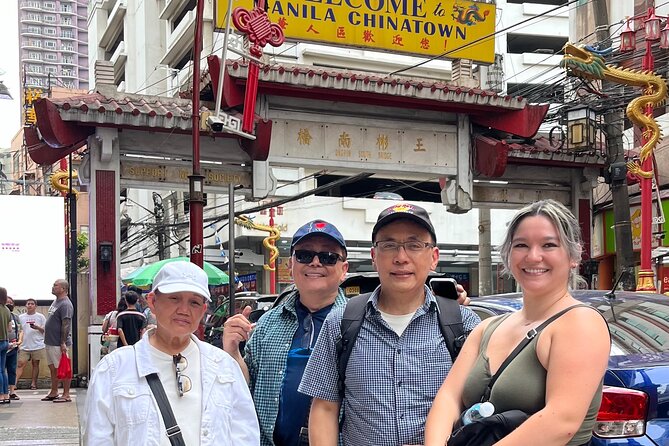
Binondo is Manila’s old Chinatown, a district where Chinese traditions and Filipino city life meet in the same few streets. You get markets, small food businesses, Chinese shops, historic sites, and a steady flow of people moving through tight urban spaces.
That mix is hard to grasp from a map alone. You can walk through Binondo independently, but it may be difficult to know which stall is worth your time, what to order, or how several dishes fit into the area’s food culture. A guide gives the visit a clear shape.
This is not a restaurant meal with a fixed table and a long tasting menu. It is a walking food experience built around several stops. You can expect to eat at local food stalls and sample between seven and ten items during the roughly two-hour route.
The format suits you if you want a quick introduction to Chinatown rather than a full day spent eating. It also works well near the beginning of a Manila visit, when you still need help getting your bearings and want a local explanation of the city’s Chinese-Filipino connections.
More history on foot in Luzon:
- Manila Old and New: Sightseeing Tour Including Intramuros and Fort Santiago
★ 4.5 · 377 reviews - Manila’s Walled City: Intramuros Walking Tour
★ 5.0 · 82 reviews - Express Bamboo Bike Tour inside Intramuros
★ 4.5 · 66 reviews
Meeting at 1919 Grand Cafe
The tour begins at 1919 Grand Cafe, 117 Juan Luna Street, Binondo, Manila, 1006 Metro Manila. This gives you a precise starting point in the district, which is useful because Binondo’s streets can be busy and easy to confuse.
You should arrive ready to walk and eat soon after meeting your guide. The experience is designed for people who come hungry, since the food is the main event and the number of samples can add up quickly.
The tour ends back at the same meeting point. That return is convenient if you are carrying shopping bags, meeting someone afterward, or using the tour as a contained two-hour visit rather than part of a longer wandering day.
A mobile ticket is accepted, and confirmation is provided at booking. The group can include up to 15 people. That is a reasonable limit for a city walk, though you should not expect the same freedom to pause or change the route that you would have on a private tour.
Walking through Binondo’s food stalls
The first part of the experience takes you through Chinatown while sampling food from various stalls. The food range includes Chinese dishes, Filipino-Chinese food, and familiar street-food styles, though the exact dishes can vary.
That variation is part of the appeal. You are not simply being served a standard meal in a restaurant. You are seeing where food is sold, how the streets are organized, and how everyday eating fits into the district.
I like this kind of tasting because it gives you several reference points. One item may be savory, another may show a Chinese influence, and another may reflect the way Filipino cooking has developed alongside Chinese food traditions. The point is not only to fill up. It is to help you notice the connections between the food and the neighborhood.
The number of tastings is generous for two hours. Seven to ten items should be enough to make this feel like lunch for many people, especially when combined with walking. You may want to keep your breakfast light, and you should tell the operator about dietary restrictions before the tour or at the start.
The food stops are also where a guide matters most. A stall menu may not explain ingredients or local habits clearly. Your guide can help you decide what to try and place each dish in a broader cultural setting.
What the guides add beyond the food
The strongest part of this experience is the guide’s explanation of Chinatown, not just the food being handed over. Mara is described as covering food, culture, and the area’s history, while Tessie is noted for helping people handle the large number of choices in Binondo. Mari is described as explaining both the country’s story and its food.
Those details point to a useful difference between this tour and simply following a food list on your phone. You get an interpreter for the district. That can be especially helpful if this is your first time in Manila or if you are unsure how Chinese and Filipino influences appear in daily life.
The guide can also help reduce decision fatigue. Binondo offers many places to eat, but an abundance of choices is not always helpful when you have limited time. A planned route lets you focus on tasting and looking around instead of stopping at every menu.
You should still expect a group experience rather than a private conversation. With a maximum of 15 people, the guide must keep a steady pace and make explanations clear to everyone. If you want a slower route built around your own interests, the operator also offers private and full-day tours, but those are separate options.
More places to eat your way through Luzon:
- Makati Street Food Experience end with a Rooftop Bar
★ 5.0 · 33 reviews - Makati Street Food tour Experience
★ 5.0 · 16 reviews - Binondo Bites Manila Food Tour with 15+ Tastings
★ 5.0 · 5 reviews - Manila Food Tour Experience with Local Guide
★ 5.0 · 4 reviews
The cultural side of a two-hour route
The tour includes more than food. As you move around Binondo, the guide discusses Chinese culture and the district’s place in Manila. You also get a view of the everyday street scene, with narrow roads, markets, shops, and historic surroundings.
This matters because food can otherwise become a checklist. You could sample several dishes and leave without understanding why Chinatown feels different from other parts of Manila. The cultural explanation gives the meal a setting.
The route is also described as a way to see one of the world’s oldest Chinatowns. That gives the neighborhood a clear point of interest beyond its restaurants. You are visiting a place shaped by long-standing Chinese-Filipino connections, not a modern food court designed only for tourists.
Still, keep your expectations in proportion to the time available. Two hours is enough for an introduction, several tastings, and a short look at the district. It is not enough for a detailed study of every landmark or street. If you want a slower historical visit, ask about the operator’s full-day or private options.
Jeepney or tuk tuk between parts of the route
Local transportation by jeepney or tuk tuk is included. This is a small but useful feature because it adds a local travel element and can help link sections of the route without making the entire experience a continuous walk.
The transport is not presented as a separate sightseeing ride. Think of it as a practical part of moving through the area. You may get a brief look at how people travel around Manila while staying focused on the food and neighborhood.
This also means you should not assume every minute is spent on foot or at a stall. Some time goes to boarding, moving, and getting organized. That is normal for a city food tour, and it gives the two-hour route a change of pace.
Bottled water is included, which is welcome when you are walking and eating in Manila’s warm urban setting. A photo opportunity is included as well, giving you a chance to record the visit without having to stop and arrange a separate photo session.
Souvenirs, shops, and the gold stalls
The route includes a stop where you can buy Chinese souvenirs before walking toward the gold stalls. This broadens the experience beyond eating and gives you a quick look at Binondo as a commercial district.
The souvenir stop may appeal to you if you want a small reminder of Manila’s Chinatown or need gifts that are easy to carry. The gold stalls add another side of the district’s shopping culture, although the available information does not specify how long you will spend there or whether purchases are part of the tour.
You should treat this section as an extra, not the main reason to book. The food and local explanation are the core of the experience. If shopping is your top priority, you may want to ask the operator how much time is normally allowed for the souvenir and gold-stall portion.
It is useful that the route includes this commercial side of Binondo. Food tells only part of the story. Shops, markets, and small businesses show how the neighborhood functions during an ordinary day.
Is $65 a fair price?
At $65 per person, this tour is not the cheapest way to eat in Manila. You could certainly buy individual snacks for less. The value comes from the combination of food, guidance, local transport, bottled water, and a structured route through a district that can be hard to read on your own.
The seven to ten tastings are the strongest part of the price calculation. If the portions are spread across several stops, you are getting much more than one snack and a short walk. The guide’s explanations also have practical value, especially if you would otherwise spend time guessing what to order.
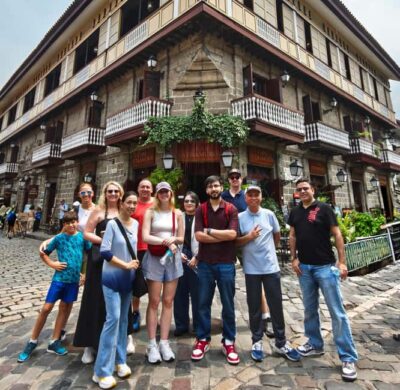
The group size keeps this from being a private premium experience. Up to 15 people can join, so the price makes the most sense if you want shared company and a planned introduction. If you are traveling alone, it can be an easy way to meet others while exploring.
For a family, group discounts may improve the value. The tour provider also offers private and full-day formats, but you would need to check their separate pricing and arrangements. I would book this tour for the access and context, not because it promises the lowest food bill.
Who should book this Chinatown walk?
This experience suits first-time visitors to Manila who want an organized introduction to Binondo. It is also a good choice if you like street food but feel unsure about ordering from unfamiliar stalls.
Families can benefit from having one person manage the route and explain the choices. The tour is also a practical fit for people with only a short window in Manila, since it lasts about two hours and returns to its starting point.
Food-focused visitors should arrive hungry. The number of samples is enough to make this more than a small nibble, and the walking helps break up the eating.
You should think twice if you need a strictly private route, have complex dietary restrictions, or dislike busy city streets. Dietary needs can be discussed in advance, but the available details do not promise that every restriction can be accommodated. A group route may also feel fast if you prefer long meals and plenty of time at each stop.
Most people can participate, according to the tour details. Even so, you should be comfortable with a walking-based city experience that includes street stops and local transport.
Practical advice before you go
Tell MstarToursPh about dietary restrictions before the tour begins. This gives the guide the best chance to adjust the food plan.
Wear comfortable clothes and shoes suitable for a city walk. Keep your appetite available for the tastings, and remember that seven to ten items can be substantial even if each serving is small.
Use the exact meeting point at 1919 Grand Cafe, 117 Juan Luna Street. Since the tour returns there, the location also makes a useful reference point for planning what comes next.
The experience requires good weather. If poor weather causes a cancellation, you are offered another date or a full refund. For other cancellations, you can receive a full refund if you cancel at least 24 hours before the local start time. Changes or cancellations made less than 24 hours before the start are not accepted for a refund.
Should you book the Manila Chinatown Food Tour?
I would book this if you want a guided introduction to Binondo with plenty of food and a clear route. The best reasons are the seven to ten tastings, the local transport, and the guides’ focus on food, culture, and history. Mara, Tessie, and Mari are each singled out for explaining more than what is on the plate.
I would skip it if your main goal is a cheap meal, a private outing, or a slow shopping trip. At $65, you are paying for direction and interpretation as much as for the food.
For most first-time visitors with two hours to spare, this is a practical way to meet Manila through its Chinatown. Come hungry, tell the guide about dietary needs, and expect a busy, social walk rather than a quiet restaurant lunch.
FAQ
How long does the Manila Chinatown Food Tour last?
The experience lasts approximately two hours.
Where does the tour start?
It starts at 1919 Grand Cafe, 117 Juan Luna Street, Binondo, Manila, 1006 Metro Manila, Philippines.
Where does the tour finish?
The tour ends back at the same meeting point.
How many food items are included?
The tour includes snacks and samples of seven to ten different items.
Is transportation included?
Yes. Local transportation by jeepney or tuk tuk is included, along with bottled water.
What happens if bad weather cancels the tour?
You will be offered a different date or a full refund if the experience is canceled because of poor weather.
Just added in Luzon
- The Jeepney & Tuk Tuk Adventure ride with Local Guide★ 4.5 · 4 reviews
- Villa Escudero Tour with Lunch From Manila (SHARED)★ 5.0 · 5 reviews
- Villa Escudero Coconut Plantation Day Trip from Manila★ 3.5 · 9 reviews
- Manila ATV Mountain Trail Adventure(with Transfers***)★ 4.5 · 19 reviews
- VILLA ESCUDERO DAY TOUR with Carabao Cart Ride and Bamboo from Manila★ 4.0 · 6 reviews
- Private Filipino Cooking Class in the Heart of Manila,Makati City★ 5.0 · 5 reviews
- Makati Rooftop Bar Hopping with Guided★ 5.0 · 8 reviews
- Sagada and Banaue Rice Terraces 4-Day Tour★ 5.0 · 4 reviews
Intramuros Heritage Walks, compared.
Intramuros, Manila: Historical Bamboo Bike Tour
Read our review →
Experience Intramuros with Bamboo Bicycle – Ecotours
Read our review →
Intramuros, Chinatown, and Old Manila Half-Day Tour
Read our review →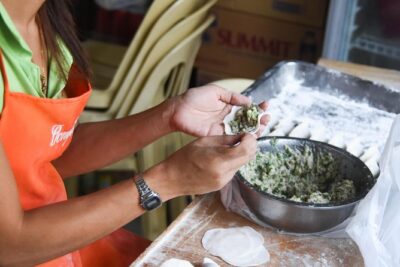
Manila Food Tour: Explore World’s Oldest Chinatown
Read our review →
Explore Intramuros: Introduction to Philippine History
Read our review →Browse the lists this tour appears in