
Reviewed · FILIPINO FOOD & STREET FOOD TOURS
Manila Food Tour Experience with Local Guide
Manila’s best food stories are often served from a stall, bakery, market counter, or small neighborhood shop. This two-hour tour takes you through Tondo and Binondo, where you can try Filipino favorites such as kwek kwek, adobo, biko, and halo-halo, then sample Chinese-Filipino staples such as siopao and dumplings.
I like the small-group setup and the chance to see parts of Manila that can feel hard to approach on your own. I also like that the guide is central to the experience: V and Venus are named as guides, and the personal approach includes local food, neighborhood sights, and photos. The main consideration is that the tour is short, the menu changes with availability, and the advertised group limit is inconsistent, listed as both eight and twelve people.
Key points to know before booking
- Tondo begins the food story: The first hour focuses on traditional Filipino flavors, local markets, and street stalls.
- Binondo adds Chinese-Filipino depth: The second hour brings siopao, dumplings, noodle shops, tea shops, and bakeries into the mix.
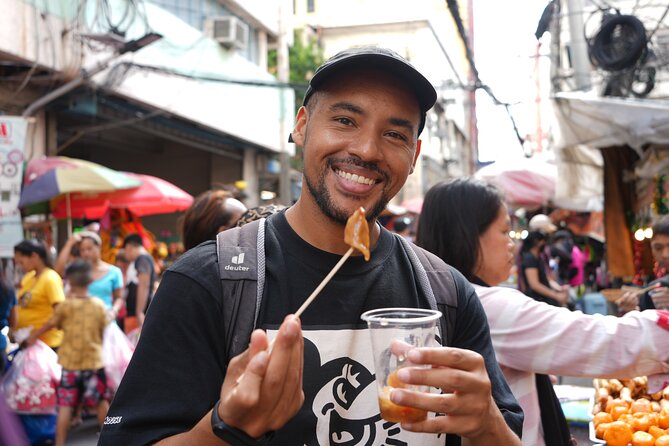
- You get 6 to 10 tastings: The food may include kwek kwek, halo-halo, adobo, biko, and other available street dishes.
- The tour suits solo visitors: A one-person booking may become a private experience, depending on the day.
- The group is intended to stay small: The information gives a maximum of eight in one place and twelve in another, so confirm the current limit.
- The tour returns to Tondo: You start and finish at the meeting point in Tondo, Manila.
Why this Manila food tour is worth considering
A food tour can give you more than a list of dishes. It can show you how a city eats from one neighborhood to the next, and that is the real appeal here.
You begin in Tondo with Filipino food, then move to Binondo, the world’s oldest Chinatown, for Chinese-Filipino specialties. In only two hours, the tour gives you two connected but distinct views of Manila’s cooking traditions.
I like this format because it avoids treating Filipino food as one single category. You might start with the savory, familiar comfort of adobo, move to the sweet and sticky texture of biko, and finish with the colorful coolness of halo-halo. In Binondo, siopao and dumplings show how Chinese cooking has become part of everyday Filipino food culture.
The tour is also built around a guide rather than a fixed restaurant meal. That matters in Tondo and Binondo, where the experience depends on knowing what to look for, what is available, and how to move through streets that may be unfamiliar to you.
The strongest benefit is access. The guide can point out food stalls and neighborhood corners you might pass without noticing. One guide named V is praised for helping solo visitors feel safe and for navigating Manila with ease. Venus is also described as warm and enthusiastic, showing lesser-known corners of her home city.
Still, keep your expectations practical. This is not a long sit-down tasting menu. It lasts about two hours, and the food depends on what is available on the street that day. You should expect variety and local context, not a fully fixed menu or a polished restaurant setting.
More places to eat your way through Luzon:
- Makati Street Food Experience end with a Rooftop Bar
★ 5.0 · 33 reviews - Manila Chinatown Food Tour Experience
★ 5.0 · 20 reviews - Makati Street Food tour Experience
★ 5.0 · 16 reviews
Tondo: Filipino food where the city eats
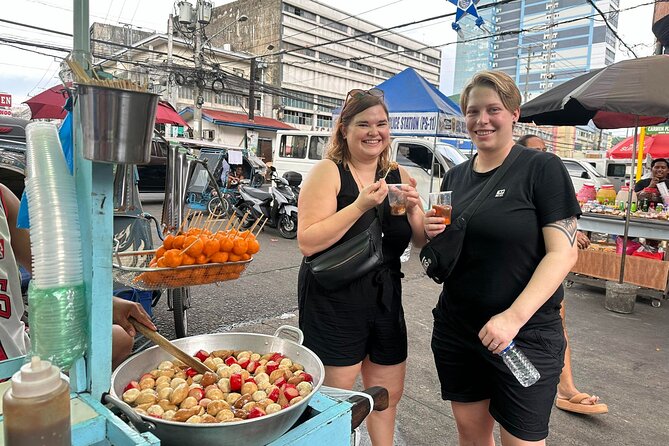
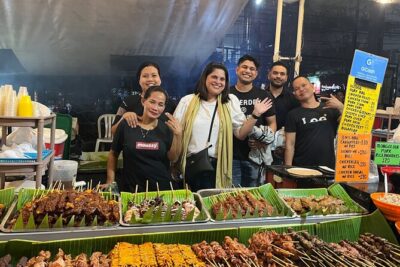
The first hour takes place in Tondo, a Manila district known here for its traditional Filipino food, markets, and street stalls. The focus is on everyday dishes rather than a formal meal.
That distinction is important. A restaurant can present Filipino cuisine in a neat sequence, but a street food tour gives you a more flexible look at what people actually buy and eat. The exact stops are not listed in advance, so you might find different foods depending on the day and local supply.
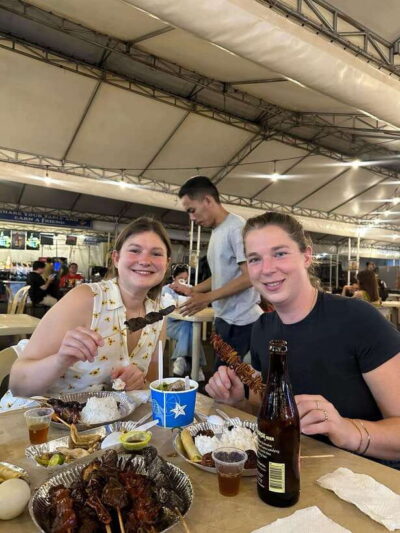
Adobo is one of the named examples. This savory dish is a useful introduction to Filipino cooking because it shows the importance of strong, familiar flavors in a simple preparation. You may also try biko, a sticky sweet rice dish that gives the first half of the tour a dessert-like counterpoint.
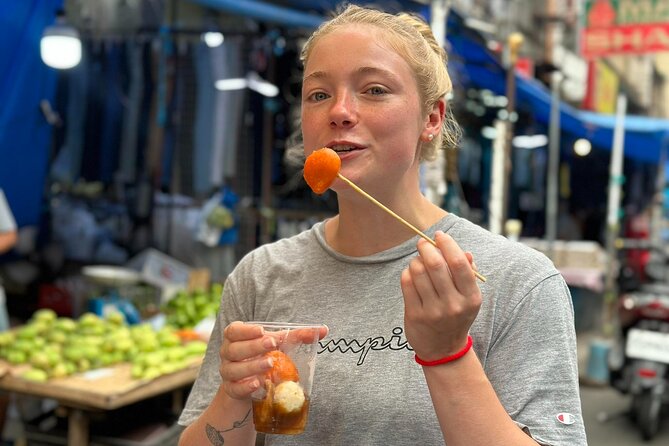
Kwek kwek is another possible tasting. These small battered quail eggs are a classic street food choice and offer a very different experience from adobo or biko. The appeal is not only the taste. It is also the chance to try something quick, inexpensive, and closely tied to Manila’s street food culture.
You may also encounter halo-halo, a cold dessert made from a mixture of sweet ingredients. Since the menu changes, you should treat these foods as examples rather than promises. The tour description specifically notes that dishes depend on what is available in the street.
The market and stall setting is part of the point. You are not simply tasting food in isolation. You are seeing where the food is sold and how it fits into the neighborhood. That can make even a small tasting feel more meaningful than ordering a familiar dish in a hotel restaurant.
The drawback is that Tondo may not be the easiest place for a first-time visitor to understand without help. That is exactly why the guide matters. V is described as skilled at navigating Manila, while Venus is praised for showing local corners that are easy to miss. Their role is not just to name dishes, but to help you read the setting around them.
Binondo: Chinese-Filipino flavors in one historic hour
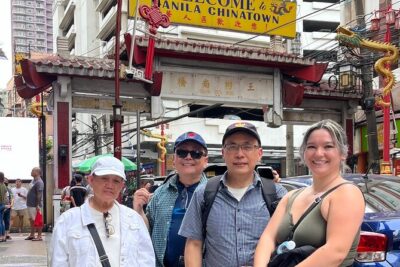
The second hour shifts to Binondo, identified as the world’s oldest Chinatown. Here the food changes direction, with Chinese-Filipino dishes such as siopao and dumplings at the center.
Binondo is valuable because it shows how food traditions overlap. The neighborhood is described as having noodle houses, tea shops, bakeries, and other food businesses along its historic streets. You are not simply adding Chinese snacks to a Filipino menu. You are seeing how Chinese influences have become part of Manila’s own food identity.
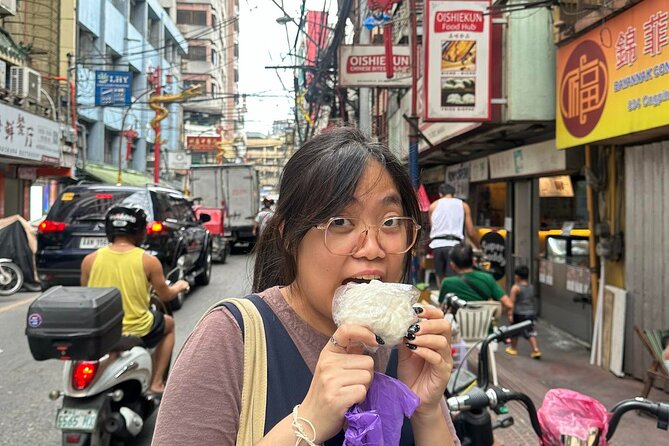
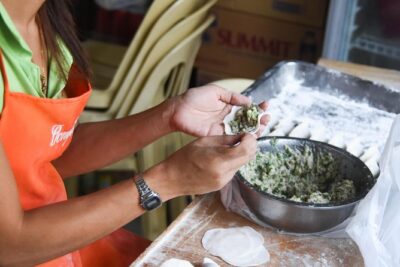
Siopao is a good example of that blend. It is a steamed bun with a savory filling, and it gives you a softer, more substantial bite than many quick street snacks. Dumplings add another texture and style, while noodle shops and bakeries help fill out the broader picture of Binondo’s food scene.
The tour allows one hour here, which is enough for a focused tasting but not enough to cover the whole district. That is both a strength and a limitation. You get a clear second chapter in the food story, but you should not book this expecting a long historical walk through every major street.
The Binondo portion also comes with one practical note: admission is marked as not included. The information does not explain what separate admission might mean in this context, so you should ask the provider before booking if any extra payment is expected. The food tour itself is listed at $70 per person, but the wording around admission deserves clarification.
Six to ten tastings, with room for surprise
The tour promises between six and ten food tastings. That is a generous range for a two-hour activity, especially if you are trying small portions rather than eating full meals.
The flexible number is useful because street food is not always predictable. A stall may be closed, a dish may sell out, or another local specialty may be available instead. Rather than treating this as a flaw, I would see it as part of the format, provided you are comfortable with some uncertainty.
You should arrive ready to sample rather than choose. The tour is designed for food enthusiasts who want a broad look at Manila’s gastronomy, so the fun comes from trying several different foods instead of spending the whole time on one dish.
At the same time, do not assume every named food will appear. Kwek kwek, halo-halo, adobo, biko, siopao, and dumplings are examples of the possible range. Your actual tastings depend on what is available in Tondo and Binondo that day.
If you have dietary restrictions, allergies, or strong dislikes, contact the provider before booking. The supplied information does not explain how substitutions are handled. Since the route centers on street food and changing availability, you will want clear answers before paying.
A few more things to do in Luzon worth a look
- Intramuros & Chinatown Manila Tour – Walking, Food & Culture
★ 4.5 · 32 reviews - Binondo Bites Manila Food Tour with 15+ Tastings
★ 5.0 · 5 reviews - Boracay Sunset Cruise with Party DJ & Unlimited Food and Drinks
★ 5.0 · 211 reviews - Manila Food Tour: Explore World’s Oldest Chinatown
★ 5.0 · 158 reviews
The guide makes the difference
The strongest personal detail in the experience is the guide. This is not marketed as a self-guided food crawl with a printed list of stops.
The guides named in the available information include V and Venus. V is described as easy to talk to, helpful with navigation, and attentive to solo visitors. Venus is described as nice and enthusiastic, with a talent for showing local food and less familiar parts of the city.
That personal touch matters if you are alone in Manila. A solo booking may become a private tour, depending on the day, which could make the pace more relaxed and the conversation more direct. The information does not guarantee a private tour, so treat that as a possibility rather than a promise.
The guide can also help you handle the small decisions that make street food easier: what to try, where to stand, how much to order, and how one food fits into the larger story of the neighborhood. Those details are hard to get from a map.
Photography is another small advantage. V is specifically praised for taking good photos, which may appeal to solo visitors who want more than food from the outing. You should not book it as a dedicated photo tour, but the guide’s willingness to help can make the experience feel more personal.
Group size, timing, and the $70 price
The experience costs $70 per person and lasts about two hours. That is not the cheapest way to buy street food in Manila, so the value depends on how much you want the guide, route, context, and convenience.
If you simply want to eat kwek kwek, dumplings, or halo-halo, you can spend less by ordering food on your own. The tour earns its price through the combined experience: several tastings, two distinct districts, local guidance, and help finding places you might not choose alone.
The small-group promise improves that value. The description says the tour is limited to 12 participants, while the additional information gives a maximum of eight. Because those numbers conflict, ask which limit applies when you book. Either way, the intended format is much more personal than a large coach group.
Two hours is a compact length. I like it for a first day in Manila or a short stop in the city, because you get a useful introduction without giving up an entire afternoon. It is less suitable if you want a slow food crawl with long meals and extensive neighborhood history.
The activity starts in Tondo and finishes back at the meeting point. No transport details are provided, so you should not assume that transfers from your hotel are included. Plan around the stated meeting point and allow enough time to reach it.
The tour is booked, on average, 59 days ahead. That suggests you should reserve early if your dates are fixed, particularly if you want a solo booking or a small group. Confirmation is provided at booking, and mobile tickets are supported.
Who will enjoy this experience most
I would recommend this tour to a first-time Manila visitor who wants an organized introduction to Filipino food without spending half a day in a formal restaurant setting.
It also fits solo visitors well. The personal accounts attached to the experience highlight safety, easy conversation, local navigation, and the chance to have a guide take photos. A solo booking may be especially appealing if you are unsure where to begin with Manila’s food.
Food enthusiasts should also like the range. The route moves from Filipino street dishes in Tondo to Chinese-Filipino food in Binondo, giving you more variety than a tour confined to one neighborhood.
It is less suitable for someone who needs a fixed menu, guaranteed dishes, or a long seated meal. The exact food depends on street availability, and the activity is short. It may also frustrate anyone hoping for a detailed, slow-paced history tour, since the emphasis is clearly on tasting and neighborhood discovery.
Most people can participate, according to the supplied information. Still, the tour’s street setting may involve changing surfaces, crowds, and time spent standing, so ask the provider about any specific mobility concern before booking.
Booking details and cancellation
The tour offers free cancellation if you cancel at least 24 hours before the local start time. Cancellations made less than 24 hours before the start are not refunded, and changes within that period are not accepted.
That policy is reasonable for a small food tour, but keep it in mind if your Manila schedule is uncertain. The tour provider is Manila Experience, also identified as V.S Tour Services.
Because the group limit is listed differently in separate parts of the information, confirm the current maximum before booking. It is also sensible to ask what the Binondo admission note means and whether any food or entry costs fall outside the $70 price.
Should you book the Manila Food Tour?
Book it if you want a guided first taste of Manila, especially if you are traveling solo or feel unsure about exploring Tondo and Binondo on your own. The mix of adobo, biko, kwek kwek, halo-halo, siopao, and dumplings gives you a useful range in a short time.
The tour is strongest as an introduction, not a complete survey of Manila food. Its best features are the local guide, the small-group format, and the contrast between Tondo’s Filipino street food and Binondo’s Chinese-Filipino cooking.
Skip it if you need a guaranteed menu or want a long, leisurely meal. For everyone else, $70 is fair when you value access, local direction, and the confidence to try foods and neighborhoods you might otherwise miss. Ask about the group limit, the Binondo admission note, and dietary needs before paying, then arrive ready for a changing menu and a close look at how Manila eats.
FAQ
Where does the Manila food tour start?
The tour starts in Tondo, Manila, in Metro Manila, Philippines.
Where does the tour end?
The activity ends back at the meeting point in Tondo.
How long does the experience last?
The food tour lasts approximately two hours, with about one hour in Tondo and one hour in Binondo.
How many food tastings are included?
The experience includes between six and ten tastings. The exact food depends on what is available in the street that day.
Which foods might I try?
Possible foods include kwek kwek, halo-halo, adobo, biko, siopao, and dumplings. The menu is not fully fixed.
How large is the group?
The information gives two different limits: one section says up to 12 participants, while another says a maximum of eight. Confirm the current limit with Manila Experience before booking.
Can I cancel for a full refund?
Yes. You can cancel at least 24 hours before the local start time for a full refund. Cancellations and changes made less than 24 hours before the start are not accepted for a refund.
Just added in Luzon
- The Jeepney & Tuk Tuk Adventure ride with Local Guide★ 4.5 · 4 reviews
- Villa Escudero Tour with Lunch From Manila (SHARED)★ 5.0 · 5 reviews
- Villa Escudero Coconut Plantation Day Trip from Manila★ 3.5 · 9 reviews
- Manila ATV Mountain Trail Adventure(with Transfers***)★ 4.5 · 19 reviews
- VILLA ESCUDERO DAY TOUR with Carabao Cart Ride and Bamboo from Manila★ 4.0 · 6 reviews
- Private Filipino Cooking Class in the Heart of Manila,Makati City★ 5.0 · 5 reviews
- Makati Rooftop Bar Hopping with Guided★ 5.0 · 8 reviews
- Sagada and Banaue Rice Terraces 4-Day Tour★ 5.0 · 4 reviews
Filipino Food & Street Food Tours, compared.
Manila Food Tour: Explore World’s Oldest Chinatown
Read our review →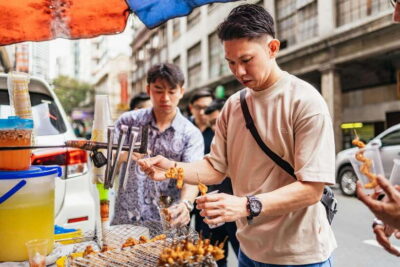
Street Food and Drinks Walking Tour with Tastings
Read our review →
Makati Street Food Experience end with a Rooftop Bar
Read our review →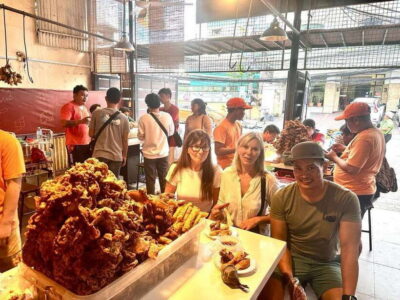
Browse the lists this tour appears in