
Reviewed · HISTORICAL TOURS
The Original Cebu City Historical and Food Walking Tour
Cebu’s best introduction may begin away from the beaches. This four-hour walk links the Yap-Sandiego Ancestral House, Santo Niño Basilica, Magellan’s Cross, and Carbon Market with local food stops and a ride on a jeepney. It gives you a useful first look at how Cebu’s Spanish, Chinese, Catholic, and everyday Filipino influences fit together.
I like two things most here: the local transport, which turns a sightseeing route into a small slice of daily life, and the guides, especially Kyle, Lorelei, Phillip, and Necian, who are praised for being warm, conversational, and good at explaining food and city customs. The main caution is value. At $69.99, this is costly for Cebu, and the tour covers food and entrances but not your ride back to your hotel.
Key things to know before you book
- Ride a jeepney through Cebu City: Public transport is part of the experience, not a private transfer.
- See six major city landmarks: The route includes the Heritage of Cebu Monument, Yap-Sandiego Ancestral House, Santo Niño Basilica, Carbon Market, Magellan’s Cross, and Cebu Metropolitan Cathedral.
- Try Filipino street food: The food stops can include unfamiliar local specialties, with balut, tuslob buwa, lechon, and other snacks mentioned in the experience.
- Finish at Freedom Park: You start at Ayala Terraces and end at Carbon, so plan your own return transport.
- Expect a small to medium group: The maximum is 20 people, though some departures may feel much smaller.
- Allow for a flexible pace: The advertised duration is about four hours, but one departure ended in roughly two and a half hours because the group moved quickly.
Why this is a smart first evening in Cebu
The tour starts at 4 pm, a useful time if you have only one night in the city or want to avoid spending your whole afternoon on foot. You meet at Ayala Terraces, then work toward the older center of Cebu City, finishing at Freedom Park in the Carbon area.
That route matters. Cebu is easy to reduce to a beach stop or a base for island excursions, but the city itself explains much of the Philippines’ colonial and Catholic story. A guide also removes the usual first-day friction: finding the right lanes, understanding which sites are close together, and deciding what is worth entering.
I especially like the mix of fixed sights and ordinary city life. You are not simply moving from one polished attraction to another. You may walk through market areas, stop for food, and ride a jeepney. For a first visit, that combination can help you understand Cebu faster than a standard vehicle tour.
The group limit of 20 is reasonable, though not intimate by default. Smaller departures have the advantage of easier conversation, and one account describes a very small group that could move at its own pace. Ask questions early if you want more time with the guide.
A few more things to do in Cebu worth a look
- Cebu City: Historical Street and Food Tour
★ 4.9 · 31 reviews - Boracay Sunset Cruise with Party DJ & Unlimited Food and Drinks
★ 5.0 · 211 reviews - Manila Food Tour: Explore World’s Oldest Chinatown
★ 5.0 · 158 reviews
Heritage of Cebu Monument and the city’s big story
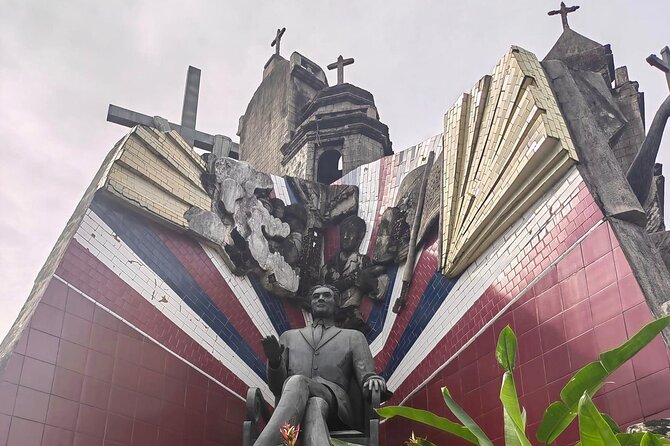
The Heritage of Cebu Monument is a good opening stop because its artwork compresses several chapters of local and national history into one tableau. It includes the Battle of Mactan, the inauguration of Sergio Osmeña as president of the Philippines, and the canonization of Pedro Calungsod.
You get about 30 minutes here, with admission included. That is enough for a guide to point out the main figures and events, but not enough for an academic lecture. I would use this stop to ask for a simple timeline: what happened before Spanish rule, what changed after 1565, and how Cebu fits into the wider story of the Philippines.
The monument also gives you something visual to remember. If you arrive with no background, the scenes can blur together. A good guide such as Kyle or Phillip can make the figures and events easier to place.
The Yap-Sandiego Ancestral House at around 1680
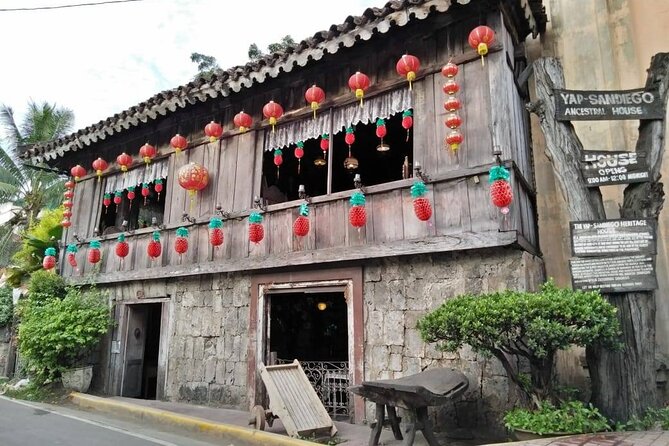
The Yap-Sandiego Ancestral House is one of the more distinctive stops. Built around 1680 from wood and coral stone, it combines Spanish and Chinese design influences and is described as one of the oldest residential homes in the country.
This is where the tour becomes more personal. A monument tells a public story. An old home shows how that story shaped daily life, architecture, and family space. You can expect about 30 minutes, and entrance is included.
Do not expect a huge museum complex. Its value is the atmosphere and the chance to see an old Cebu home rather than only churches and plazas. The house is also one of the stops where it is especially useful to have someone explain what you are looking at.
The tour may not always enter every major religious building. One account notes that the group went inside the ancestral house but did not enter the two cathedrals, possibly because it was Sunday and they were crowded. If going inside the churches is important to you, ask your guide at the start how that day’s timing and services may affect access.
Santo Niño Basilica and Magellan’s Cross
The Basilica Minore del Santo Niño de Cebu was founded in 1565 by Fray Andrés de Urdaneta and is closely tied to the arrival of Christianity in Cebu. It is one of the city’s key religious sites and sits beside Magellan’s Cross at Plaza Sugbo.
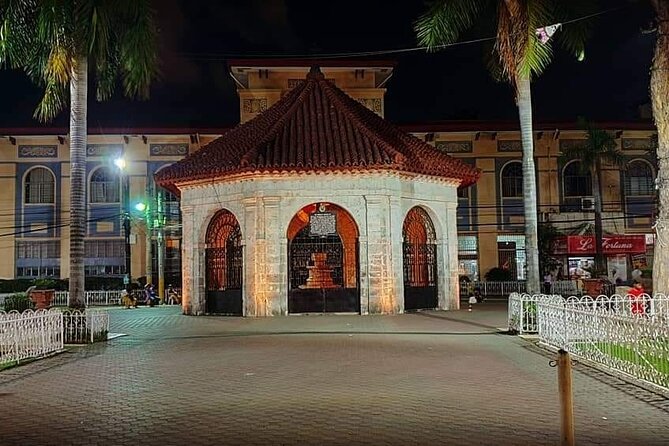
Magellan’s Cross is housed in a small stone pavilion. The cross is linked to the arrival of Ferdinand Magellan’s expedition and the spread of Christianity in the Philippines. Together, the basilica and pavilion make a compact but important stop.
The supplied schedule gives each attraction about 30 minutes, but that does not mean you receive 30 quiet minutes inside each building. Services, crowds, and local activity can shape what you see. The route is strongest when the guide explains the tension between grand historical claims and the living religious practices around these places.
I would not treat these stops as a quick photo checklist. Ask your guide about the connection between the Santo Niño and Cebu, and pay attention to how the sites function today. You may find the outside explanations more useful than a rushed attempt to enter during a busy service.
Same base, a different kind of day out:
- Cebu City: Whale Shark Swimming & Kawasan Falls Canyoneering
★ 4.7 · 665 reviews - Cebu City: Bohol Countryside Tour with Loboc Cruise Lunch
★ 4.5 · 488 reviews - Canyoneering Experience in Kawasan Falls with Lunch
★ 5.0 · 440 reviews - Cebu: Oslob Whale Sharks, Tumalog Falls & Sardine Snorkeling
★ 4.3 · 343 reviews
Cebu Metropolitan Cathedral and the marks of war
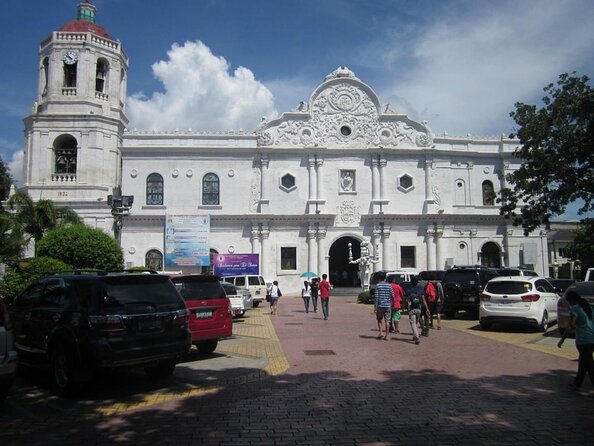
The Cebu Metropolitan Cathedral, officially the Metropolitan Cathedral and Parish of Saint Vitalis and of the Immaculate Conception, adds another layer to the route. Much of the building was destroyed during World War II and later rebuilt.
This stop works well after the basilica and Magellan’s Cross because it shows that Cebu’s religious architecture is not frozen in the colonial period. Buildings here have been damaged, repaired, adapted, and used across generations.
Again, entry is not guaranteed in every departure. The route includes the cathedral as a stop, but a busy Sunday or service may change the plan. The guide can still provide context from outside.
Carbon Market: the most local-feeling part of the walk
Carbon Market is likely to be the most revealing part of the experience for anyone who has only seen Cebu’s malls and resort areas. The name comes from carbón, the Spanish word for coal. The area was associated with a coal depot used by the old Cebu Railway in the 19th century.
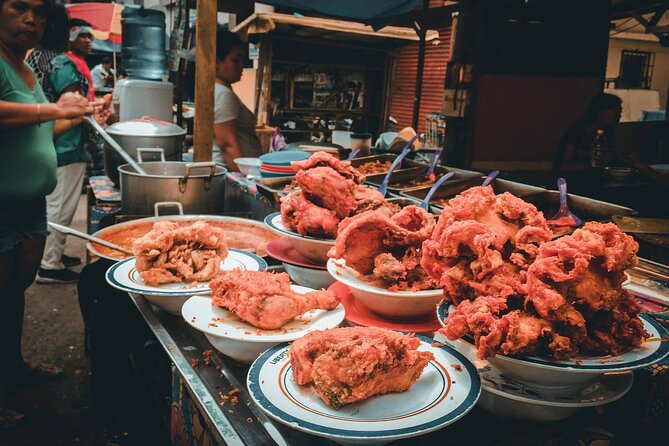
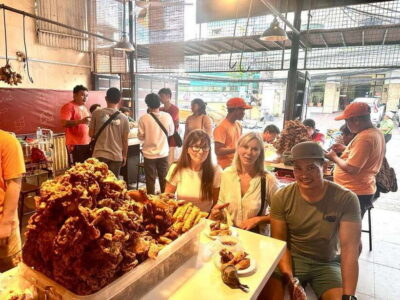
Today, the market is tied to food, commerce, and everyday city life. This is where the tour’s food focus makes the most sense. You might see ingredients and prepared dishes that are hard to identify on your own, then get a guide’s help deciding what to try.
The food is not designed to match every palate. The experience may include local street food such as tuslob buwa, balut, lechon, and other small dishes. One account praised the lechon but found some other food only average. That is a fair warning: this is a chance to sample local tastes, not a carefully polished restaurant meal.
You should also tell the guide about dietary limits before ordering. The information supplied does not promise vegetarian, vegan, halal, or allergy-specific arrangements, so do not assume the food plan can be changed. Adventurous eaters will get more from this tour than cautious eaters who want familiar dishes.
One useful detail is that the food portion appears to vary slightly by route and day. The operator describes three food stops, while an account describes four food places. Think of the price as covering a set of tastings rather than a fixed restaurant menu.
What the jeepney ride adds
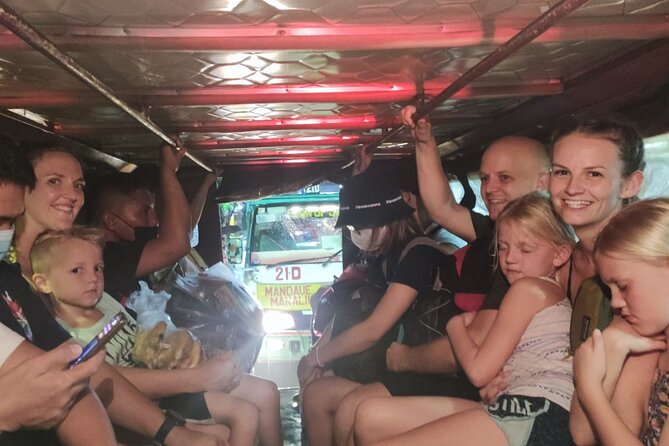
The jeepney ride is one of the tour’s strongest details. It is public transport used by locals, not a private sightseeing vehicle. For someone new to Cebu, boarding with a guide takes away some of the uncertainty while still giving you a short look at how the city moves.
This also explains one of the less positive reactions to the tour. If you expect air-conditioned transfers between attractions, you may feel that the tour is missing something. The point here is different: you are paying for help using the city, not for a private ride through it.
The route includes walking as well as transport, and the total time depends partly on the group’s pace. One departure finished in about two and a half hours, while the advertised length is approximately four hours. If you want the full experience, do not rush from one stop to the next. Ask for time at the market and food stalls.
Is $69.99 good value in Cebu?
At $69.99 per person, this is a high price for a walking and public-transport tour in Cebu. You are not buying a private car, a hotel transfer, or a long restaurant meal. Your payment covers the guide, listed entrances, and food stops, while your return ride after the tour is your responsibility.
The price becomes easier to justify if you are in Cebu for one night, feel unsure about navigating the old center, and want several historic sights plus local food in one organized outing. It also has value for solo visitors who would not feel comfortable trying a jeepney or Carbon Market alone.
The calculation looks weaker if you have several days in Cebu, are happy to use Grab or public transport independently, and mainly want to see the monuments from outside. You could likely visit some of the central sights at lower cost on your own, though you would lose the guide’s explanations and food introductions.
Arrive on time. One person arrived an hour late and missed a major part of the experience, including a museum-related portion. The operator also states clearly that food and entrance fees are covered, not the journey home.
Guides, group feel, and the practical rhythm
Guide quality is central here. Kyle is repeatedly singled out for clear English, kindness, and enthusiasm for Cebu’s food and culture. Lorelei is described as organized, communicative, and passionate about local dishes. Phillip is praised for making a solo woman feel safe, while Necian is described as informative and easy to talk with.
That range matters because the same route can feel either lively or rushed depending on how the guide handles questions and meal stops. The strongest version of this tour is social. You walk, taste small portions, share reactions, and learn how jeepneys and local food fit into city life.
The group can include up to 20 people, so do not expect a private tour. The published start time is 4 pm, and the route ends at Freedom Park in Carbon. Arrange your own onward ride, especially if you are carrying shopping or do not know the area.
The experience needs good weather. If poor weather cancels it, you are offered another date or a full refund. The same applies if the minimum number of participants is not reached. Otherwise, the booking is non-refundable and cannot be changed, so choose your date carefully.
Who should book this Cebu walking tour?
I would choose it for a first night in Cebu, a solo visit, or anyone who wants a guide for local food and public transport. It is also a good fit if you enjoy trying unfamiliar dishes and prefer a city tour with conversation rather than a silent march between monuments.
I would hesitate if you want a formal museum tour, private transportation, guaranteed entry into every church, or a gourmet food crawl. You should also think twice if you dislike street food or feel uncomfortable with public transport.
Should you book it?
Book this tour if your main goal is to get your bearings through Cebu’s old center while tasting food you might not try alone. The combination of the ancestral house, historic churches, Carbon Market, jeepney ride, and friendly guides gives you a useful first picture of the city.
Skip it if $69.99 feels steep for a public-transport route, or if you prefer to explore slowly and choose your own food. If you do book, arrive at Ayala Terraces on time, wear comfortable shoes, keep an open mind about the menu, and plan your own ride from Freedom Park.
FAQ
How long is the Cebu historical and food walking tour?
The advertised duration is approximately four hours. The actual pace can vary, and one departure finished in about two and a half hours because the group moved quickly.
What time and where does the tour start?
The tour starts at 4 pm at Ayala Terraces, 8W94+H97, Biliran Road, Cebu City.
Where does the tour end?
The tour ends at Freedom Park in the Carbon area of Cebu City. You need to arrange your own transportation after the tour.
What sights are included?
The route includes the Heritage of Cebu Monument, Yap-Sandiego Ancestral House, Basilica Minore del Santo Niño de Cebu, Cebu Carbon Market, Magellan’s Cross, and Cebu Metropolitan Cathedral.
Are entrance fees included?
Admission is listed as included for the scheduled stops. Food and entrances are covered, but transportation back to your hotel is not.
Does the tour include a jeepney ride?
Yes. The experience includes riding public transportation, including a jeepney, as part of seeing Cebu through local daily routines.
What kind of food will I try?
The food stops focus on local Filipino street food. Dishes mentioned in connection with the experience include tuslob buwa, balut, and lechon, along with other local snacks. The exact food selection can vary.
What happens if bad weather cancels the tour?
If poor weather causes a cancellation, you are offered a different date or a full refund. If the minimum number of participants is not reached, you are also offered another date or experience, or a full refund.
More Walking Tours in Cebu
- Manila: Street Food and Drinks Walking Tour with Tastings
★ 4.8 · 114 reviews - Viva Old Manila: Intramuros Walking Tour
★ 4.9 · 104 reviews - Manila’s Walled City: Intramuros Walking Tour
★ 5.0 · 82 reviews - Manila: Sightseeing and Food Walking Tour with Tastings
★ 4.7 · 68 reviews
More Historical Tours in Cebu
- Cebu: Exploring Cebu City’s rich history and Uphill Tour
★ 4.5 · 68 reviews - CEBU: Cebu City Heritage and Uphill Guided Tour
★ 4.2 · 31 reviews - Cebu Historic and Views Tour Pickup Dropoff and Lunch (private)
★ 5.0 · 26 reviews - BEST OF CEBU: Cebu City Heritage with Uphill Tour | Joiners
★ 4.5 · 22 reviews
Just added in Cebu
- Scuba Diver Course (PADI)★ 5.0 · 18 reviews
- Discover Scuba Diving★ 5.0 · 18 reviews
- Moalboal Sardines Run Private Tour w/ Transfers Option★ 5.0 · 22 reviews
- BEST OF CEBU: Cebu City Heritage with Uphill Tour | Joiners★ 4.5 · 22 reviews
- Cebu: Mactan Island Hopping Boat Tour with Lunch★ 4.5 · 24 reviews
- Mactan Cebu International Airport Plaza Premium Lounge★ 3.5 · 25 reviews
- Cebu City: Best of Cebu Full-Day Guided Sightseeing Tour★ 4.0 · 27 reviews
- Cebu: Whaleshark Encounter, Tumalog Falls & Sumilon Sandbar★ 4.8 · 22 reviews
Historical Tours, compared.
Intramuros, Manila: Historical Bamboo Bike Tour
Read our review →
Explore Intramuros: Introduction to Philippine History
Read our review →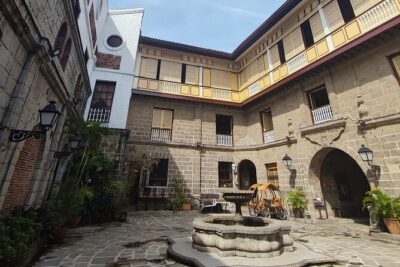
Experience Manila’s Heritage: Intramuros & More in Half a Day!
Read our review →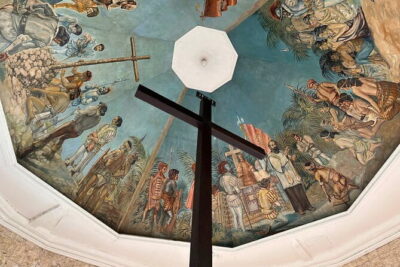
Exploring Cebu City’s rich history and Uphill Tour
Read our review →
Tagaytay, Taal Volcano & Heritage Town: A Journey of Discovery
Read our review →Browse the lists this tour appears in