
Reviewed · INTRAMUROS HERITAGE WALKS
Manila: Intramuros and Chinatown Food Tour with Food Samples
Manila’s past and present meet neatly on this five-hour walk, which begins at Fort Santiago and ends with seven food samples in Binondo, the world’s oldest Chinatown. I like the clear contrast: colonial stone walls and churches first, busy food streets and Chinese Filipino flavors later. I also like the small group, capped at eight, and the short tuk-tuk ride that saves your feet while adding a little fun.
The main drawback is the pace and physical demand. You walk between several sights, spend about three hours on food tasting, and finish at Binondo Church rather than returning to Intramuros. Serious food allergies are a concern, and the tour is not suitable for wheelchair users.
Key things to know before you book
- Seven Chinatown tastings: Expect foods such as fried siopao, pork siomai, lumpia, hopia, pansit, egg tart, and buchi, depending on availability.
- Three major Intramuros sights: Fort Santiago, Manila Cathedral, and San Agustin Church give the first half a strong historical focus.
- A small-group format: With no more than eight participants, it is easier to ask questions and stay close to the guide.
- A tuk-tuk transfer: The 20-minute ride from Intramuros to Binondo adds local color and breaks up the walking.
- Guides named Jane or Jayne in guest feedback: The guide is praised for clear explanations, friendly help, and assistance after the tour.
- A one-way route: You begin at Fort Santiago Gate and finish at Binondo Church, so plan your onward ride from Chinatown.
Why this Manila combination works
Many Manila tours force you to choose between old monuments and local food. This one puts both in the same half-day. You begin in Intramuros, the walled center of Spanish Manila, then move to Binondo, where Chinese and Filipino traditions meet at the table.
That change of mood is the tour’s main strength. Fort Santiago and the churches ask you to slow down and look closely. Binondo asks you to follow your appetite, watch the street activity, and try several small bites in succession. You get a more complete picture of Manila than you would from a monument-only visit.
I also appreciate that the food is not treated as a separate restaurant stop. Your guide connects the dishes to Chinese influence on Filipino cooking, giving you useful context for what you are eating. A fried siopao, lumpia, or bowl of pansit becomes more than a snack when you understand how Chinese food traditions became part of everyday Filipino cuisine.
The tour costs $80 per person. That is not a cheap walking tour, but the price includes a professional English or Tagalog guide, entrance to Fort Santiago, the tuk-tuk ride, seven tastings, and photography assistance. If you would otherwise pay separately for a fort visit, transportation, and a food tour, the package offers fair value. The best value comes if you want a guided introduction rather than simply wandering through Intramuros and choosing restaurants on your own.
More Food Tours in Manila
- Manila Food Tour: Explore World’s Oldest Chinatown
★ 5.0 · 158 reviews - Manila: Street Food and Drinks Walking Tour with Tastings
★ 4.8 · 114 reviews - Manila: Guided Food Tour of Binondo with Tastings
★ 4.8 · 38 reviews
Starting at Fort Santiago
The tour begins at the Fort Santiago Gate. This is a practical starting point because the fort gives you an immediate sense of Manila’s colonial past without requiring a long transfer from another part of the city.
Allow about an hour for the visit and walk. Your guide explains the fort’s role in the Philippines and points out its connection to José Rizal, the country’s national hero. The preserved ruins and gateways also provide some of the strongest photo opportunities of the day, so bring your camera and take advantage of the included photography assistance.
Fort Santiago is not just a backdrop for pictures. It helps set the tone for the first section of the tour. You are looking at a place shaped by Spanish rule, wartime events, and the memory of national resistance. The guide’s explanations matter here because a walk through old stone walls can otherwise feel disconnected from the people and events behind them.
You should wear shoes that can handle uneven walking and bring water. Manila can be hot, and the tour keeps moving. Sunscreen is also a sensible addition, especially if you are visiting during the brighter part of the day.
Manila Cathedral and San Agustin Church
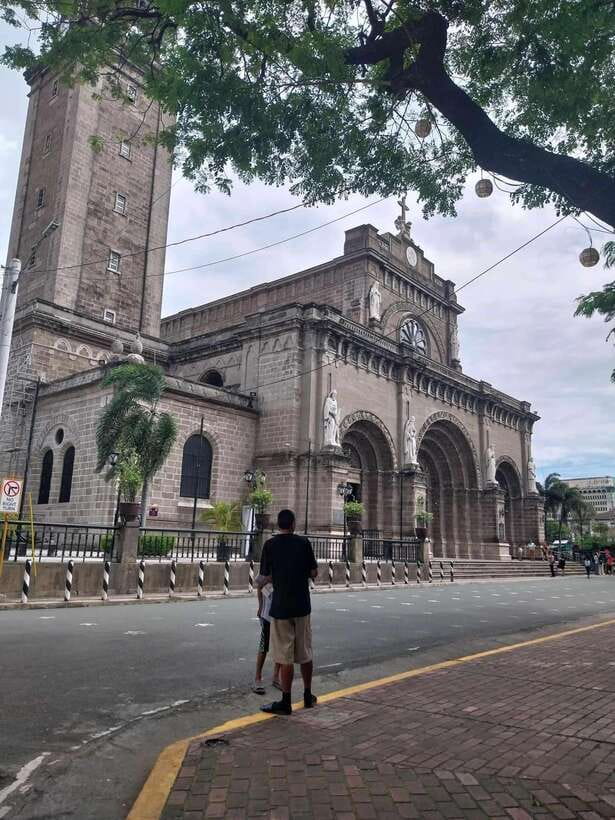
From Fort Santiago, the route continues on foot to Manila Cathedral, with about 20 minutes allocated for this part of the walk. The cathedral has survived natural disasters and repeated rebuilding, which makes it an important symbol of Manila’s religious and civic life.
This stop works best as a short architectural and historical pause. Your guide can explain why the cathedral matters, while you look at the structure and its place within Intramuros. Do not expect a long private visit or a quiet museum-style experience. The value is in seeing the cathedral as part of the larger walled-city route.
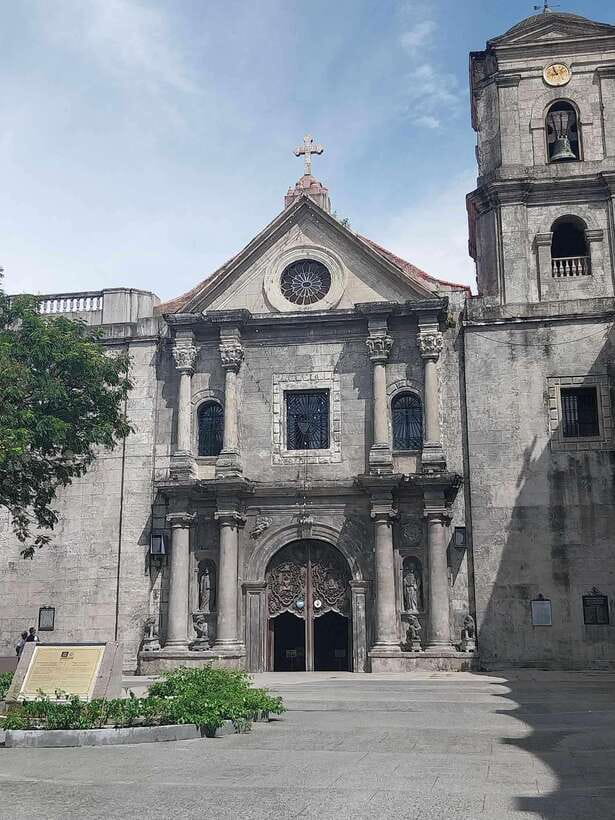
A further 20-minute walk takes you to San Agustin Church. It is the oldest stone church in the Philippines and a UNESCO World Heritage Site, known for its baroque design. For many people, this is the visual highlight of Intramuros. Its age and design give you a strong sense of how European religious architecture took root in Manila.
The walking distances are manageable for most people who are comfortable on foot, but they add up. This is not a sit-down sightseeing tour. You should dress for warm weather, choose comfortable clothing, and think carefully about your footwear. Flash photography is not allowed, so use natural light and follow the guide’s directions inside heritage sites.
The 20-minute tuk-tuk ride to Binondo
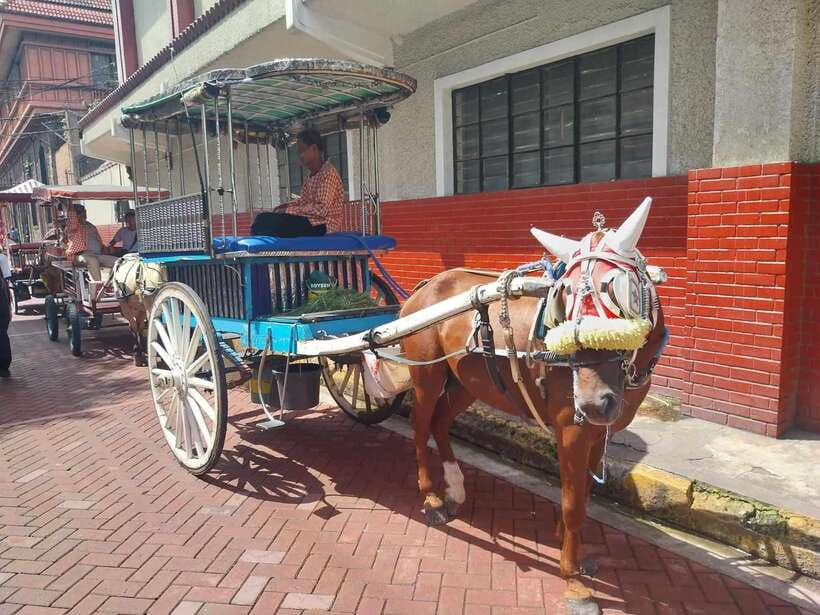
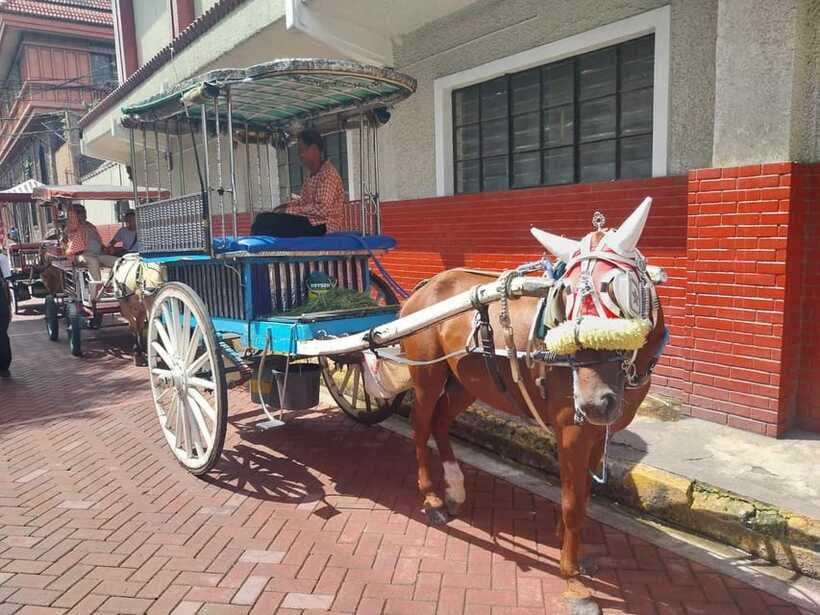
After the Intramuros sights, you take a tuk-tuk toward Chinatown. This short ride is more than simple transport. It gives you a breezy view of Manila between the two main parts of the tour and lets you rest before the food portion begins.
The ride passes landmarks, cobbled streets, and changing city scenes. It also makes the route feel less rigid than a tour that keeps you walking from one stop to the next. For a first visit, this transition helps you see that Intramuros and Binondo are not isolated attractions. They are connected parts of Manila’s central story.
The tuk-tuk is a compact local vehicle, so the experience is best understood as a brief city ride rather than a private sightseeing transfer. The tour information does not promise a particular vehicle layout or a separate seat for every participant, so be prepared for a simple, close-range ride.
More history on foot in Manila:
- Intramuros, Manila: Historical Bamboo Bike Tour
★ 4.8 · 583 reviews - Experience Intramuros with Bamboo Bicycle – Ecotours
★ 5.0 · 508 reviews - Manila: Intramuros, Chinatown, and Old Manila Half-Day Tour
★ 4.8 · 475 reviews - Manila: Guided Sunset Bamboo Bike Tour in Intramuros
★ 4.8 · 119 reviews
Eating your way through Binondo
The second half takes place in Binondo, the world’s oldest Chinatown. You spend roughly three hours on food tasting, which makes this more than a quick stop for one snack. Come hungry, but not empty. Seven tastings can add up quickly, especially when some foods are filling.
The exact selection depends on availability, but the planned range includes:
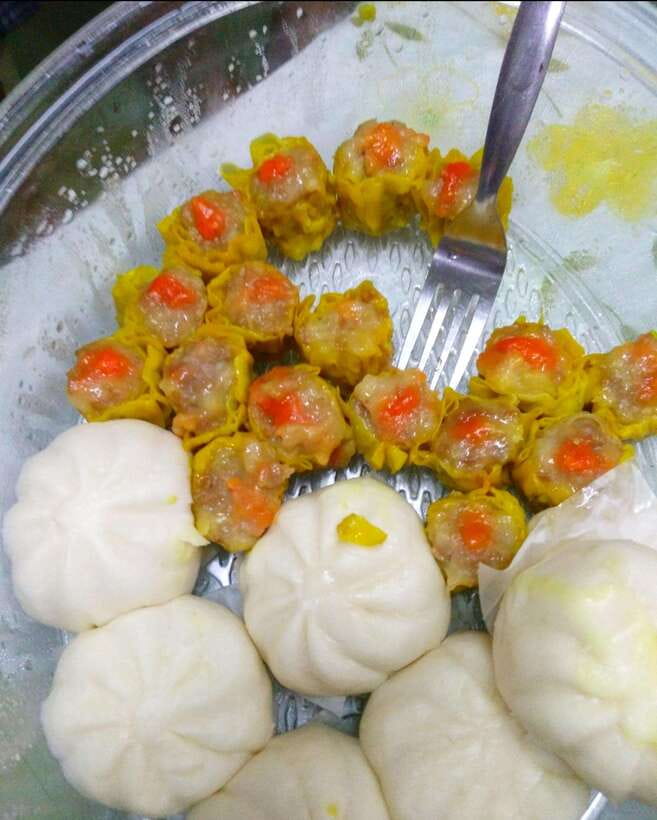
- Fried siopao
- Pork siomai
- Lumpia
- Hopia with mung bean filling
- Pansit
- Egg tart
- Buchi
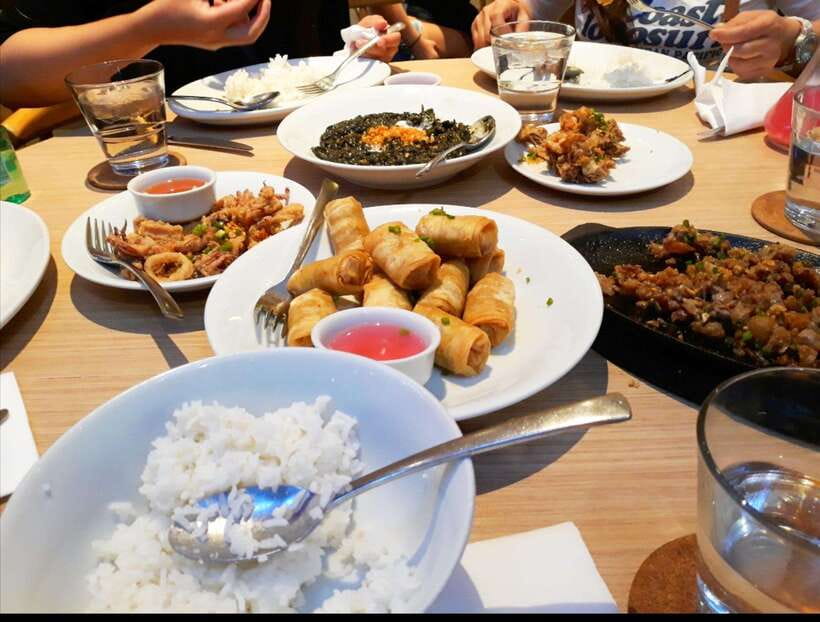
This is a useful spread because it includes dumplings, pastries, noodles, spring rolls, and sweet bites. You are not limited to one style of dish. The variety also makes it easier to notice how Chinese food traditions have been adapted within Filipino cooking.
Siopao and siomai give you the steamed or filled-dough side of the tasting. Lumpia adds a crisp spring roll option, while pansit provides a more substantial noodle dish. Hopia, egg tart, and buchi shift the meal toward sweets and pastries. Depending on the day’s availability, the order and exact portions may change.
The food is served as part of the walking experience, not as a formal multi-course restaurant meal. You may eat at several places or stops as the guide takes you through Binondo. That is the point: you see the neighborhood and taste along the way rather than sitting in one dining room for the whole afternoon.
I would treat the seven samples as a guided introduction, not a full meal with unlimited portions. One review describes the food as generous and filling, but your appetite and the day’s selection will affect how substantial it feels. If you want extra snacks after the included tastings, you may find it difficult to resist the food offered along the route. Bring some spending money if you want to buy additional items, though extra purchases are not included.
The Filipino and Chinese connection
The guide’s role becomes especially useful in Binondo. It is easy to label a dish Chinese or Filipino and move on. A better tour explains how the two food cultures overlap and why Binondo became such an important center for that exchange.
This cultural connection gives the food section more purpose. You are not simply collecting seven samples. You are learning how ingredients, cooking methods, and family traditions moved between Chinese and Filipino communities and became part of Manila’s daily life.
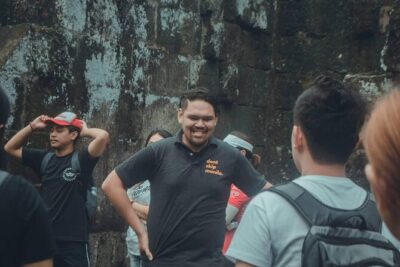
The strongest guest feedback focuses on the guides, especially Jane, also spelled Jayne in one review. Her explanations are described as clear and lively, and she is praised for keeping a parent and adult child interested throughout the day. Another couple appreciated that she helped them see a more everyday side of Manila, rather than only the famous monuments.
That personal attention seems to be a real feature of the experience. Jane has also helped people with their return plans after the tour, waited while a taxi arrived, and checked by message that participants reached their destination safely. Those details matter when you are in an unfamiliar city, though they are acts of helpfulness rather than services formally listed in the inclusions.
The tour ends at the Minor Basilica and National Shrine of Saint Lorenzo Ruiz, commonly called Binondo Church. Ending here gives the food walk a final heritage stop and keeps the route one-way. You can pause to reflect on the contrast between the churches of Intramuros and the Chinese Filipino character of Binondo before arranging your next ride.
Pace, group size, and practical comfort
Five hours is a useful length for this combination. It gives you enough time for the major Intramuros stops and a proper food walk without turning the day into an all-day commitment. The tradeoff is that the schedule is fairly full, with little room to linger at every monument.
A group limit of eight is a strong advantage. Small groups are easier to manage on city streets, and you have a better chance to hear the guide near busy roads or food stops. It also makes it simpler to ask about dishes, history, or getting around after the tour.
You need to be comfortable walking for much of the experience. Comfortable shoes, water, sunscreen, and a camera are the right kit. Smoking and flash photography are not allowed. The tour is not suitable for wheelchair users because of the walking route and site conditions.
Food allergies deserve careful thought. The instructions ask you to report allergies or dietary restrictions in advance, but the experience is also listed as unsuitable for people with food allergies. If you have a serious allergy, I would not assume that substitutions or full ingredient control are available. Ask before booking, and consider choosing a different activity if cross-contact would be a serious risk.
The meeting details are provided within 24 hours after booking, so you should watch for that information and confirm where to go. The stated starting point is the Fort Santiago Gate, and the finish is Binondo Church. Since the tour does not return you to Intramuros, plan your onward transport from Binondo.
Who should book this tour
This experience suits you if you want a first look at Manila that combines major landmarks with local food. It is especially useful for a short stay, when one well-planned half-day can cover several important parts of the city.
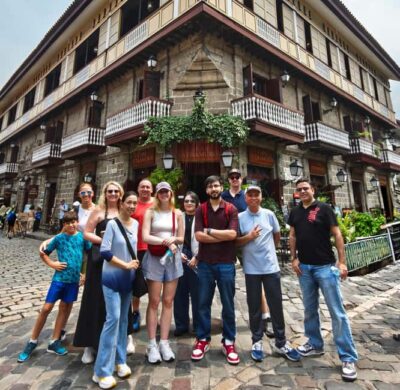
It also fits solo visitors, couples, families with older children, and small groups who prefer conversation over a large coach tour. The guide support and small group can make the day feel less complicated, especially when moving between historic sites and food stops.
You may want a different tour if your priority is a slow architectural study of Intramuros. The food portion takes about three hours, so it leaves less time for long visits inside each church or fort area. Likewise, serious food allergies, wheelchair access needs, or an aversion to walking should give you pause.
The cancellation policy is flexible: you can cancel up to 24 hours ahead for a full refund, and you can reserve now and pay later. Availability and starting times vary, so check those details before you commit to the day.
Should you book the Intramuros and Chinatown food tour?
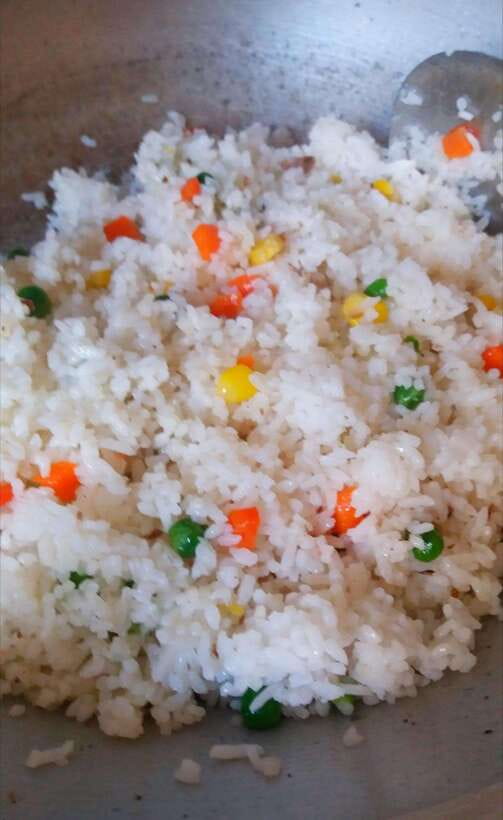
I would book it if you want history and eating in equal measure. The route has a logical flow, the tuk-tuk transfer breaks up the walking, and seven tastings give you a useful introduction to Binondo rather than a single restaurant meal.
The best reason to choose it is the guide-led connection between places and food. Jane or Jayne’s warm, practical help is a strong part of the experience, based on the detailed feedback available. At $80, you are paying for more than entry and snacks: you are paying for a small-group route, translation of local context, and help navigating a busy part of Manila.
Skip it if you need a fully accessible route, have serious food allergies, or prefer to explore at your own pace. For everyone else, it is a well-shaped half-day that gives you old stone walls, landmark churches, a tuk-tuk ride, and a generous taste of Chinese Filipino Manila.
FAQ
How long does the tour last?
The experience lasts five hours, including the Intramuros walk, tuk-tuk ride, and Chinatown food tastings.
Where does the tour begin and end?
It begins at the Fort Santiago Gate and ends at the Minor Basilica and National Shrine of Saint Lorenzo Ruiz, also known as Binondo Church.
What food is included?
Seven tastings are included. Possible items are fried siopao, pork siomai, lumpia, hopia, pansit, egg tart, and buchi, depending on availability.
Is transportation included?
Yes. A tuk-tuk ride from Intramuros to Chinatown is included. The tour does not state that return transportation to Intramuros is provided.
What languages does the guide speak?
The tour is available with a live guide speaking English or Tagalog.
Is the tour suitable for people with food allergies or wheelchair users?
The experience is not suitable for wheelchair users or people with food allergies. You are asked to provide information about dietary restrictions in advance, but serious allergies should be treated as a reason to consider another activity.
Just added in Manila
- Private Tour: Tagaytay Midlands & Taal Volcano Boat Ride★ 4.5 · 15 reviews
- Tagaytay Adventure: Volcano Views, Countryside, Market & Cruise!★ 4.5 · 14 reviews
- 3 Days Private Tour in Banaue Ifugao visiting Batad Rice Terraces★ 3.5 · 3 reviews
- Tagaytay Day Tour sightseeing with Panoramic Taal volcano view★ 5.0 · 6 reviews
- Tagaytay + Hidden Valley Springs: A Scenic Escape w/ Transfers★ 4.0 · 4 reviews
- Unforgettable Manila Fishing Village Day Excursion 2024★ 5.0 · 4 reviews
- 5 Days Sagada Banaue Batad Discovery (PRIVATE GROUP TOUR Max 6 Travellers)★ 5.0 · 16 reviews
- Shared Old Manila Tour★ 5.0 · 5 reviews
Intramuros Heritage Walks, compared.
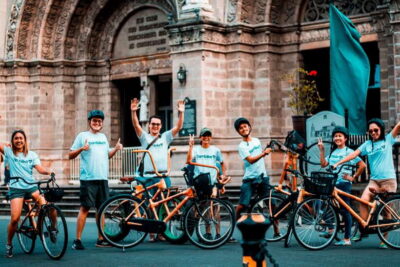
Intramuros, Manila: Historical Bamboo Bike Tour
Read our review →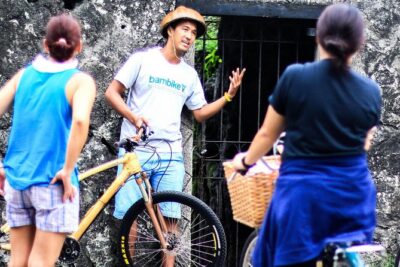
Experience Intramuros with Bamboo Bicycle – Ecotours
Read our review →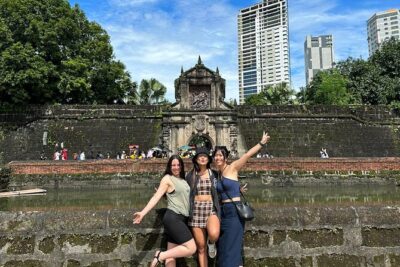
Intramuros, Chinatown, and Old Manila Half-Day Tour
Read our review →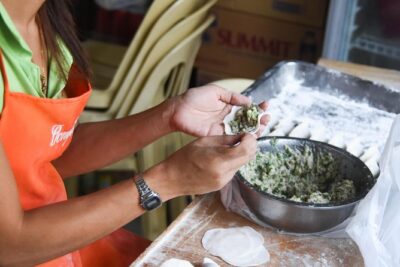
Manila Food Tour: Explore World’s Oldest Chinatown
Read our review →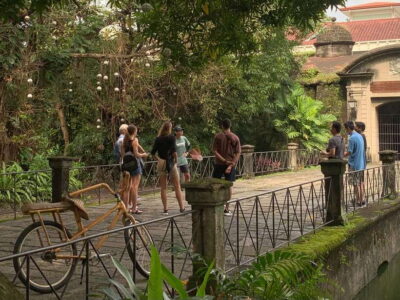
Explore Intramuros: Introduction to Philippine History
Read our review →Browse the lists this tour appears in